
Taste Note - Amazon Supply Chain Best Sellers
Arriving Today: How One USB Charger Explains the Global Supply Chain
A Kurums Book Taste review of Arriving Today for procurement leaders who want to see the physical and human machinery their purchase orders set in motion.
Why this book fits Kurums
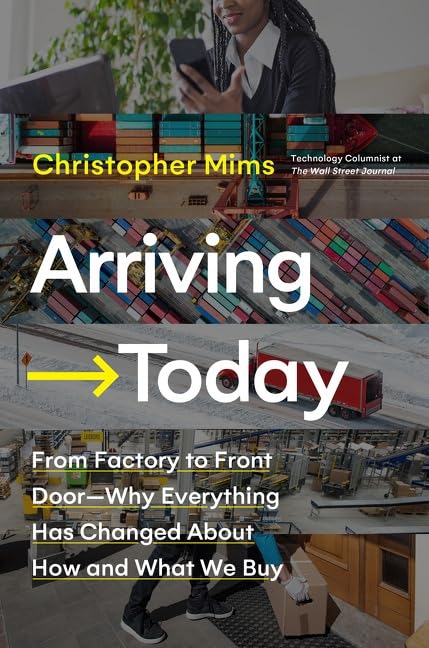
Mims, a Wall Street Journal technology columnist, follows one USB charger from a factory in Vietnam across ships, ports, trucks, and fulfillment centers to a US doorstep - reported largely during 2020, when the system was under maximum stress. The device is a camera: every leg of the journey opens into the history, economics, and labor reality of that link.
For the Kurums Procurement audience this is the context layer behind every landed-cost model: what actually constrains a container ship's schedule, why port automation fights unions, how Amazon's fulfillment machine set the service level your customers now demand from you, and where human workers - the long-haul driver, the picker pacing to an algorithm - absorb the pressure your lead times create. You will negotiate freight and fulfillment differently after reading it.
What the book argues
The first argument is that the global supply chain is a single interlocking machine optimized to the edge of fragility. Mims traces how containerization collapsed shipping costs and made geography negotiable, how the ocean leg runs on schedules and chokepoints - canals, straits, berth windows - with little slack, and how 2020 revealed the machine's operating assumption: that demand is forecastable and every link stays up. The charger's smooth journey is the exception that mass coordination makes look routine; the book's reporting shows how many single points of failure that routine conceals.
The second argument is that the system's intelligence is increasingly Taylorism by algorithm. From the stopwatch of scientific management to warehouse management systems that dictate each picker's next six seconds, Mims draws one continuous line: optimization of human motion, now enforced by software and sensors. The fulfillment-center chapters are the book's core - rate-driven work, algorithmic discipline, turnover as a design parameter rather than a failure - and the trucking chapters extend it: electronic logging, dispatch optimization, and a driver shortage that is really a retention problem priced as a wage problem.
The third argument is that the last mile rewired expectations for the whole economy. Amazon's decision to make delivery speed the product forced the entire chain upstream of the doorstep - port throughput, cross-docks, injection points, route density algorithms - to reorganize around two days, then one. Mims shows the costs that speed socializes: warehouse injury rates, delivery-van labor models, inventory pushed closer to customers at enormous expense. For anyone buying logistics services, the book's closing stance is clarifying: speed is a choice with a price, and most businesses pay for velocity their customers would trade for reliability.
Key ideas, translated to your desk
Know your chokepoints by name
Your lead time is a sequence of canals, berths, chassis pools, and cross-docks you have never audited. Walk one product's full journey on paper and you will find the two links that dominate your variance.
Algorithmic pace has a turnover bill
Rate-optimized warehouses and fleets run on churn. When buying fulfillment or carriage, ask for retention and injury data - they predict your peak-season failure risk better than the rate card.
Buy the speed you need, not the speed on offer
Next-day delivery is an arms race someone else started. Test whether your customers value reliability over velocity before paying velocity's full logistics premium.
Use it at work
- Trace one representative SKU end to end - factory gate to customer - naming every handoff, operator, and chokepoint on the route.
- Add labor-model questions (turnover, injury rates, pay structure) to fulfillment and carrier RFPs.
- Quantify what your current delivery-speed promise costs per order, and A/B test a slower, cheaper, more reliable tier.
- Build a watchlist of the physical chokepoints your top lanes depend on, with trigger-based contingency routings.
Read it if
- You buy freight, fulfillment, or contract manufacturing and want the physical reality behind the rates.
- You onboard executives or category managers who need the whole chain in one readable book.
- You enjoyed The Resilient Enterprise and want the on-the-ground sequel reported this decade.
You can skip it if
- You have spent a career in ports, ocean freight, and warehousing - much of the tour is your office.
- You want frameworks and prescriptions; this is reportage, and its lessons need your own extraction.
- Labor-condition reporting reads as digression to you rather than as operational risk data.
Discover more from Kurums | Business Intelligence
Subscribe to get the latest posts sent to your email.