
Taste Note - Amazon Business Negotiating Best Sellers
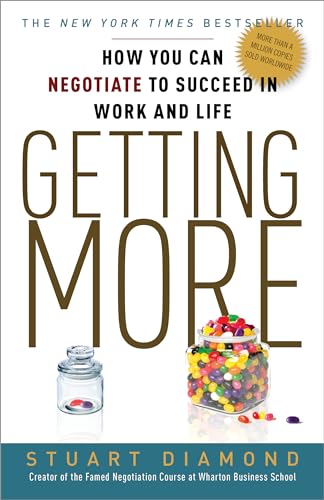
Getting More: Perception-First Negotiation for the Real, Messy World
A Kurums Book Taste review of Getting More for negotiators who found the rational models breaking against actual humans.
Why this book fits Kurums
Diamond's Wharton course displaced game theory with a blunter observation: people are irrational, emotional, and perception-driven - so negotiation must start from the pictures in their heads, not from interests they may not even know they hold. His twelve-strategy system is the most people-first of the major methods, built for the daily negotiations the grand frameworks skip.
For the Kurums Law audience it rounds out the five-method shelf: Fisher's principles, Shell's system, Ury's de-escalation, Camp's discipline - and Diamond's perceptual craft, especially his standards tool (using the counterpart's own rules and words), which is contract and compliance negotiation's native weapon.
What the book argues
The foundations invert the usual order: people first, substance later - in Diamond's research, substance accounts for a small fraction of outcomes while people and process dominate. The method's engine is the pictures in their heads: you cannot move anyone without first seeing their perceptions, valuations, and feelings as they hold them - so every negotiation starts with questions, role reversal, and the discipline of valuing what they value (which enables trades of unequal value, his version of expanding the pie: things cheap for you, dear to them, exchanged both ways).
The tactical dozen includes his signatures: incrementalism (move in steps small enough that each is acceptable - big asks trigger big defenses; anchor the staircase, not the summit); emotional payments (when people are emotional they cannot hear logic - acknowledgment, apology, concessions to feeling are the currency that reopens the channel); using their standards - the tool lawyers will recognize as estoppel's friendly cousin: hold counterparts to their own published policies, precedents, and statements, which is nearly irresistible because refusing means contradicting themselves; and framing - the question asked determines the answer available.
The breadth chapters apply the system everywhere - airlines and hotels, salaries, kids, cross-cultural deals - which is both the book's charm and its critics' target: some examples read as charm offensives rather than strategy. But the business core holds: preparation via his Getting More model (goals, problems, parties, options - the four-quadrant worksheet), relentless focus on your goals rather than winning points, and the closing ethic that trust is an asset never worth burning for a single deal. Read as the perceptual layer atop Shell's structure, it completes a negotiator's education.
Key ideas, translated to your desk
See their pictures first
Every impasse encodes a perception you haven't found yet. Ask, reverse roles, and restate their view until they say 'exactly' - then negotiate.
Pay emotions before logic
An emotional counterpart is logic-deaf. Acknowledgment and small human concessions reopen the channel - budget them as deal costs.
Their standards are your leverage
Quote their policy, their precedent, their words. People will concede to consistency what they would never concede to pressure.
Use it at work
- Adopt the four-quadrant prep sheet for every negotiation above routine - goals, problems, parties, options.
- Build a standards file per counterpart: policies, public statements, past deals - your consistency arsenal.
- Practice incremental asking: break your next big request into four acceptable steps.
- Train teams on emotional payments with scripts - acknowledgment lines that cost nothing and buy the room.
Read it if
- Your negotiations involve ongoing relationships where perception outweighs leverage.
- The rational toolkits stall against emotional or inconsistent counterparts.
- You want the most teachable everyday-negotiation system for non-specialists.
You can skip it if
- You need adversarial armor - Camp and Ury cover that flank.
- Anecdote density tries your patience; the system hides inside stories.
- You've internalized perception-first practice; this formalizes your instincts.
This book appears in
Curated Tasting Menus that chain this title into a reading route.
Discover more from Kurums | Business Intelligence
Subscribe to get the latest posts sent to your email.