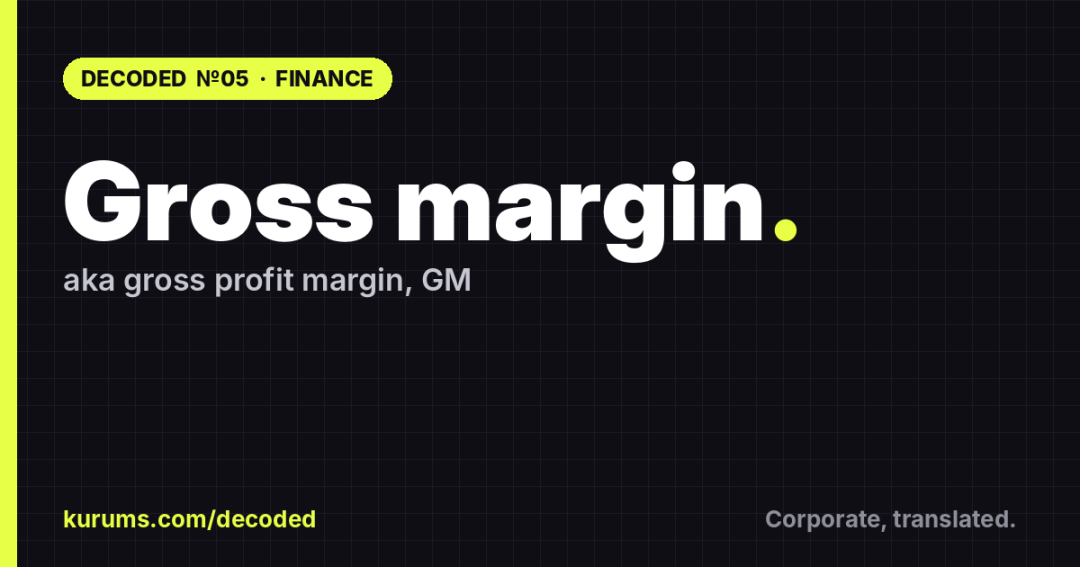
Gross margin is the share of revenue left after subtracting the direct cost of producing what was sold. If a product sells for $100 and costs $40 to make and deliver, gross margin is 60%.

Department
Kurums Decoded: business and corporate terms explained for Gen Z in plain, pop-culture English. Corporate, translated.
Gross margin is the share of revenue left after subtracting the direct cost of producing what was sold. If a product sells for $100 and costs $40 to make and deliver, gross margin is 60%.

Profit is what a company earns on paper once revenue is recorded and costs are matched to it. Cash flow is the money that actually moves in and out of the bank account. They are measured differently and often tell different stories in the same month.

EBITDA is a company’s profit before subtracting interest payments, taxes, depreciation and amortisation. It is a rough measure of how much cash the core business generates from simply operating.
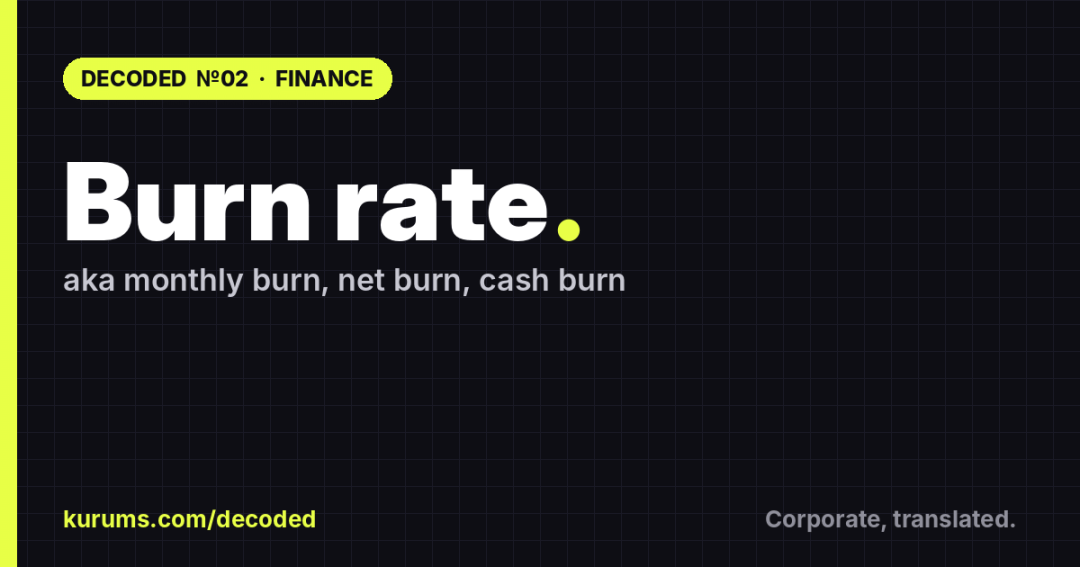
Burn rate is how much cash a company loses each month: everything it spends minus everything it brings in, measured in actual money leaving the bank account.

Runway is the number of months a company can keep operating before its cash runs out, assuming it keeps spending at the current rate and nothing new comes in.