Games Contact us
Select Page

Department

Decoded — Page 5

Kurums Decoded: business and corporate terms explained for Gen Z in plain, pop-culture English. Corporate, translated.

  • 89 guides
  • 8 subtopics
  • Updated Oct 29, 2026
Advertisement

All guides · page 5

Term sheet, Decoded: What It Actually Means

Term sheet, Decoded: What It Actually Means

A term sheet is a short document that sets out the main terms of a proposed deal, most often an investment in a startup. It covers how much money is invested, at what valuation, and what rights the investor gets. It is usually mostly non-binding: a shared outline agreed before the full legal contracts are drafted.
Working capital, Decoded: What It Actually Means

Working capital, Decoded: What It Actually Means

Working capital is the money a business has available to run its daily operations. It is usually calculated as current assets (cash, money customers owe you, stock) minus current liabilities (bills and short-term debts due within about a year). Positive working capital means you can cover near-term obligations; negative means you may struggle to.

Opex vs Capex, Decoded: What It Actually Means

Opex vs Capex, Decoded: What It Actually Means

Opex (operating expenditure) is the money a business spends to run day to day, like rent, salaries and software subscriptions. Capex (capital expenditure) is money spent on long-term assets, like machines, buildings or vehicles, that keep giving value for years. The split matters because the two are treated differently in the accounts and often for tax.

Stakeholder, Decoded: What It Actually Means

Stakeholder, Decoded: What It Actually Means

A stakeholder is any person or group who can affect a project, decision or business, or who is affected by it. That includes obvious players like owners, managers, customers and employees, but also suppliers, regulators, local communities and other teams whose work depends on the result.

API, Decoded: What It Actually Means

API, Decoded: What It Actually Means

An API, short for application programming interface, is a set of rules that lets one piece of software request data or actions from another. Instead of a person copying information between systems, one app sends a structured request, the other sends back a structured answer, and neither needs to know how the other works inside.

KPI, Decoded: What It Actually Means

KPI, Decoded: What It Actually Means

A KPI, or key performance indicator, is a measurable value that shows how well a team, process or company is doing against an important goal. It is chosen on purpose, tracked regularly and compared to a target, so people can see quickly whether they are on track and act when they are not.

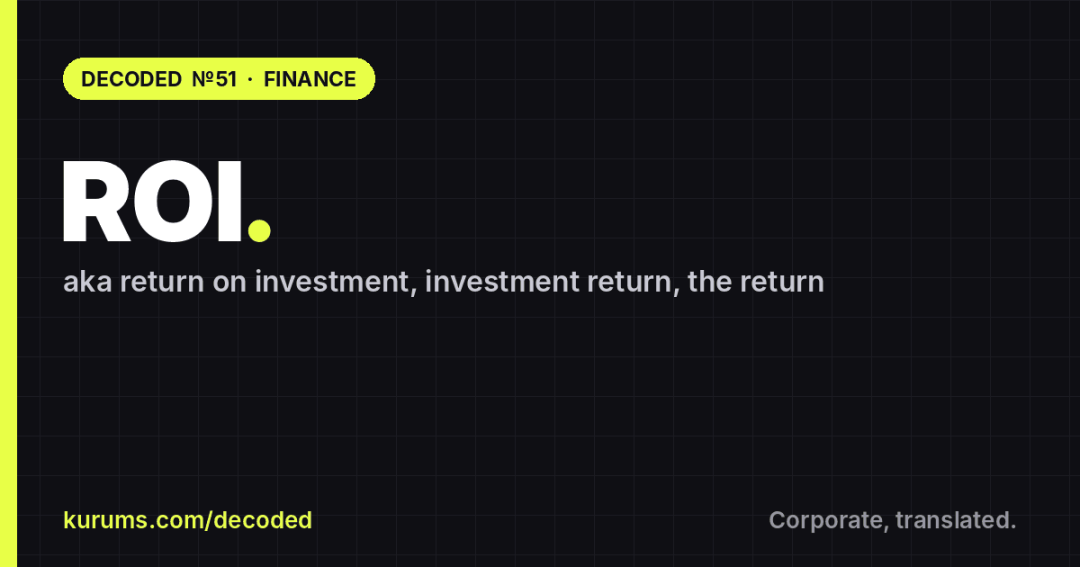
ROI, Decoded: What It Actually Means

ROI, Decoded: What It Actually Means

ROI, or return on investment, measures how much you gained or lost compared with what you spent. The basic formula is gain minus cost, divided by cost, shown as a percentage. Spend $100, end up with $130, and your ROI is 30%. It is a quick way to compare whether different uses of money were worth it.

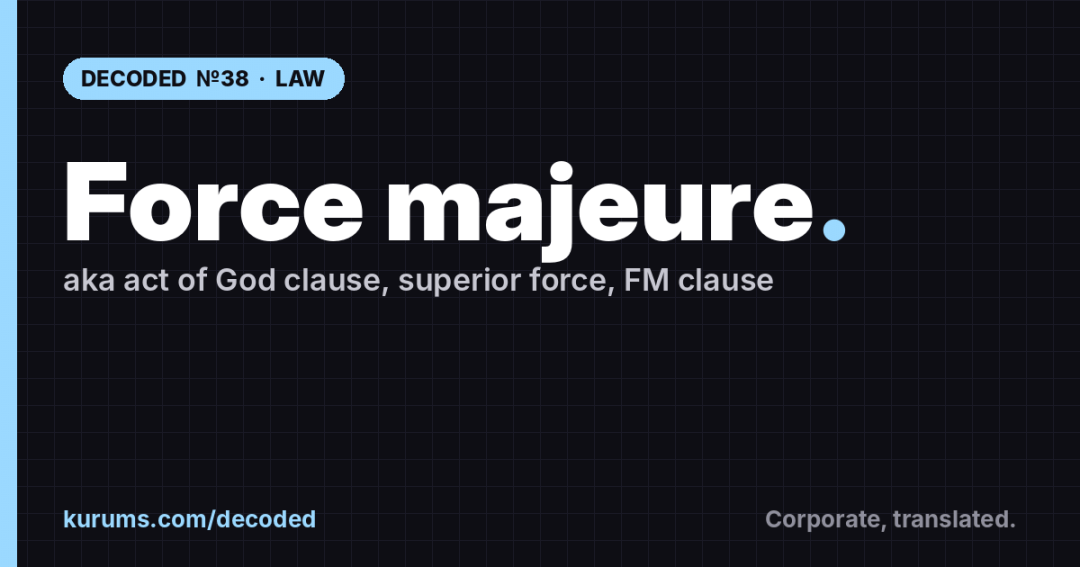
Force majeure, Decoded: What It Actually Means

Force majeure, Decoded: What It Actually Means

A force majeure clause excuses one or both parties from performing a contract, usually temporarily, when an extraordinary event outside their control makes performance impossible or seriously impractical. Typical examples are natural disasters, war, pandemics and government action, but what counts depends on the exact wording.

Liability, Decoded: What It Actually Means

Liability, Decoded: What It Actually Means

Liability is legal responsibility for something, usually a debt or a harm, that can be enforced with money. In business it covers what a company owes, what it can be sued for, and, through structures like limited liability, how much of the owners’ personal assets are at risk if the business fails.

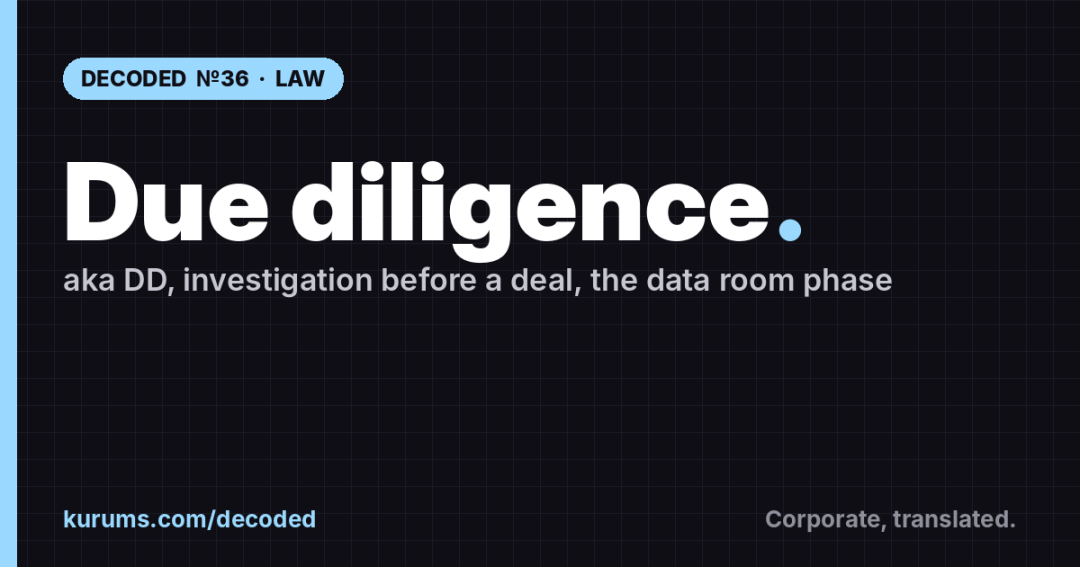
Due diligence, Decoded: What It Actually Means

Due diligence, Decoded: What It Actually Means

Due diligence is the investigation a buyer, investor or partner carries out before committing to a deal, to confirm that what they were told is true and to find risks they were not told about. It covers finances, contracts, legal issues, tax, people, technology and anything else that could affect the value of the deal.

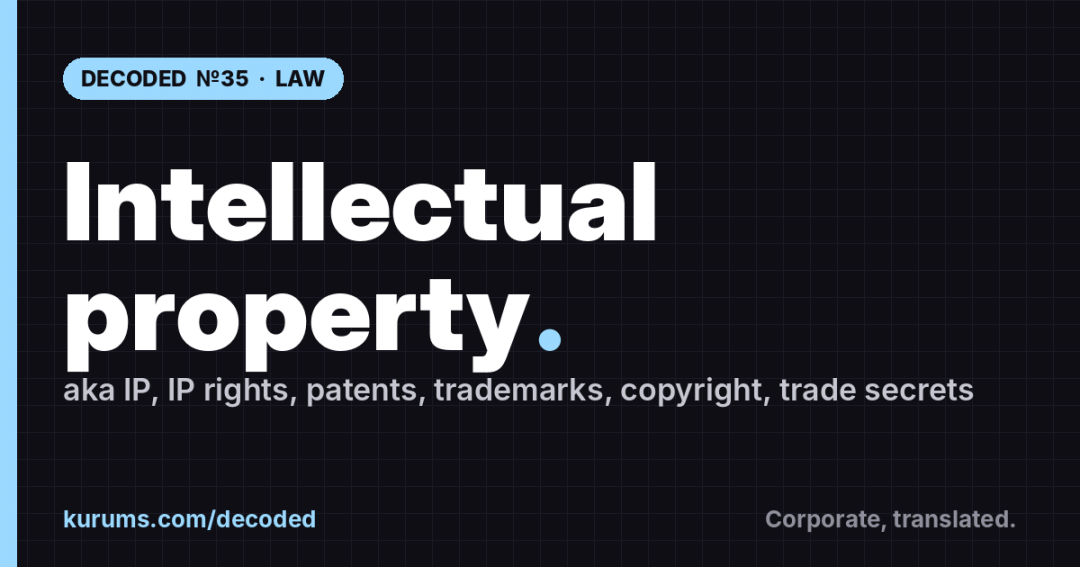
Intellectual property, Decoded: What It Actually Means

Intellectual property, Decoded: What It Actually Means

Intellectual property (IP) is the legal ownership of creations of the mind: inventions, brand names and logos, creative works, designs and confidential know-how. The main types are patents, trademarks, copyright and trade secrets, and each protects something different in a different way.

Non-compete, Decoded: What It Actually Means

Non-compete, Decoded: What It Actually Means

A non-compete is a contract clause in which an employee or business seller agrees not to work for a competitor, or start a competing business, within a set area and time after leaving. Whether it can be enforced depends heavily on the country, the state and how reasonable its limits are.

Advertisement