
Taste Note - Amazon Software Development Best Sellers
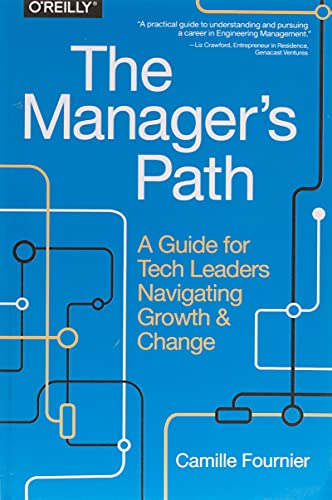
The Manager's Path: The Engineering Career Ladder From Tech Lead to CTO
A Kurums Book Taste review of The Manager's Path for technology leaders who need to grow strong engineers into strong managers without losing either.
Why this book fits Kurums
Technology organizations promote their best engineers into management and then act surprised when the results are uneven. The skills that made someone a great individual contributor do not automatically transfer to running a team, a group of teams or an entire engineering function. Camille Fournier, a former CTO of Rent the Runway, wrote The Manager's Path to describe what each step on that ladder actually demands, from being managed well to setting culture for a whole department.
For the Kurums Technology audience this book works as a shared reference. A CTO can use it to define expectations at each level, an engineering manager can see what the next role really involves, and HR partners get a concrete picture of how technical leadership differs from general management. It keeps the conversation specific to software teams rather than generic leadership advice.
What the book argues
The book's first argument is that management is learned in stages, and each stage changes what good work looks like. Fournier starts with how to be managed and how to mentor, then moves to the tech lead role, which she treats as a distinct job focused on project delivery and technical direction rather than people management. From there she covers managing people directly, with practical attention to one-on-ones, feedback, performance problems and the uncomfortable shift from writing code to enabling others to write it.
Second, it argues that each jump up the ladder requires letting go of something you were good at. Managing a single team still allows you to stay close to the code and the daily work. Managing multiple teams forces you to work through other people, choose where to spend scarce attention and decide when to stay technical enough to judge decisions without making them yourself. Managing managers adds another layer: you must hold leaders accountable, use skip-level conversations to see what is really happening, and debug teams you cannot observe directly.
Third, it argues that senior technology leadership is a business role. The chapters on top leadership explain how the CTO and VP of Engineering roles differ, why strategy, prioritization and partnership with the rest of the executive team matter more than technical brilliance, and how leaders shape culture whether they intend to or not. The closing section on bootstrapping culture urges leaders to write down values, add structure and process as the organization grows, and avoid both chaos and bureaucracy.
Key ideas, translated to your desk
The tech lead is not a mini-manager
Tech leads own delivery and technical direction for a project. Treat it as its own role with its own expectations instead of a probation period for people management.
One-on-ones are the core tool
Regular, private conversations are where trust is built and problems surface early. A manager who skips them loses the earliest signal that a team is in trouble.
Every level means giving something up
Each promotion takes you further from hands-on work. Leaders who refuse to let go become bottlenecks and slow down the very teams they were promoted to grow.
Use it at work
- Write a one-paragraph expectation for each level on your engineering ladder, from tech lead to head of engineering.
- Audit whether every engineer has a regular, uncancelled one-on-one with their manager.
- Start quarterly skip-level conversations if you manage managers, and track the themes that come up.
- Give new engineering managers the chapter for their new level in their first week.
Read it if
- You are promoting engineers into management and want a shared definition of each role.
- You recently became a manager of managers and feel further from the work than you expected; pair it with High Output Management.
- You partner with engineering as an HR or business leader and need to understand its career ladder.
You can skip it if
- You want deep material on architecture, delivery metrics or team structure; Team Topologies or Accelerate fit better.
- You lead outside software and need general management advice.
- You expect research-heavy evidence; this book is built on experience and practical judgment.
This book appears in
Curated Tasting Menus that chain this title into a reading route.
Discover more from Kurums | Business Intelligence
Subscribe to get the latest posts sent to your email.