Games Contact us
Select Page

Department

Decoded — Page 3

Kurums Decoded: business and corporate terms explained for Gen Z in plain, pop-culture English. Corporate, translated.

  • 89 guides
  • 8 subtopics
  • Updated Nov 4, 2026
Advertisement

All guides · page 3

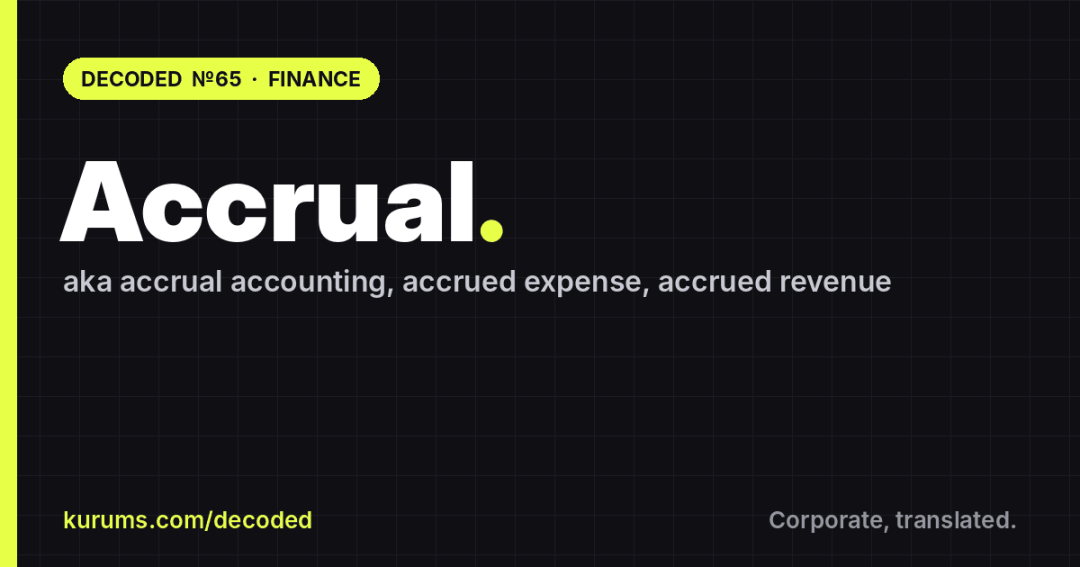
Accrual, Decoded: What It Actually Means

Accrual, Decoded: What It Actually Means

An accrual is an amount recorded in the accounts when it is earned or owed, even if no cash has moved yet. Accrual accounting matches revenue and expenses to the period they actually belong to, so a company’s profit reflects the work it did that month, not just the payments that happened to arrive or leave.

Compliance, Decoded: What It Actually Means

Compliance, Decoded: What It Actually Means

Compliance means a business following the laws, regulations, industry standards and internal policies that apply to it, and keeping the evidence to show it. It covers areas like data privacy, anti-money laundering, workplace safety, financial reporting and anti-bribery. It is also the name of the team that sets up the checks, trains staff and handles audits.

Overhead, Decoded: What It Actually Means

Overhead, Decoded: What It Actually Means

Overhead is the ongoing cost of running a business that cannot be tied directly to a specific product, service or customer. Think rent, utilities, insurance, accounting, IT and management salaries. These costs exist whether you sell a lot or a little, so they have to be covered by the profit from everything the business sells.

Procurement, Decoded: What It Actually Means

Procurement, Decoded: What It Actually Means

Procurement is the process a company uses to buy the goods and services it needs, from laptops and raw materials to software and consultants. It covers finding and choosing suppliers, negotiating price and terms, getting approval, placing orders and making sure what arrives matches what was agreed. The goal is good value with control and a clear paper trail.

P&L, Decoded: What It Actually Means

P&L, Decoded: What It Actually Means

A P&L, or profit and loss statement, is a financial report that shows how much a business earned and spent over a period, such as a month, quarter or year. It starts with revenue, subtracts costs in layers, and ends with net income, the profit or loss left over. It is also called the income statement.

Headcount, Decoded: What It Actually Means

Headcount, Decoded: What It Actually Means

Headcount is the number of people a company employs, or is approved to employ, at a given time. In planning it usually means approved roles in the budget, not just bodies in seats, so a team can have open headcount it has not filled yet. It is often measured in FTEs (full-time equivalents) to account for part-time staff.

Burnout, Decoded: What It Actually Means

Burnout, Decoded: What It Actually Means

Burnout is a state that results from chronic workplace stress that has not been successfully managed. The World Health Organization describes it in ICD-11 as an occupational phenomenon, not a medical condition, marked by three things: exhaustion, growing mental distance or cynicism about your job, and reduced effectiveness at work.

NPS, Decoded: What It Actually Means

NPS, Decoded: What It Actually Means

NPS, or Net Promoter Score, is a customer loyalty metric based on one question: how likely are you to recommend us to a friend or colleague, from 0 to 10? People who answer 9 or 10 are promoters, 7 or 8 are passives, and 0 to 6 are detractors. NPS equals the percentage of promoters minus the percentage of detractors.

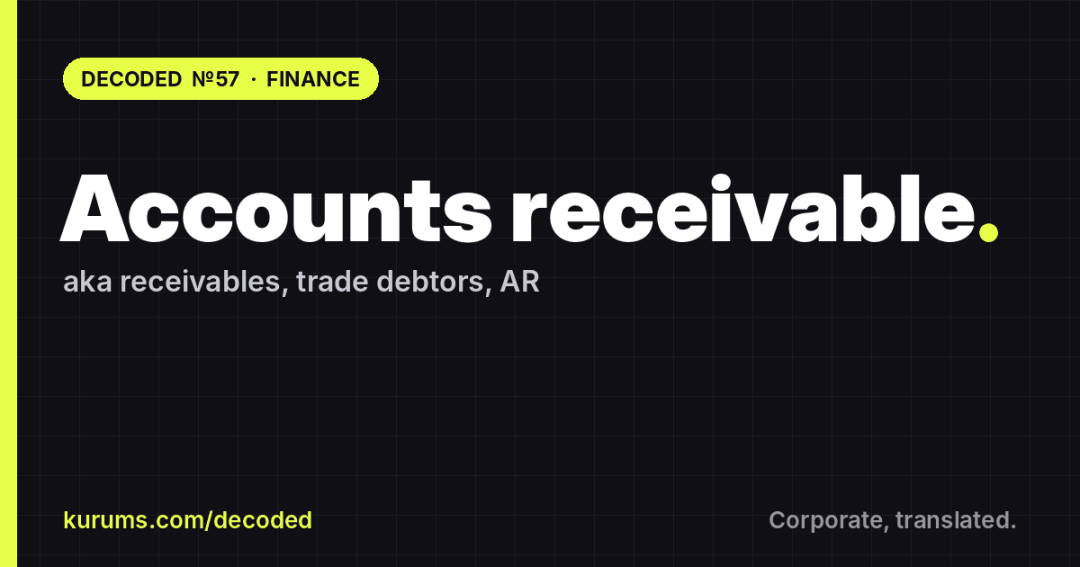
Accounts receivable, Decoded: What It Actually Means

Accounts receivable, Decoded: What It Actually Means

Accounts receivable is the money customers owe a business for goods or services already delivered but not yet paid for. It usually comes from sending an invoice with payment terms, such as 30 days. On the balance sheet it counts as a current asset, because the business expects to turn it into cash within a year.

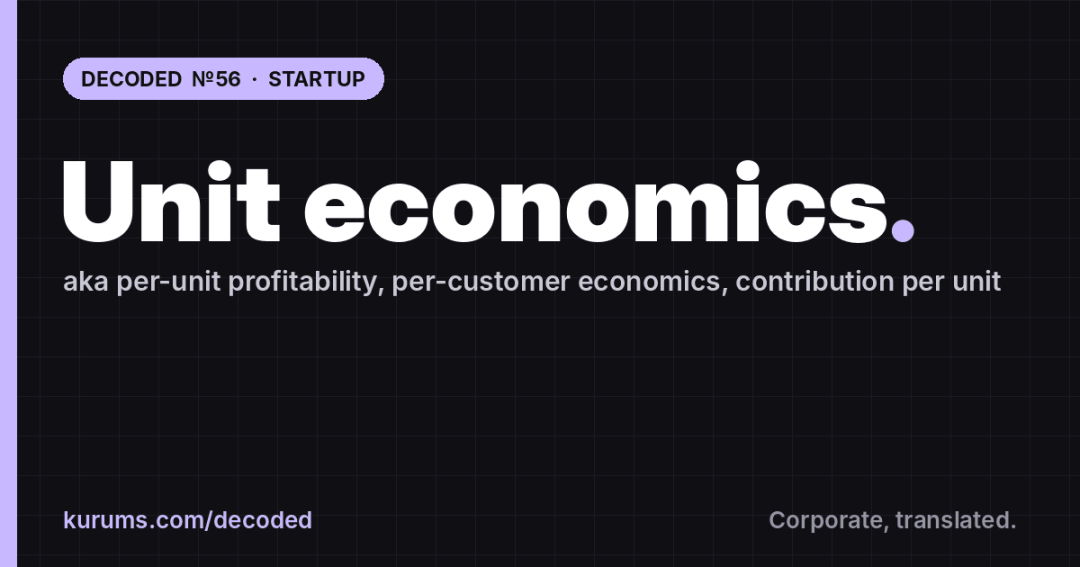
Unit economics, Decoded: What It Actually Means

Unit economics, Decoded: What It Actually Means

Unit economics is the revenue and cost of a single unit of your business, such as one product sold, one order delivered or one customer over their lifetime. It shows whether each unit makes or loses money before fixed costs like rent and head office salaries, and whether growing bigger will make the business healthier or simply lose money faster.

Bootstrapping, Decoded: What It Actually Means

Bootstrapping, Decoded: What It Actually Means

Bootstrapping means starting and growing a business without outside investors, using the founders’ own savings and the revenue that customers bring in. Instead of selling shares to raise a large round, a bootstrapped company funds each step from what it already earns, which usually means slower growth but full control and no investor pressure.

SEO, Decoded: What It Actually Means

SEO, Decoded: What It Actually Means

SEO, or search engine optimization, is the practice of improving a website and its content so it appears higher in unpaid search results. It covers what a page says, how fast and well built the site is, and how much other sites trust and link to it, all aimed at earning free, relevant visitors from search.

Advertisement