
Taste Note - Amazon Accounting Best Sellers
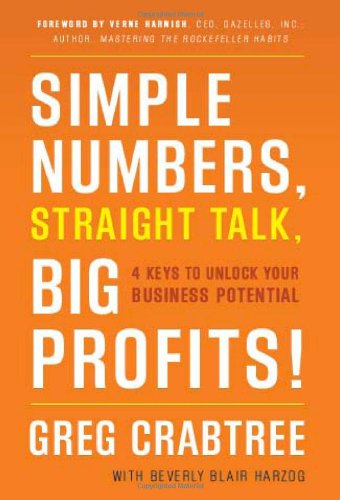
Simple Numbers, Straight Talk, Big Profits!: The Four Keys That Unlock Small-Business Economics
A Kurums Book Taste review of Simple Numbers for owner-operators whose P&L says fine while the business feels broke.
Why this book fits Kurums
Profit First fixes cash behavior; Crabtree fixes the economics underneath. His CPA-practice distillation attacks the distortions that make small-business statements lie to their owners - unpaid-market-wage owners, lifestyle costs buried in the books, tax-avoidance spending - and replaces them with a handful of unforgiving metrics, led by labor efficiency.
For the Kurums Accounting audience this is the advisory playbook: the four-key framework turns a compliance relationship into a management one, and its thresholds (the 10 percent pretax profit floor, the labor-efficiency targets) give advisors and owners a shared scoreboard.
What the book argues
The opening correction is owner compensation: until the owner takes a market wage for the work they do, the P&L is fiction - profit is return on the business, not disguised salary. Crabtree's first chapters strip the common distortions (S-corp games, personal costs in the books, revenue vanity) to reach the number that matters: pretax profit percentage, with his blunt bands - under 5 percent means the business is on life support, 10 percent is good, 15 percent is great - and the insistence that tax is a sign of profit, not a problem to engineer away.
The core instrument is labor efficiency ratio: gross margin dollars produced per dollar of labor cost, tracked separately for direct and management labor. Labor is the largest controllable cost in most businesses, and LER makes productivity visible before the damage shows in profit - hiring ahead of growth, keeping underperformers, and raise cycles all become arithmetic rather than argument. The salary-cap concept imports sports-league discipline: a target total compensation pool derived from the profit target, allocated deliberately.
The capital chapters finish the economics: the four forces of cash flow (pay taxes, repay debt, reach core capital, then distribute), the core capital target of two months of operating expenses in cash with nothing drawn on the line - Crabtree's definition of a fully capitalized business - and the discipline of funding growth from profit rather than borrowing against hope. The closing material on reading your business in trailing-twelve charts rather than monthly noise completes a book that is really one long argument: simple numbers, honestly kept, make hard decisions obvious.
Key ideas, translated to your desk
Pay the owner first - a wage, not profit
Market-rate owner compensation is the first correction. Everything the statements say before it is self-flattery.
Labor efficiency is the master metric
Gross margin per labor dollar predicts profit trouble quarters early. Track it by team and manage hiring to it.
Two months of opex is the finish line
Core capital in cash, line untouched - that is what 'capitalized' means. Distributions before that point are borrowed celebration.
Use it at work
- Restate the last twelve months with market owner wages and lifestyle costs removed - meet the real business.
- Stand up LER tracking (direct and management) and set the next hire's trigger as a ratio, not a feeling.
- Adopt the four forces order for every profitable month: tax, debt, core capital, distribution.
- Switch management charts to trailing twelve months and retire the monthly zigzag debates.
Read it if
- You own or advise businesses in the $1-10M range where the owner is the system.
- Profit exists on paper while cash and sanity do not.
- You want the economics layer to pair with Profit First's behavior layer.
You can skip it if
- You run enterprise finance - these are owner-operator economics.
- Your labor model is already ratio-managed; the capital chapters are the remainder.
- You want accounting technique; this is management through accounting.
This book appears in
Curated Tasting Menus that chain this title into a reading route.
Discover more from Kurums | Business Intelligence
Subscribe to get the latest posts sent to your email.