
Taste Note - Amazon Accounting Best Sellers
Warren Buffett Accounting Book: From Reading Statements to Valuing the Business
A Kurums Book Taste review of the Warren Buffett Accounting Book for readers ready to turn statement literacy into actual valuation.
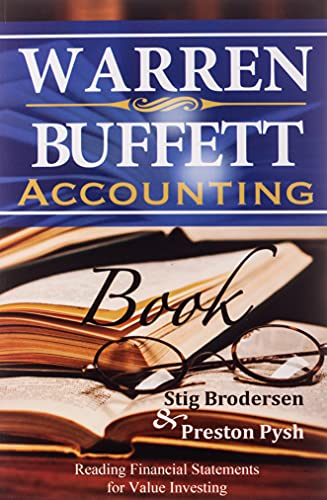
Why this book fits Kurums
Mary Buffett's interpretation book taught the moat fingerprints; this successor goes the step further that readers keep asking for - from identifying a durable business to estimating what it is worth, with the discount arithmetic shown rather than gestured at.
For the Kurums Accounting audience it completes a progression on the shelf: statements (Ittelson) → interpretation (Mary Buffett, Schilit's skepticism) → valuation (this book) - the last mile that turns accounting fluency into capital-allocation input, whether the asset is a stock, an acquisition target, or your own company's next project.
What the book argues
The first third sets the investor's frame: Buffett's core rules (don't lose money; view stocks as fractional business ownership; insist on a margin of safety), the distinction between price and value, and why stable, predictable earnings - the accounting signature of a moat - are the precondition for any valuation at all. The authors are explicit that the method only works on businesses whose statements make the future estimable; everything volatile is honestly ruled out of scope.
The middle chapters re-walk the three statements with a valuation reader's eye: income statement quality markers (consistent margins, low interest burden), balance-sheet strength (low debt, rising retained earnings and book value), and the cash flow statement as the source of owner earnings - the free cash available after the capex needed to maintain position. Key ratios get the same treatment as inputs rather than trivia: return on equity as the compounding engine, debt-to-equity as the fragility test, current ratio as the sleep-at-night check.
The final third does what the genre usually avoids: actual discounting. Book-value growth and dividend streams are projected conservatively, discounted against the ten-year Treasury as the opportunity-cost baseline, and compared with price to size the margin of safety - with worked examples, sensitivity to assumptions shown, and repeated warnings that conservative inputs matter more than decimal precision. The honest limitations stand: the method suits stable franchises, punts on complex financials, and inherits every risk of the projections - which is, the authors argue, exactly why Buffett sticks to businesses where projecting is possible.
Key ideas, translated to your desk
Stability is the license to value
If margins and returns jump around, no discounting is honest. Screen for predictability first; valuation is a privilege stable businesses earn.
Owner earnings beat reported earnings
Profit after maintenance capex is what an owner can actually take out. Compute it before believing any earnings multiple.
Discount against your alternative
Value is relative to what else the money could safely earn. Anchor every valuation to the risk-free alternative, then demand a margin below it.
Use it at work
- Add an owner-earnings line to your internal reporting: operating cash flow minus maintenance capex, tracked quarterly.
- Value your own company annually with the book's conservative method - the discipline sharpens every budget debate.
- Screen acquisition targets for earnings stability before commissioning any valuation model.
- Run valuations at three assumption sets and present the range, never the point estimate.
Read it if
- You can read statements and want the next step into valuation.
- You evaluate acquisitions or investments and distrust black-box models.
- You want the quantitative sequel to the moat-fingerprints book.
You can skip it if
- You build DCF models professionally - this is the teaching version.
- Your targets are early-stage or volatile; the method honestly excludes them.
- You have not read a statements primer yet - start one layer down.
This book appears in
Curated Tasting Menus that chain this title into a reading route.
Discover more from Kurums | Business Intelligence
Subscribe to get the latest posts sent to your email.