
Expense management software automates the entire spend cycle — capturing receipts, categorizing transactions, enforcing policy, routing approvals and reconciling to your accounting system — replacing the spreadsheets, paper receipts and email-chain approvals that cost finance teams hours every week. The market split sharply in recent years between corporate-card-first platforms (which bundle cards with free or low-cost software) and card-agnostic tools that work with your existing cards. The right choice depends on your company size, whether you’ll adopt the provider’s card, and how much you travel.
This guide compares six expense platforms in 2026 across pricing model, card requirements, policy controls, integrations, implementation fit and travel depth. The review uses current public product and pricing information; it is not a hands-on product test.
Expense management software compared at a glance
| Platform | Pricing | Best For | Link |
|---|---|---|---|
| Webexpenses | Essential from £7.50/active user/month | Policy-led finance teams | Visit → |
| Ramp | Free; Plus $15/user/month + platform fee | Free, automation-first | Visit → |
| Brex | Essentials $0; Premium $12/user/month | Funded startups | Visit → |
| Expensify | Collect $5/member/month; Control from $18 on annual terms before card discounts | Card-agnostic receipts | Visit → |
| SAP Concur | Base from $7/report; Plus from $11/report; Premium custom | Enterprise T&E | Visit → |
| Navan | Business: first 5 expensing users free, then $15/user/month; Enterprise custom | Travel + expense | Visit → |
What is included in these expense software prices?
Compare the billing unit and plan conditions before comparing prices. A fee per employee, active expense user or submitted report can produce very different totals. The prices below were checked on 9 September 2026. Existing products are shown in USD; Webexpenses’ global pricing page displays GBP.
- Ramp pricing: Free is $0. Plus lists $15 per user per month plus a platform fee based on team size, with a stated 20% discount for annual billing. Enterprise is custom-priced.
- Brex pricing: Essentials is $0 per user per month, Premium is $12 per user per month, and Enterprise pricing is custom.
- Expensify billing details: Current Collect pricing is $5 per unique member per month. Control annual pricing is $18 per included member per month; active members above the subscription size cost $36. Pay-per-use Control is $36 per active member per month. Eligible card usage can reduce these rates, with included annual members as low as $9. Legacy Collect plans and regional prices differ.
- SAP Concur pricing: Base starts at $7 per report and Plus at $11 per report, with unlimited users. Premium is custom-priced. Monthly commitments affect pricing; request an implementation and add-on quote for your scope.
- Webexpenses pricing: Essential starts at £7.50 per active user per month, Scale at £9 and Pro at £13. The provider says organizations can load all employees but pay according to active claim users; plan, region and implementation requirements should be confirmed directly.
- Navan pricing: Business is offered to companies with up to 300 employees. Expense is free for the first five monthly expensing users, then $15 per user per month. Larger organizations should request an Enterprise quote.
This check covers published pricing and billing conditions; it is not a hands-on product test. Confirm eligibility, taxes, integrations, add-ons and contract terms with the provider.
The best expense management & corporate card platforms in 2026, compared
Webexpenses
Policy-led finance teams

Best for: Finance teams seeking configurable policies, approval workflows and active-user billing while retaining flexibility around cards.
| Pricing | Essential from £7.50/active user/month |
| Use case | Policy-led expense control |
| Strength | OCR, approvals and policy enforcement |
| Integrations | QuickBooks, Xero, NetSuite, Sage Intacct and Business Central by plan |
| Fit | Small teams through multi-entity organizations |
| Note | Regional pricing and plan capabilities vary |
- Receipt OCR, duplicate checks and up to six approval levels on Essential
- Policy reinforcement, mileage and reporting are included in the core expense workflow
- Higher tiers add SSO, broader ERP integrations, API access and direct reimbursement
Ramp
Best free & automation
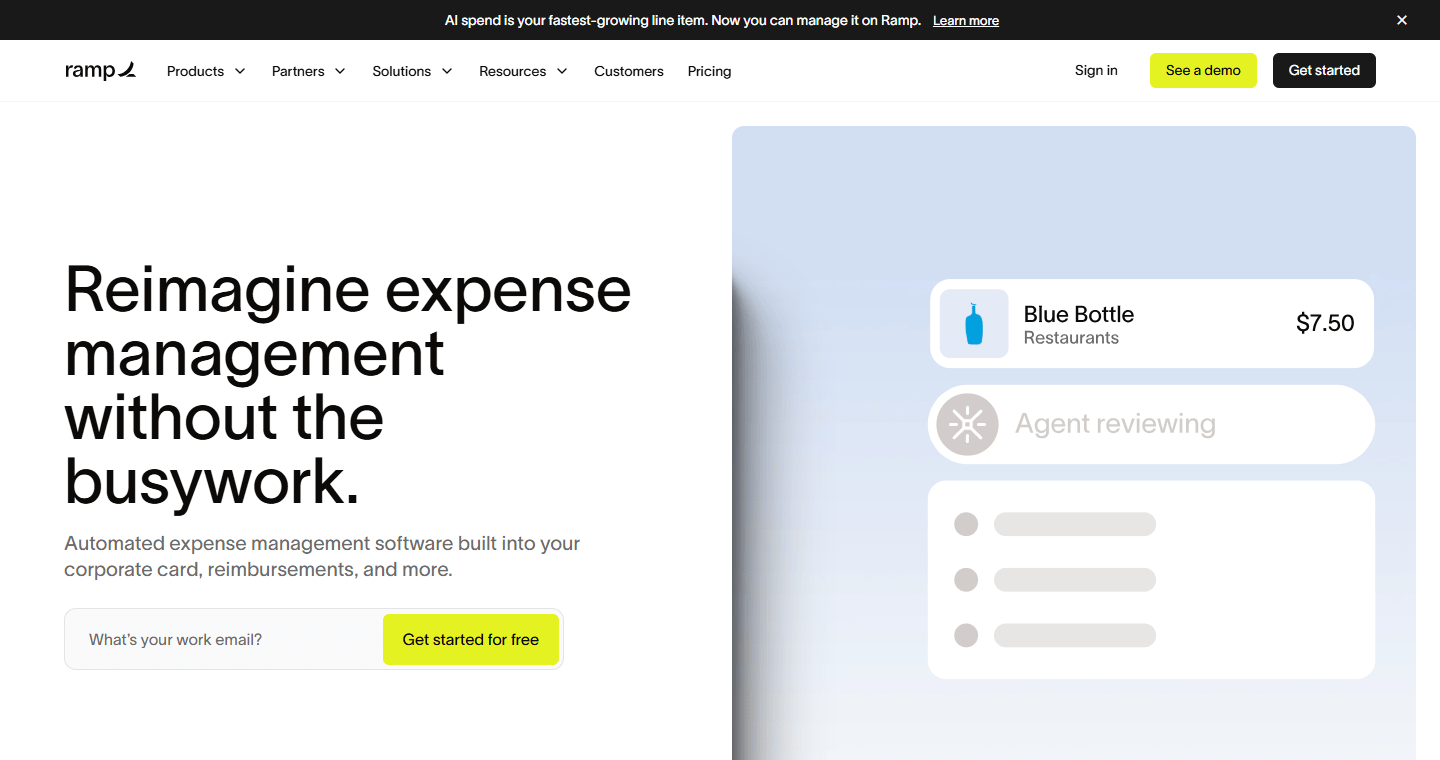
Best for: Companies under ~500 employees that can switch cards and want top automation.
| Pricing | Free; Plus $15/user/month + platform fee |
| Use case | Free, automation-first |
| Strength | Best automation and spend controls |
| Cards | Unlimited, no personal guarantee |
| Extras | AP, bill pay, subscription monitoring |
| Note | Requires using Ramp cards |
- Genuinely free with the strongest automation
- Blocks out-of-policy spend before it happens
- Flags price hikes and unused subscriptions
Brex
Best for funded startups
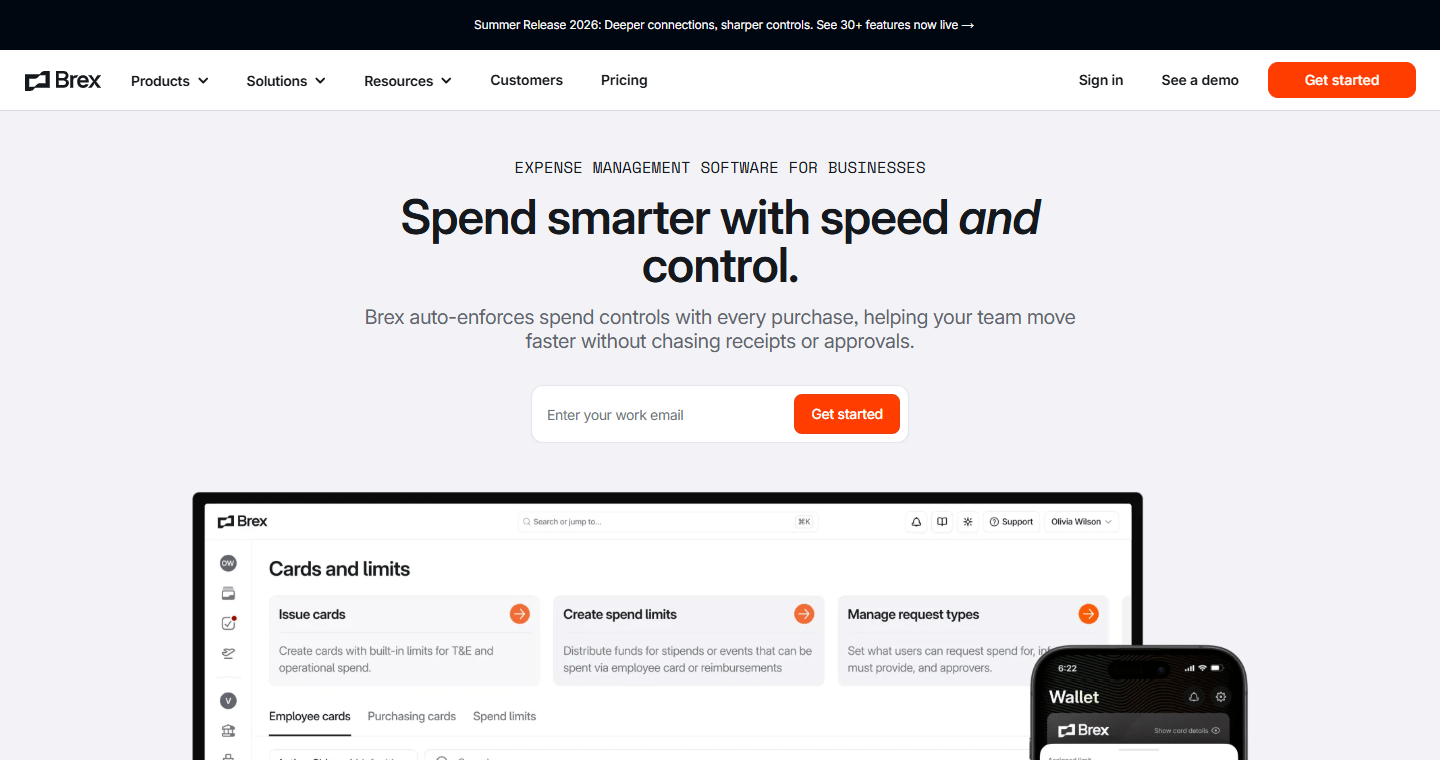
Best for: Funded startups wanting cards, expenses and travel in one, on cash-based credit.
| Pricing | Essentials $0; Premium $12/user/month |
| Use case | Funded startups |
| Strength | Cards + expense + travel unified |
| Credit | Underwritten on cash balances |
| Owner | Capital One (acquired 2026) |
| Note | Best with venture funding |
- Cards, expense and travel in one platform
- Credit based on cash balances, no personal guarantee
- Now a Capital One company; runs independently
Expensify
Best card-agnostic
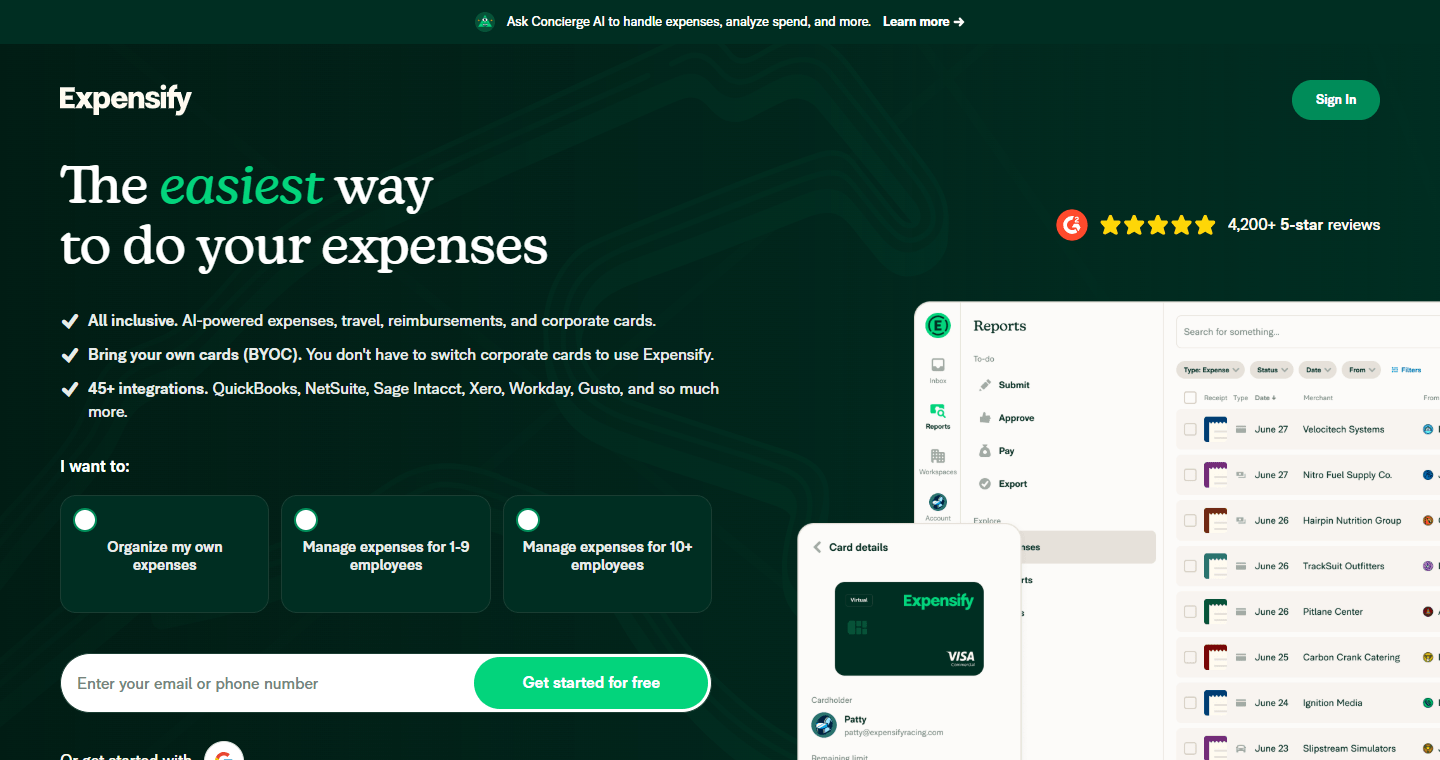
Best for: Teams keeping existing cards wanting the best receipt capture.
| Pricing | Collect $5/member/month; Control from $18 on annual terms before card discounts |
| Use case | Card-agnostic receipts |
| Strength | Best receipt scanning (SmartScan) |
| Cards | Works with any Visa/MC/Amex |
| Fit | Small to mid-market |
| Note | Basic policy depth at scale |
- Best-in-class SmartScan receipt capture
- Works with any existing corporate card
- Collect and Control plans with different billing conditions
SAP Concur
Best for enterprise
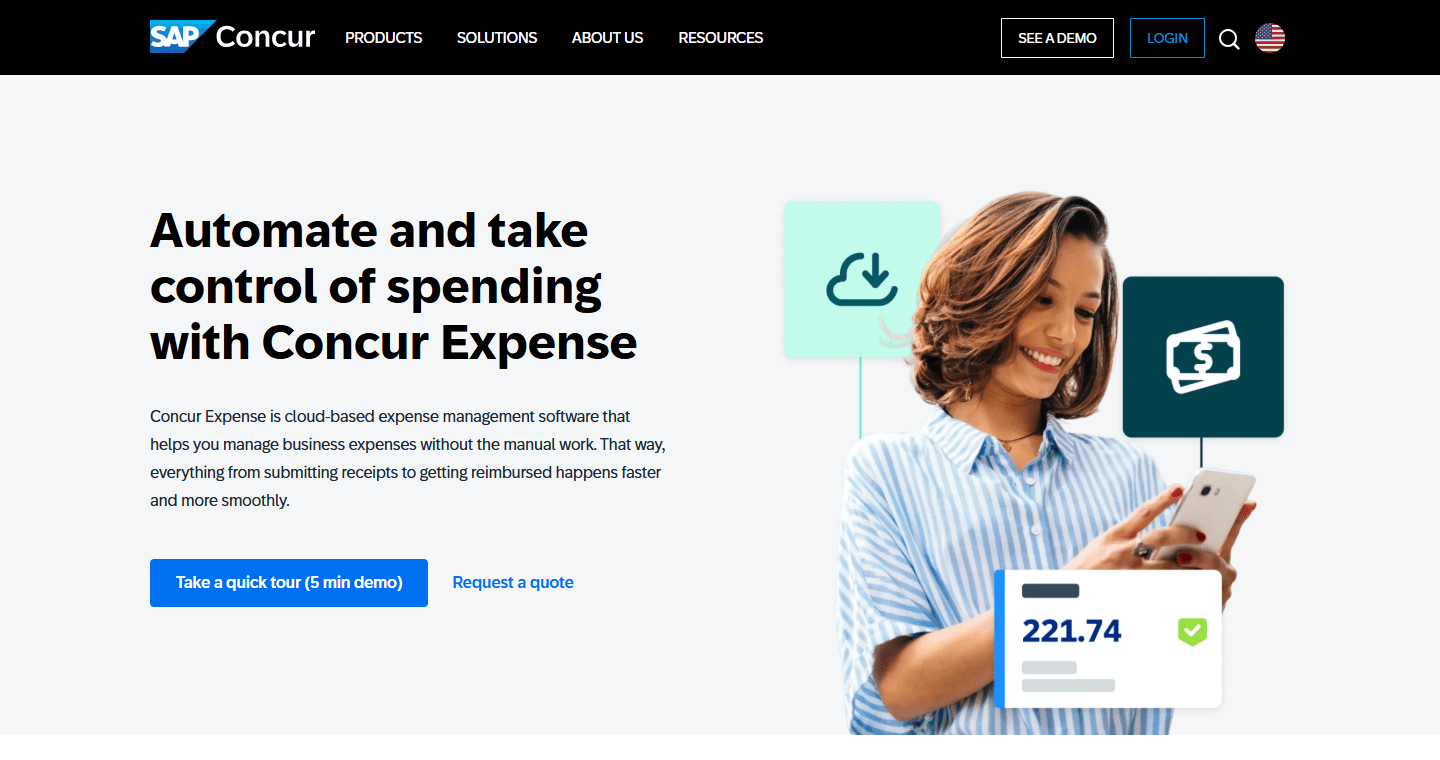
Best for: Large enterprises with complex travel, multi-country ops or SAP infrastructure.
| Pricing | Base from $7/report; Plus from $11/report; Premium custom |
| Use case | Enterprise T&E |
| Strength | Configurable policy engine |
| Integration | Native SAP, broad ERP |
| Fit | 1,000+ employees, global |
| Note | Dated UI, heavy implementation |
- The configurable enterprise T&E standard
- Handles complex global policies and compliance
- Native SAP and broad ERP integration
Navan
Best for travel
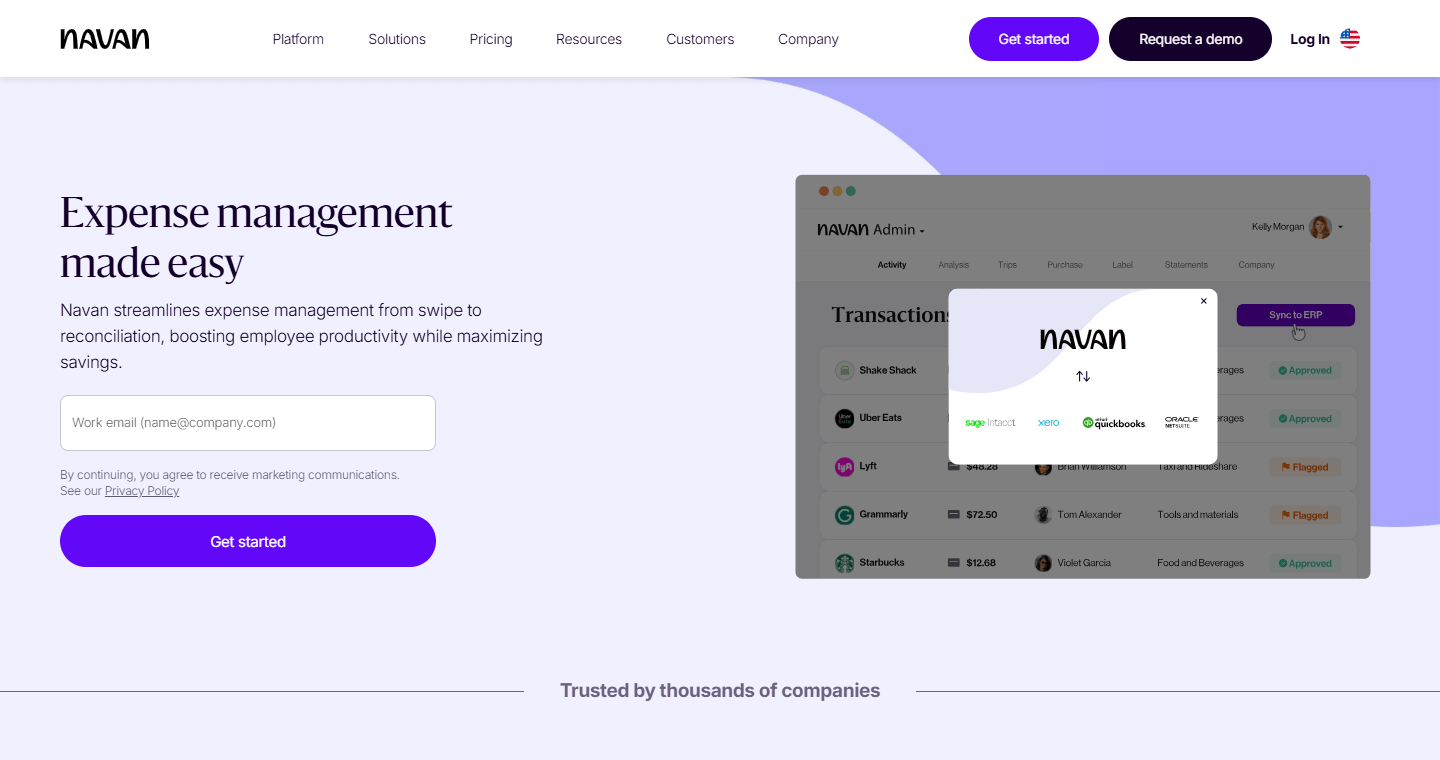
Best for: Travel-heavy teams wanting booking and expense in one workflow.
| Pricing | Business: first 5 expensing users free, then $15/user/month; Enterprise custom |
| Use case | Travel + expense |
| Strength | Unified travel booking + expense |
| Reach | 45 countries, 25 currencies |
| Fit | Travel-heavy teams |
| Note | Less compelling for expense-only |
- Combines travel booking with expense management
- Auto-generates expense reports from trips
- Strong global rapid reimbursements
How should you choose expense management software?
Start with the payment model and operational complexity. Card-first tools can reduce manual reimbursement work, while card-agnostic platforms preserve existing card programs. Then compare billing units, approval depth, ERP connectivity, geographic coverage and implementation effort.
Kurums Match: which expense platform fits your team?
Open the priority that best describes your buying decision.
Policy controls with active-user billing
Webexpenses fits finance-led rollouts that prioritize configurable policies, approval levels and paying according to active claim users.
Card-first automation and spend controls
Ramp is the closest fit when adopting its card is acceptable and automation is the main priority.
Funded startup with cards, travel and expenses
Brex is designed around funded companies that want these workflows in one platform.
Keep existing cards and simplify receipts
Expensify is the practical option for card flexibility and receipt-centered workflows.
Complex enterprise travel and expense
SAP Concur is built for complex policies, multinational operations and established ERP environments.
Travel booking and expense in one workflow
Navan is the strongest category fit for travel-heavy teams wanting booking and expenses together.
How did Kurums evaluate these tools?
We compared current official pricing, billing model, receipt capture, policy controls, approval workflows, cards, accounting or ERP integrations, travel capability and target organization size. This is source-led desk research, not a hands-on lab test.
No Kurums Recommends or Top Pick badge is awarded on this page. Those verdicts require documented evidence and an independent second reviewer.
Frequently Asked Questions
What is expense management software?
Expense management software automates the spend cycle — capturing receipts, categorizing transactions, enforcing policy, routing approvals and reconciling to accounting — replacing spreadsheets, paper receipts and email approvals. Modern platforms may bundle a corporate card (Ramp, Brex), work with existing cards (Expensify and Webexpenses), or combine expense with enterprise travel and ERP workflows (SAP Concur and Navan).
What is the best expense management software in 2026?
It depends on the operating model. Ramp fits card-first automation, Brex funded startups, Expensify card-flexible receipt workflows, Webexpenses policy-led finance teams, SAP Concur complex enterprises, and Navan travel-heavy organizations.
Is Ramp really free?
Yes — Ramp’s core expense management and corporate cards are free, because Ramp earns revenue from card interchange rather than per-user fees. Advanced features (like HRIS sync) require Ramp Plus at $15/user/month plus a team-size-based platform fee (annual billing discounts are available). The trade-off of free, card-first platforms is that you must adopt their card, and interchange-based models can limit flexibility versus card-agnostic tools.
Did Capital One acquire Brex?
Yes. Capital One announced its acquisition of Brex (~$5.15 billion) in January 2026, and the deal closed in April 2026. Brex now operates as a Capital One subsidiary. The product continues to function independently and existing customers retain their plans, but the long-term roadmap may shift as Capital One integrates Brex’s technology.
Should I choose a card-first or card-agnostic tool?
Decide whether you’ll adopt the provider’s card. Card-first platforms (Ramp, Brex) are free or cheap and can reduce reimbursement work for spending placed on their cards, but require switching. Card-agnostic tools such as Expensify and Webexpenses can preserve existing card programs, while SAP Concur also supports enterprise card feeds; billing may be per member, active user or submitted report. If keeping your current card program matters, go card-agnostic; otherwise card-first usually wins on cost and automation.
Related Finance comparisons
Discover more from Kurums | Business Intelligence
Subscribe to get the latest posts sent to your email.
