
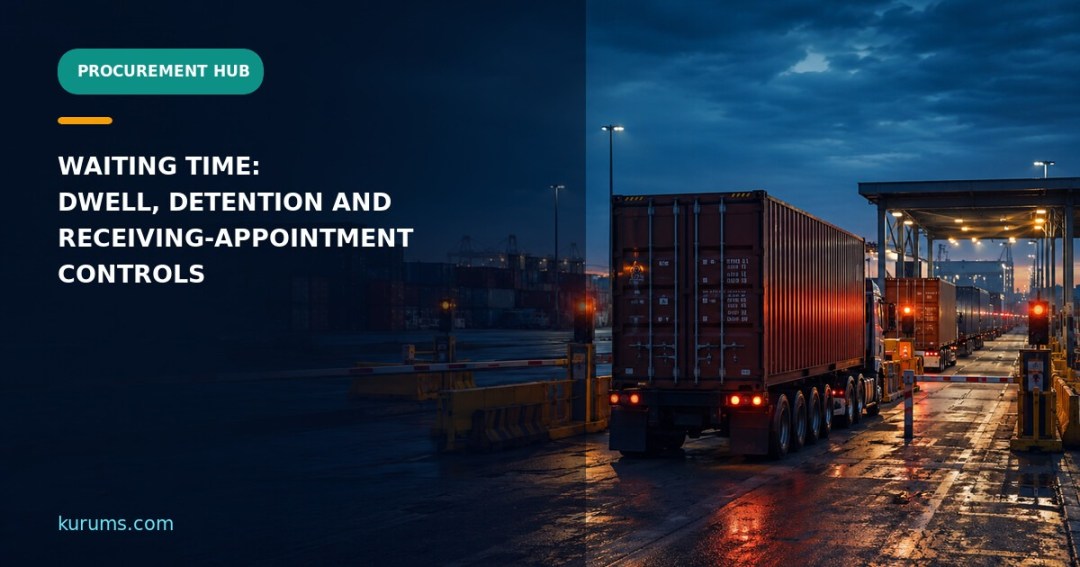
WAITING TIME is the period in which cargo, a vehicle or equipment is physically unable to progress. Procurement should separate loading or unloading time, terminal dwell, truck detention, container demurrage, chassis use and carrier delay, then define the start and stop events, free time, evidence, responsibility and dispute route for each charge.
- Use a shared event clock for arrival, check-in, dock or gate, loading, release, departure and equipment return.
- Separate cargo availability, appointment access, terminal dwell, truck detention, demurrage and chassis clocks.
- Price waiting transparently with free time, rate, minimum, cause, evidence, notice and practical-exception rules.
- Use recurring waiting events to improve receiving capacity, documents, appointment design and carrier performance.
Define the Waiting Event
The SSDER glossary defines waiting time as the period when cargo is not physically moving. That definition is useful but too broad for an invoice. A truck may wait because a dock is occupied; a container may dwell because customs has not released it; equipment may incur detention because an empty return is unavailable; and a carrier may wait because the shipper missed cargo readiness. Each event needs its own clock and cause.
Write the event definitions into the rate card and operating procedure. Name arrival, check-in, appointment, available-for-pickup, loading start, loading complete, release, gate-out, empty-return appointment, accepted return and terminal closure. Use one time zone and clarify whether the clock is based on electronic data, a gate ticket, a signed record or a system status.
Build Appointment and Capacity Controls
Appointments should match cargo readiness, labour, dock capacity, customs status, equipment, driver hours and the receiving site’s operating window. A carrier should not be dispatched merely because the booking exists. The system should confirm that the cargo is available, the appointment is valid, the equipment is compatible and the documents or release codes are complete.
Set a rescheduling path for terminal closure, weather, system outage, customs hold, no appointment, wrong equipment and carrier delay. Record who changed the appointment, when, why and whether the change was available to the driver. If the buyer has no practical ability to prevent the delay, the contract should provide a reasoned exception rather than a blanket charge.
Separate Detention, Demurrage and Dwell
Terminology varies, but procurement should maintain a local dictionary. Demurrage commonly relates to cargo or container time in a terminal beyond free time; detention often relates to equipment outside the terminal; dwell may describe the broader time cargo or equipment remains in a location; truck detention can describe vehicle waiting. The contract or tariff determines the applicable meaning and clock.
The invoice should show equipment or shipment ID, charge period, free time, start event, stop event, location, rate, currency, reason, notice and dispute instructions. In the U.S. ocean context, the FMC’s billing rule addresses information and timing for certain detention and demurrage invoices; other jurisdictions and transport modes require their own review. Do not import a legal conclusion from one lane into another.
Audit Responsibility and Practical Ability
A fair review asks who controlled the next action at each timestamp. The shipper may control cargo readiness and documents; the terminal may control gate access and appointment capacity; the carrier may control booking, equipment and return instructions; customs may control release; the consignee may control dock capacity. A single shipment can contain several waiting causes and should not be assigned to one party automatically.
Create an exception matrix for terminal closure, no appointment, cargo not available, customs hold, carrier late arrival, wrong equipment, driver hours, weather, road restriction and consignee delay. Attach the notice, portal event, gate record, appointment, email or system log. The decision should show billed, waived, credited or disputed days and the reason.
Worked Example: Cargo Available but No Appointment
An import container becomes available in the terminal system, but the earliest appointment is five days later. The trucker calls the terminal, joins a queue and cannot obtain a return slot for the empty. The carrier invoices detention and the terminal bills demurrage. The buyer has a cargo-available timestamp but no record of appointment availability or empty-return refusal.
The corrected process captures availability, appointment attempts, terminal capacity, release, pickup, delivery and empty-return events in one record. The invoice team applies the contract’s practical-ability and closure rules, requests credits where supported and escalates the terminal or carrier process. The receiving team then adjusts booking windows and empty-return instructions to reduce recurrence.
Metrics and Governance
For waiting time detention procurement, measure both service and evidence quality. Useful indicators include first-pass acceptance, exception rate, response time, unplanned cost, document completeness, damage or discrepancy rate, and the percentage of shipments that follow the approved process. A dashboard should distinguish a supplier failure from a carrier, terminal, broker or internal master-data failure.
Review the metric trend with procurement, logistics, finance, quality and the responsible specialist. Use a monthly exception sample to test whether the control worked in a real transaction, not just whether a field was filled. Repeated exceptions should change the sourcing strategy, contract, lane design or supplier development plan.
Keep the control proportionate to risk. High-value, regulated, time-critical or safety-sensitive cargo needs stronger evidence and faster escalation than a routine shipment. Record the decision owner, approval date, source documents and follow-up action so the next buyer can understand the operating history.
Supplier and Carrier Questions
- Which waiting time or related glossary condition is assumed in your quotation, procedure or service description?
- Which party owns each data field, physical handoff, inspection, document and exception?
- What evidence will be available before release, loading, movement, receipt, invoice approval or claim?
- What changes require advance notice, requalification, a revised price or a new risk decision?
- How will the supplier report incidents, delays, mismatches and corrective actions, and within what response time?
Implementation Sequence
Implement the control in a small, representative lane first. Capture the baseline process, test the required data and evidence, run a real transaction, and review every exception with the people who performed the work. Do not declare the control effective only because a supplier signed a procedure.
After the first three shipments or operating cycles, update the purchase-order clause, work instruction, scorecard and training. Scale the control to other suppliers only when the evidence is repeatable and the owner can explain what happens when the normal path fails.
Common Mistakes to Avoid
- Using waiting time, dwell, detention and demurrage as interchangeable invoice categories.
- Starting a charge clock at booking or arrival without proving cargo availability, access and the required next action.
- Paying waiting charges without appointment, gate, release, equipment, terminal or closure evidence.
- Assigning every delay to the shipper even when the terminal or carrier controlled the practical remedy.
- Applying a rule from one jurisdiction, mode or contract to another without reviewing the governing terms.
Procurement Implementation Checklist
- Define event, time zone, source system, owner and evidence for each waiting clock.
- Separate loading, unloading, dwell, truck detention, container demurrage and chassis use.
- Set appointment, cargo-readiness, release, closure, return and rescheduling procedures.
- Publish free time, rate, minimum, cause, notice, practical-exception and dispute rules.
- Reconcile invoice ID, period, events, equipment, rate, reason and supporting records.
- Trend waiting by site, terminal, carrier, supplier, cause and avoidable cost.
Frequently Asked Questions
What is waiting time in logistics?
It is time during which cargo, equipment or a vehicle cannot progress. The contract should define the specific event and charge category.
What is the difference between detention and demurrage?
The terms often refer to different equipment or terminal clocks, but meanings vary. Use the defined local tariff or contract terms and record start and stop events.
When should a waiting charge start?
It should start at the agreed, evidenced event after the required practical conditions exist—not merely at a generic booking or arrival timestamp.
Who is responsible for waiting time?
Responsibility depends on who controlled the next action and the applicable contract. A shipment may contain multiple causes and parties.
What supports a waiting-time invoice dispute?
Use appointments, availability, release, gate, terminal, equipment, closure, notice, driver and delivery records linked to the charged period.
Related Kurums Guides
- Freight Rates and Surcharges
- Freight Contracts and Parties
- Freight Network Design
- Cargo Security Hardware
- Billed Weight and VGM
- Waiting-Time and Arrival Controls
Standards and Authoritative Sources
- Federal Maritime Commission — Detention and demurrage billing practices
- Federal Maritime Commission — Freight-fluidity decision
- Federal Maritime Commission — Detention and demurrage resources
- UIIA — Intermodal equipment interchange
Glossary terms covered: waiting time, dwell, detention, demurrage, appointment, free time, gate event, accessorial
Kurums.com · Procurement, sourcing and business operations
Related reading: managing procurement budgets through the 2026 diesel price surge.
Discover more from Kurums | Business Intelligence
Subscribe to get the latest posts sent to your email.