TL;DR:Elastic Cloud fits search-centric log platforms. Grafana Loki/Cloud Logs fits Prometheus/Grafana estates optimizing GB cost. Datadog Logs fits teams that want logs beside APM/infra. Splunk Cloud fits enterprise SPL estates (quote-led packaging). Better Stack fits simpler SMB log + uptime stacks with public modular prices. Fit labels are Kurums interpretation from public pricing checked 2026-09-17.
Log management platforms centralize, retain and query machine logs for debugging and operations. This guide compares five primary options for engineering and platform leads — not a SIEM buyer guide (see security monitoring fundamentals for detection context) and not an uptime-tool roundup.
We evaluate the same fields for every option: public starting price shape, pricing model, hosting model, standout capability and main limitation. We do not crown a single “best overall” winner. Pricing reflects publicly listed rates checked on 2026-09-17; always verify live vendor pages before purchase.
Pricing reflects publicly listed US/EU rates as of 17 September 2026 and changes frequently. Meters differ (ingest GB vs indexed events vs resources vs contracts). Free tiers vary widely. Always verify current pricing on each provider’s official site. Fit labels are Kurums interpretation, not vendor rankings.
The best log management software in 2026, compared
Best for: Teams that want powerful log search and analytics on Elastic Cloud (hosted or serverless), especially when Elastic is already used for search or security.
Elastic Cloud Hosted is resource-priced; Serverless is usage-priced. Log and Observability solutions run on those models — use the Elastic pricing calculator for region, retain and ingest assumptions. Self-managed Elastic Stack shifts cost to licenses plus your ops. Strong search UX is the draw; capacity planning is the homework.
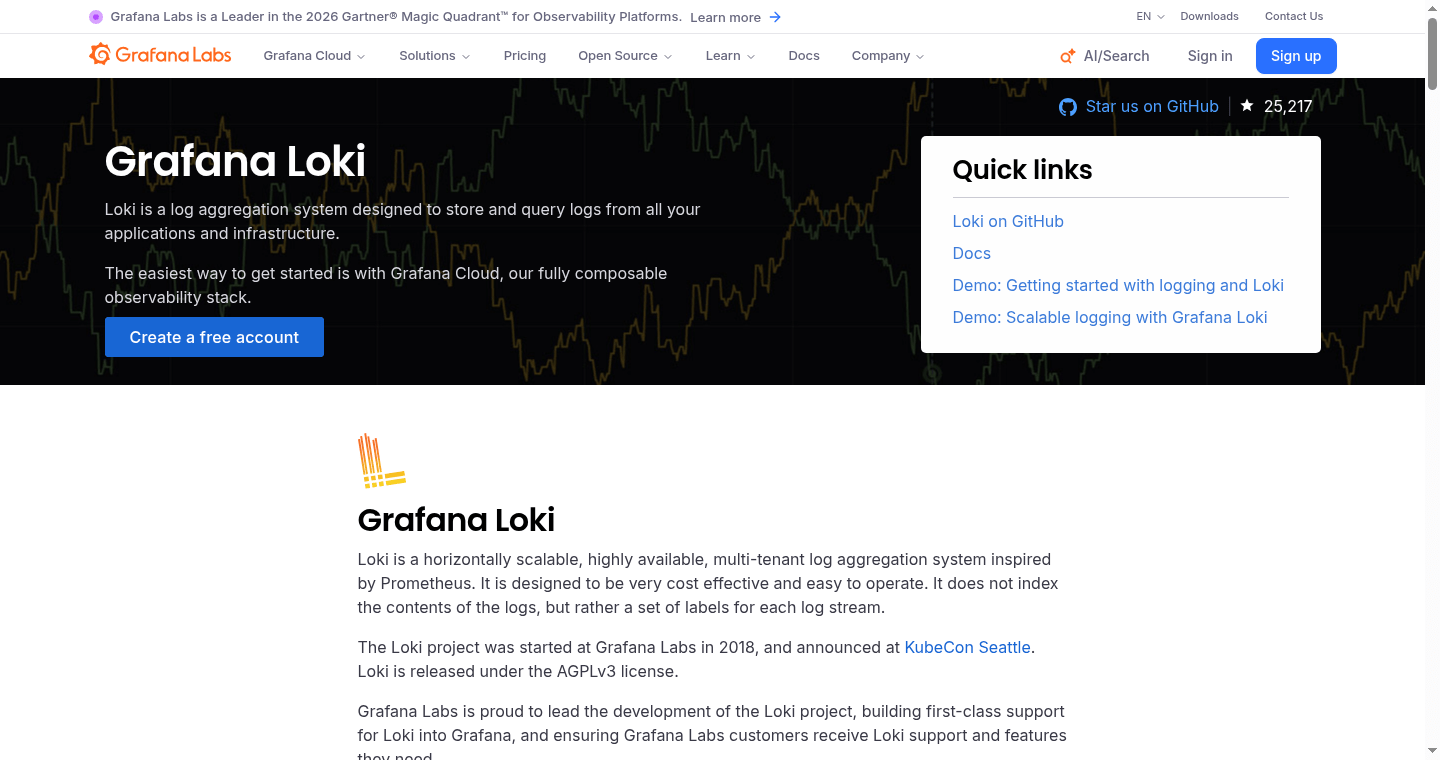
Best for: Prometheus/Grafana teams that want log aggregation tightly linked to metrics labels without indexing every field like a classic search engine.
Loki OSS is free to self-host. Grafana Cloud Logs sits on Free / Pro ($19/mo platform + usage) / Enterprise (from $25k/year commit) with Adaptive Logs features aimed at dropping low-value volume. Query model differs from Elasticsearch — excellent beside Grafana dashboards; less ideal if you need arbitrary full-text forensics at massive scale without design work.
Starting price
Loki OSS free; Grafana Cloud Free; Pro $19/mo + ingest/retain usage; Enterprise from $25k/year
Best for short
Label-based cost-efficient logs
Pricing model
OSS or Cloud platform fee + usage
Hosting model
Self-managed Loki or Grafana Cloud
Standout
Cost-aware log storage aligned with Grafana/Prometheus culture
Main limitation
Not a drop-in Splunk/Elastic query experience — design labels carefully
Best default when metrics already live in Grafana Cloud or Mimir/Prometheus
Use Adaptive Logs recommendations to cut unused patterns
Self-host Loki only if you will operate object storage and compactors
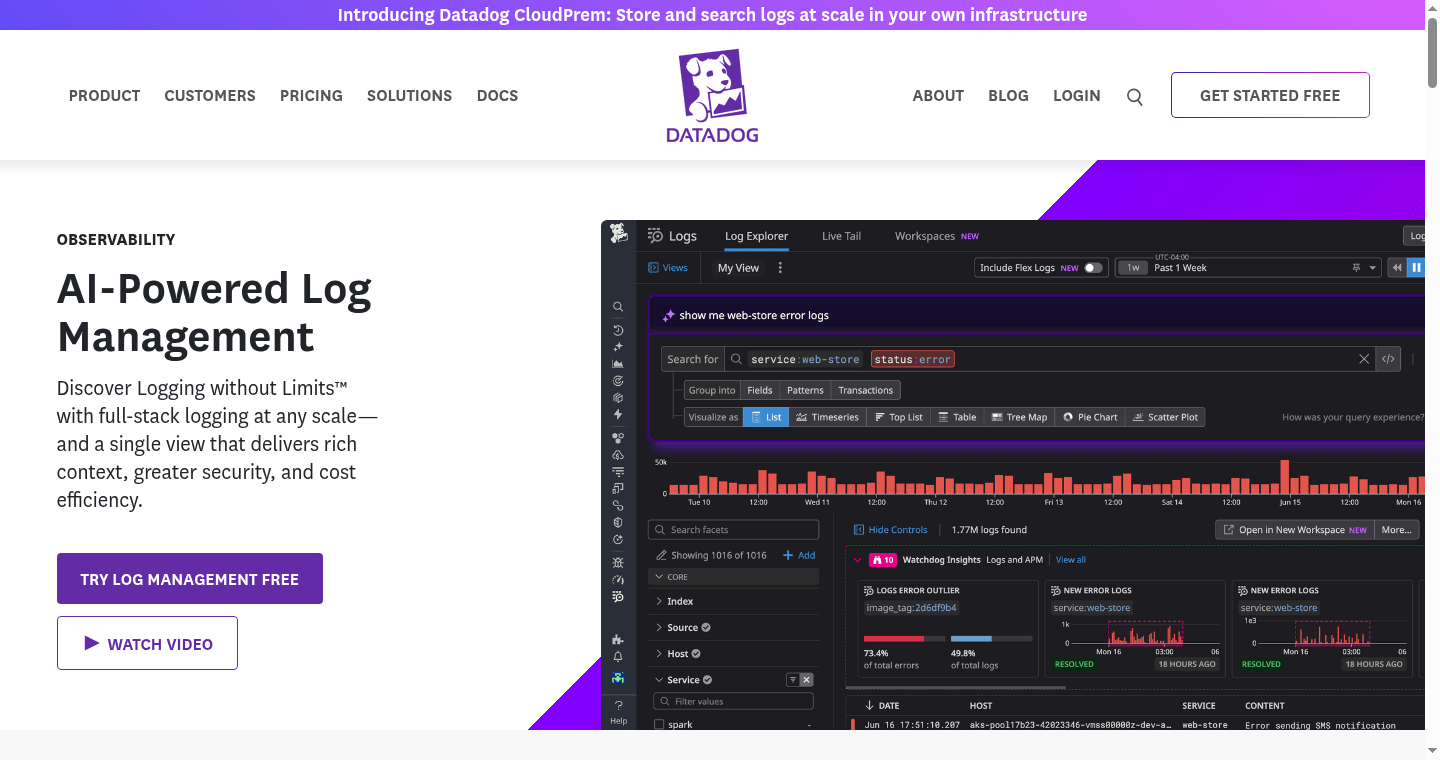
Best for: Teams already on Datadog that want Logging without Limits ingest plus selective indexing, correlated with APM and infrastructure.
Public Datadog pricing lists log ingest from about $0.10/GB and indexing (for example 15-day retention commonly listed near $1.70 per million events — verify live tiers including Flex Logs). Ingest-all/index-some is the cost-control story; custom metrics and other SKUs still stack if you use the broader platform.
Starting price
Ingest from $0.10/GB; indexing retention tiers (e.g. 15-day ~$1.70 per million events); Flex Logs options — verify datadoghq.com/pricing
Best for short
Logs next to APM/infra
Pricing model
Ingest + index/retain (and optional Flex)
Hosting model
Datadog SaaS
Standout
One-click pivots from logs to traces/metrics in the same product
Main limitation
Indexing everything by default gets expensive — governance required
Generate metrics from logs where you need long retain without full index
Archive to your object storage for rehydration patterns
Model ingest GB and indexed events separately before annual commit
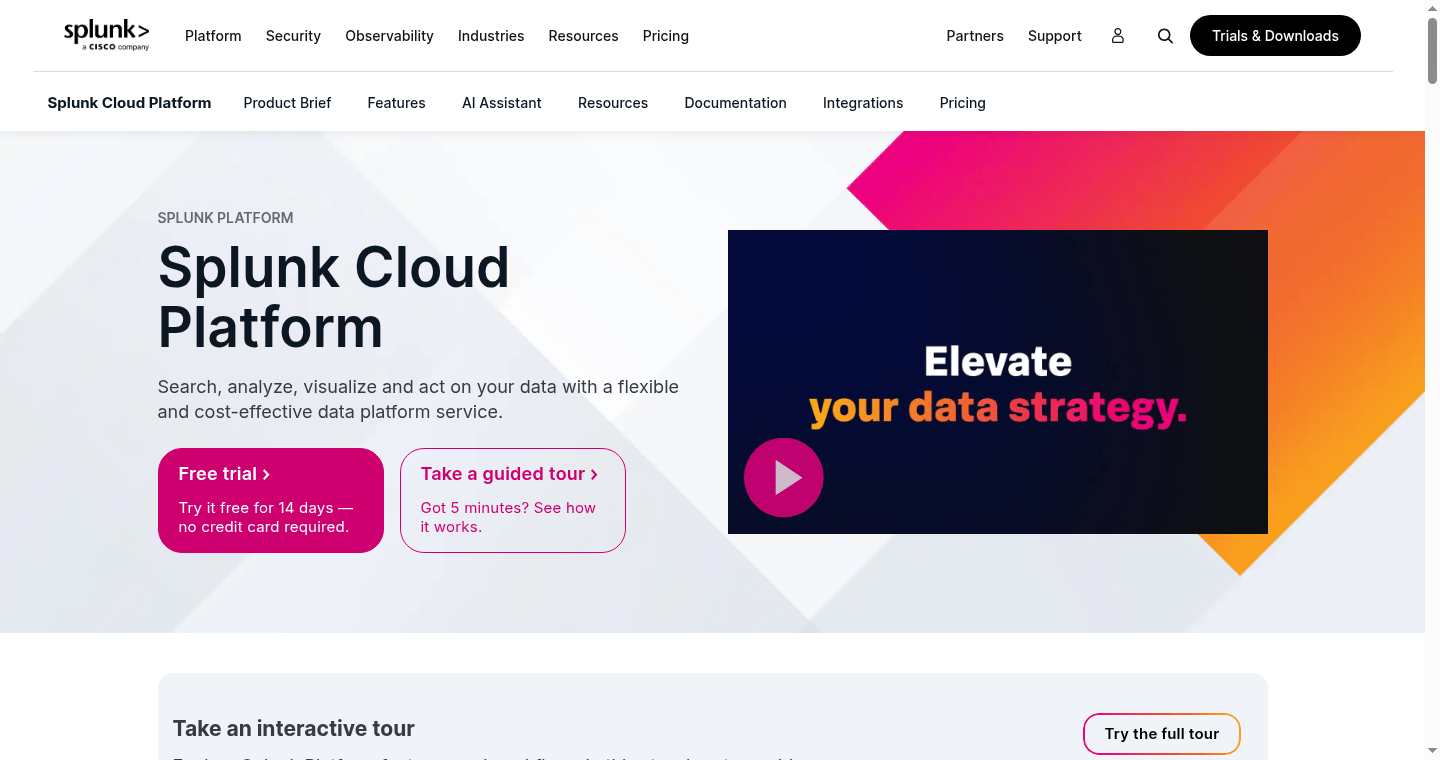
Best for: Enterprises standardized on SPL, Splunk apps and mature log/security analytics workflows that will buy via ingest or workload models.
Splunk Cloud Platform offers ingest (GB/day) and workload (SVC) commercial models described on Splunk pricing FAQs — public sticker $/GB rates are generally quote-led rather than a single self-serve grid. Budget professional services and retain thoughtfully. Strong analytics ecosystem; weaker fit if you need transparent startup SaaS pricing tomorrow.
Starting price
Splunk Cloud ingest or workload pricing via Splunk (public FAQs; typically sales-assisted) — verify splunk.com pricing
Best for short
Enterprise SPL log analytics
Pricing model
Ingest GB/day and/or workload SVCs (contract)
Hosting model
Splunk Cloud (or self-managed enterprise)
Standout
Deep SPL analytics and enterprise app ecosystem
Main limitation
Limited transparent self-serve list pricing; contracts dominate
Ask for ingest vs workload total-cost models on the same data profile
Do not confuse Splunk Observability Cloud SKUs with Splunk Cloud Platform log pricing
Fit when SPL skills and apps are already organizational standards
Best for: Smaller teams that want approachable log management next to uptime/status workflows with public modular pricing.
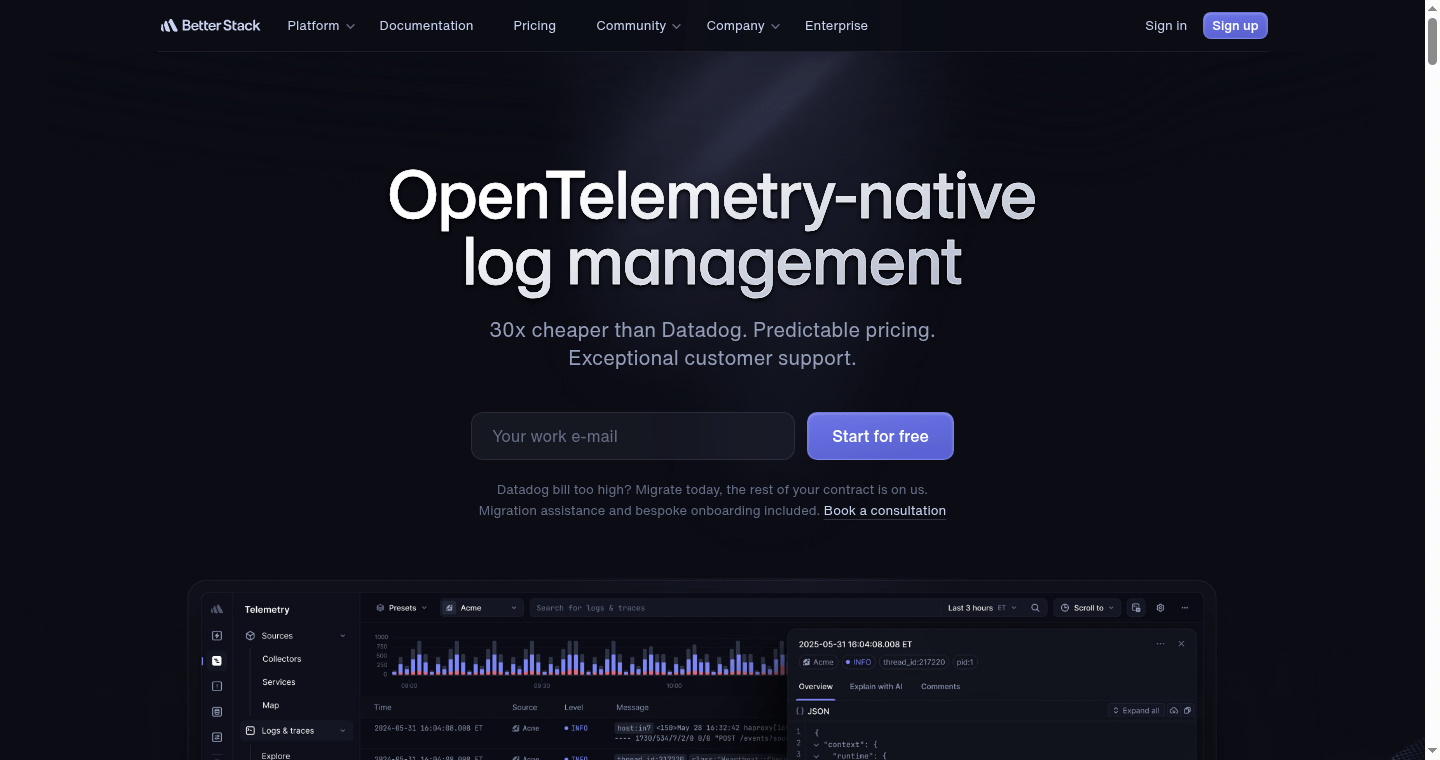
Better Stack publishes a free tier (including a small log allotment) and paid telemetry bundles plus per-GB ingest/retain rates by region (for example EU ingest commonly listed near $0.10/GB with retain fees — verify live). Responder seats and uptime modules are separate line items — read the modular price, not a single homepage “from” number. Distinct from a full enterprise SIEM.
Starting price
Free tier (limited GB); paid Nano+ bundles and per-GB ingest/retain by region (EU ingest often ~$0.10/GB) — verify betterstack.com/pricing
Start with query culture (search engine vs label/LogQL vs SPL), whether logs must sit beside APM, and whether you need transparent self-serve pricing.
Choose Elastic Cloud when flexible search and Elastic ecosystem leverage matter — and you will manage tiers/retain.
Choose Grafana Loki/Cloud Logs when Grafana/Prometheus is home base and you want cost-efficient volume with label discipline.
Choose Datadog Logs when correlation with Datadog APM/infra outweighs building a separate log stack.
Choose Splunk Cloud when SPL skills and enterprise apps are already standard and you will run a formal procurement.
Choose Better Stack when you want simpler SMB packaging and may combine logs with uptime/on-call modules carefully.
Control cost with collector-side filtering, retain tiers and “ingest much / index little” patterns where vendors support them. Fit guidance is Kurums interpretation from public pricing checked 2026-09-17.
Tip: Price the same log profile (GB/day ingest, hot retain days, query concurrency, and whether you index 100% or a subset) on each shortlisted vendor before renewing. Retain and index policy change the winner more often than UI screenshots.
How we evaluate
We compare tools on the same fields: public pricing and billing basis, free plan or trial, hosting model, standout capability, and the main limitation. Order reflects evidence for common buyer situations — not affiliate availability. We do not claim “best overall,” “market leader,” or invented market share.
Primary sources are vendor pricing and documentation pages checked on 2026-09-17 (see SOURCE-LEDGER). Third-party commentary is used only for context and labeled. Re-check every price at publish time. This article stays on operational log management — not SIEM content packs.
Frequently Asked Questions
What is the best log management software in 2026?
It depends on query culture and stack gravity. Elastic fits search-centric platforms; Loki fits Grafana cost-efficient volume; Datadog fits correlated observability; Splunk fits enterprise SPL; Better Stack fits simpler SMB needs. No single best overall winner.
How much does Datadog log management cost?
Public list pricing commonly starts near $0.10/GB ingest with separate indexing/retention rates (for example ~$1.70 per million events for 15-day — verify live). Flex Logs and archives change the math.
Is Grafana Loki cheaper than Elasticsearch?
Often for high-volume, label-oriented workloads with disciplined cardinality — not always for arbitrary full-text forensics. Model GB + query patterns on both public calculators.
Splunk Cloud vs Elastic — which should we pick?
Pick Splunk when SPL/apps/process are already enterprise-standard and you accept quote-led buying. Pick Elastic when you want Cloud calculator transparency and Elasticsearch skills.
Do we need a SIEM if we buy log management?
Operational log management ≠ SIEM. Security detection, correlation content and compliance workflows may still need a SIEM or cloud security suite — budget and own them separately.
How do we control log costs?
Filter at collectors, sample debug noise, shorten hot retain, index only high-value streams, and archive the rest. Revisit retain quarterly.
What should we test in a log platform PoC?
Ship production-like volume from one service, test the top 10 investigative queries, measure time-to-answer, and extrapolate month-2 cost with retain policy — not demo data.
Can Better Stack replace Datadog or Elastic?
For many SMB operational log + uptime needs, yes. For large-scale enterprise search/SPL or deep APM correlation, shortlist Elastic, Datadog or Splunk instead.
Last Updated: 17 September 2026 (Europe/Istanbul) · Reviewed by the Kurums Technology editorial team. This comparison is independent and informational; it is not purchasing advice. Verify pricing, features and integrations directly with each provider.
Disclosure: Kurums comparisons are editorial and informational. “Visit” links go to official vendor sites. If a link later becomes affiliate or sponsored, it will use sponsored/nofollow attributes and this disclosure will be updated. Always verify current pricing and terms on the vendor page.