
Taste Note - Amazon Corporate Governance Best Sellers
The Smartest Guys in the Room: Enron as the Permanent Governance Syllabus
A Kurums Book Taste review of The Smartest Guys in the Room for directors, auditors, and executives who want to recognize the next Enron while it is still being applauded.
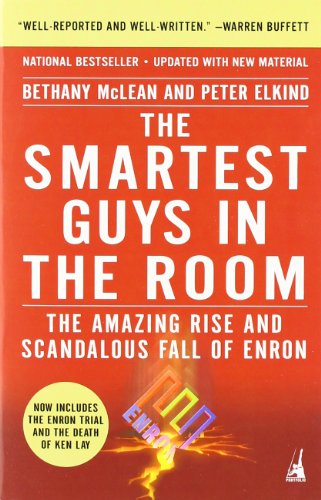
Why this book fits Kurums
Enron is the case every governance framework quietly answers, and this is its definitive account: how America's most-admired company manufactured earnings with mark-to-market accounting and off-balance-sheet partnerships while the board, the auditor, the banks, the analysts, and the press all declined to ask the obvious question - where does the cash come from?
For the Kurums Corporate Governance audience it is a working syllabus: every control a modern board relies on existed at Enron - audit committee, code of ethics, big-firm auditor, sophisticated directors - and the book shows, safeguard by safeguard, the incentives that turned each one ornamental. Pair it with Financial Shenanigans: same crime scene, complementary toolkits.
What the book argues
The rot begins with an accounting choice: mark-to-market let Enron book the entire projected profit of a twenty-year deal on signing day - making 'earnings' a function of models and assumptions, and making every quarter a treadmill requiring bigger new deals to replace the phantom profits already recognized. Onto that treadmill the culture was bolted: Skilling's rank-and-yank reviews, deal-origination bonuses with no accountability for outcomes, and an internal market for talent that rewarded aggression and exiled skeptics.
The fatal machinery was Fastow's: special purpose entities - Chewco, LJM, the Raptors - built to hedge Enron's risk with Enron's own stock, warehousing losses and debt off the balance sheet while paying Fastow himself tens of millions on both sides of the table. The board waived the conflict-of-interest policy twice to allow it. Arthur Andersen, earning consulting fees dwarfing its audit fees, kept signing. The banks structured the deals they knew were disguised loans. Analysts kept buy ratings on a company whose statements they admitted they could not understand - the actual meaning of the title.
The unraveling reads like the mechanism running in reverse: McLean's original Fortune question ('how exactly does Enron make its money?'), Skilling's abrupt resignation, Sherron Watkins's memo, the Raptors' collapse as the stock that collateralized them fell, and the death spiral of credit triggers - the debt was real even though the earnings were not. The governance lessons write themselves: complexity is a red flag, not a moat; watch cash, not earnings; incentive design is destiny; and a board that cannot explain the structure has approved something it does not govern.
Key ideas, translated to your desk
If you can't explain it, you haven't approved it
Boards ratified structures no director could sketch. Any transaction that resists a one-page plain-language explanation deserves a no.
Earnings are a story; cash is a fact
Enron reported profits for years while operations consumed cash. The income-versus-operating-cash divergence was public every quarter.
Incentives wrote the fraud
Deal bonuses without outcome accountability, ranked-and-yanked skeptics, an auditor selling consulting - every actor did what the pay design asked. Govern the incentives and the ethics follow.
Use it at work
- Adopt the plain-language rule: material transactions get a one-page explanation a non-specialist director must be able to repeat.
- Track operating cash flow against net income on every board pack - and treat sustained divergence as an agenda item.
- Review where your incentive plans pay on signing, booking, or origination rather than on outcomes - and fix the worst one.
- Never waive a conflict-of-interest policy; if the deal requires the waiver, the waiver is the finding.
Read it if
- You serve on a board, an audit committee, or advise ones that believe controls-on-paper equal controls.
- You want the narrative company to Financial Shenanigans' checklists.
- You teach or train on governance and need the case that contains every failure mode at once.
You can skip it if
- You want a short read; this is 400+ dense, reported pages.
- You know the case deeply from the documentary and coursework - though the financial detail here goes further.
- You need post-SOX regulatory analysis; the book ends at the collapse and trials.
Discover more from Kurums | Business Intelligence
Subscribe to get the latest posts sent to your email.