
Last Update: May 28, 2026
Every financial decision in a high-growth environment hinges on one fundamental question: How will our expenses react when we scale? The truth is, misclassifying a single line item can lead to disastrous projections in your EBITDA. To build a resilient fiscal strategy, you must look beyond the surface of your balance sheet. But here is the real catch: the boundary between these costs often blurs in the ‘relevant range’ of production.
What defines a fixed cost in a corporate environment?
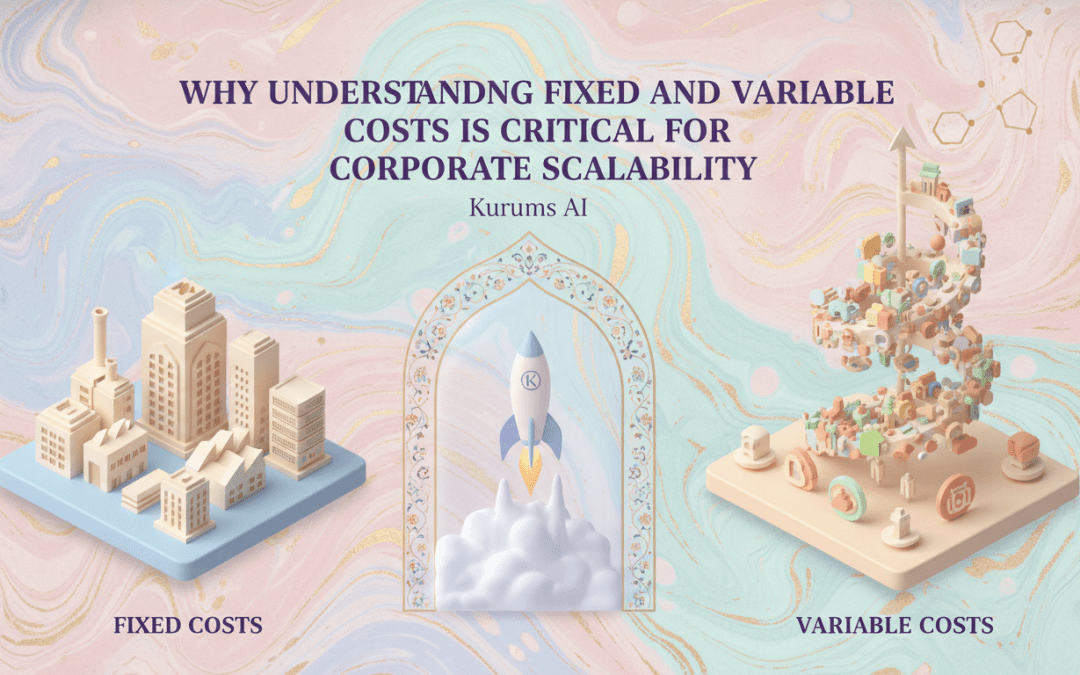
Fixed costs are expenses that do not change in response to the volume of goods or services produced within a specific period. These are often referred to as ‘overhead’ or ‘sunk costs’ in short-term accounting cycles. Even if your factory produces zero units this month, these obligations remain stagnant and must be settled to ensure business continuity.
- Commercial Lease Agreements: Monthly rent remains constant whether your office is empty or at full capacity.
- Executive Salaries: Base compensation for full-time staff is typically independent of daily sales fluctuations.
- Insurance Premiums: General liability and professional indemnity insurance usually follow a fixed annual schedule.
- Depreciation: Using straight-line methods, the value reduction of equipment is recorded as a fixed periodic expense.
How do variable costs fluctuate with production volume?
Variable costs are volume-dependent expenditures that rise or fall in direct correlation with your business activity levels. In a manufacturing or SaaS environment, these are the costs of doing business on a per-unit basis. If production stops, variable costs should, in theory, drop to zero. Understanding these is vital for calculating your marginal cost of production.
- Raw Materials: The direct ingredients or components used to create a physical product.
- Direct Labor: Wages paid to temporary or hourly staff specifically for production hours.
- Transaction Fees: Credit card processing fees or marketplace commissions that apply only when a sale occurs.
- Utilities for Production: Electricity or water used specifically by machinery during the manufacturing process.
What are the core differences between volume-dependent and constant overhead?
The primary difference lies in the sensitivity to activity levels. While fixed costs represent the ‘capacity’ to produce, variable costs represent the ‘actualization’ of that production. Comparing these requires a look at how they impact the total cost curve and the average cost per unit over time. Think about this: as your volume increases, your average fixed cost per unit drops, but your average variable cost usually stays the same.
| Feature | Fixed Costs | Variable Costs |
|---|---|---|
| Relationship to Volume | Inverse (Per Unit) | Constant (Per Unit) |
| Total Amount | Remains Constant | Changes with Activity |
| Timing of Influence | Long-term Commitments | Short-term Operational |
| Decision Focus | Budgeting & Infrastructure | Pricing & Inventory |
Why is the contribution margin the ultimate KPI?
The contribution margin is the amount remaining from sales revenue after deducting all variable costs. This figure ‘contributes’ to covering fixed costs and then generating profit. For a financial analyst, this is the most important metric for determining the viability of a product line or service. If your contribution margin is negative, every sale you make is actually losing the company money.
How do mixed costs complicate the financial analysis?
In the real world, many costs are semi-variable or ‘mixed.’ These contain both a fixed base and a variable component. A classic example is a salesperson’s compensation, which might include a fixed base salary plus a commission based on sales volume. Analyzing these requires the High-Low method or regression analysis to separate the components accurately for forecasting.
Frequently Asked Questions (FAQ)
In most cases, yes. However, in some retail environments, lease agreements include ‘percentage rent’ where the tenant pays a base fee plus a percentage of monthly revenue, making it a mixed cost.
Yes, in the long run. In accounting theory, all costs are variable in the long term because contracts expire and infrastructure can be scaled up or down.
Investors look at the degree of operating leverage. High fixed costs mean higher risk during downturns but much higher profit potential during growth phases.
Discover more from Kurums | Business Intelligence
Subscribe to get the latest posts sent to your email.