
Startup
A founder's route map across validation, product, fundraising, go-to-market, scaling and growth. Move from pillar to focused guide without digging archives.Start With The Task
Pick the job you are trying to do. Each route leads to a pillar page, topic hub, or focused category of guides.
Pillar Atlas
Every Startup pillar as a card, with live article counts from the current categories. Twenty-one Company Stories hubs come first — more than 1,100 country case studies and the deepest research libraries in this department.
Founder Exit Playbook — New Series
Founder Exit Playbook
Every way out of your startup from the founder’s side of the table: valuation, due diligence and legal prep, then eight routes — strategic sale, private equity, merger, acqui-hire, secondary, IPO, MBO/ESOP and wind-down — with 33 real cases from WhatsApp and Flipkart to Klarna, Windsurf and Quibi.
Open the playbook →How to Value Your Startup for an Exit
Multiples, comparables, the strategic premium and the waterfall from headline price to what actually reaches you.
Read the guide →Due Diligence and Legal Preparation
The data room, SPA anatomy, escrow and RWI, antitrust and the deal-killers buyers find.
Read the guide →City Startup Atlas — New Format
Shenzhen Startup Atlas
An interactive district map of the Hardware Capital: 25 companies across 10 districts, 8 clusters from drones to biotech, a 5-era timeline, filterable founding stories and fact cards — from Shekou’s 1980s experiments to Nanshan’s humanoid-robot wave.
Open the atlas →Hangzhou Startup Atlas
The Dragon City mapped: Alibaba’s lakeside-flat origin, Ant’s halted $37B IPO, Binjiang’s 72 km² of giants, the Tonglu courier cradle and the Six Little Dragons — DeepSeek, Unitree, Game Science, DEEP Robotics, BrainCo, Manycore.
Open the atlas →Bengaluru Startup Atlas
The Talent Capital mapped: HAL’s 1940 hangars, Infosys’s $250 start, Flipkart’s two-bedroom flat and the $16B Walmart exit, Zerodha’s zero-VC empire, the UPI fintech wave — plus Byju’s and Dunzo as honest warning lights.
Open the atlas →London Startup Atlas
Lloyd’s coffee house to the Shoreditch neobank wars, Revolut’s $45B, the King’s Cross AI quarter — and the listing exodus, mapped honestly.
Open the atlas →Austin Startup Atlas
Dell’s dorm room, Samsung’s $17B fab, Giga Texas and the Bastrop Musk belt — plus a record $7.19B funding year.
Open the atlas →Berlin Startup Atlas
Siemens 1847, the Rocket mafia, Ableton & Native Instruments, N26 vs Trade Republic — and Gorillas’ 22-month arc.
Open the atlas →Singapore Startup Atlas
The state-drawn one-north blueprint: Sea, Grab, Temasek’s capital, Dyson’s power-station HQ — and the Hyflux lesson.
Open the atlas →Stockholm Startup Atlas
Ericsson 1876 to Minecraft, Spotify vs piracy, Klarna’s record IPO, the Lovable AI spring — and Northvolt’s warning pin.
Open the atlas →Tallinn Startup Atlas
The e-state’s capital: Skype’s mafia and its 2025 final call, Wise & Bolt’s campuses, Cybernetica’s X-Road, Starship’s robots — and the deeptech-defense turn.
Open the atlas →Tokyo Startup Atlas
Sony’s 1946 workshop, Shibuya’s Bit Valley, Mt. Gox’s 850,000 lost Bitcoin, Sakana AI’s $2.6B sprint — and the ¥10-trillion plan to end the unicorn drought.
Open the atlas →Seoul Startup Atlas
Samsung Town’s gravity, Coupang’s $60B bell, Pangyo’s game-and-AI valley, Teheran-ro fintech — and the scars of Terra and the TMON summer.
Open the atlas →São Paulo Startup Atlas
The 1890 coffee exchange to Faria Lima’s Wall Street, Nubank’s purple rebellion, Cubo’s startup city, Osasco’s delivery giants — Nubank country mapped.
Open the atlas →Toronto Startup Atlas
The 2012 AlexNet lab, Cohere’s King West HQ, MaRS & Vector, BlackBerry’s Waterloo — and Sidewalk Labs, the smart city that died on the waterfront.
Open the atlas →Amsterdam Startup Atlas
The city that invented shares (1602): Adyen’s ≈€50B fintech, Booking’s campus, the Zuidas floors, Picnic’s milk-floats — and VanMoof’s lesson.
Open the atlas →Paris Startup Atlas
The Sorbonne’s eight centuries of talent, Mistral’s $14B champion, Station F’s rail-hall campus, Ledger’s Marais vault — the republic’s AI coronation.
Open the atlas →Zurich Startup Atlas
ETH’s 530 spin-offs, Google’s biggest campus abroad, Climeworks, Zug’s Crypto Valley — and the weekend that ended Credit Suisse.
Open the atlas →Sydney Startup Atlas
The lab that patented Wi-Fi, the team that built Google Maps, Atlassian’s credit-card start, Canva’s Surry Hills empire — and Nuix’s float-to-lawsuit.
Open the atlas →Munich Startup Atlas
TUM’s 52-unicorn engine, Celonis, Helsing’s $18B defense bet, Isar Aerospace’s rockets — and the Wirecard and Lilium collapses.
Open the atlas →Dubai Startup Atlas
Dubai Internet City’s Careem, Souq and Tabby, DIFC’s fintech hive, Kitopi’s cloud kitchens — and the Abraaj collapse.
Open the atlas →Miami Startup Atlas
Cruise giants, Citrix and Chewy, the ‘How can I help?’ migration, Citadel’s Brickell HQ — and the arena that wore FTX’s name.
Open the atlas →City Startup Atlas — Series Home
The format explained, the methodology, and twenty atlases live — from Shenzhen to Miami — with San Francisco, New York, Boston and Seattle on the research desk.
Open the series →Company Stories Clusters
Canada Company Stories
The Big Six banks and Brookfield’s US$1 trillion machine, Suncor and the oil sands, Shopify and Constellation, Loblaw and the Hudson’s Bay collapse, CPKC, Magna, the Thomsons and the Westons, and the 2025 tariff war with the United States.
Open hub →Netherlands Company Stories
ASML’s EUV monopoly and the Nexperia seizure, Shell’s exit to London, ING and ABN AMRO, Ahold Delhaize, Heineken, Action, the Port of Rotterdam, the nitrogen crisis, the Brenninkmeyers and the headquarters exodus.
Open hub →New Zealand Company Stories
Fonterra’s NZ$4.22bn brand sale, Zespri’s kiwifruit single desk, the Australian-owned Big Four banks, the gentailers and Tiwai Point, Xero and Rocket Lab, Fletcher Building’s break-up, Mainfreight, Ngāi Tahu and the US tariff saga.
Open hub →Vietnam Company Stories
Samsung’s fifth of all exports, Vietcombank’s valuation, EVN’s loss-making grid, VinFast’s $10bn gamble, the Van Thinh Phat fraud, Viettel in ten countries, the durian boom, Vietjet vs the flag carrier and the 2025 tariff shock.
Open hub →Spain Company Stories
Inditex’s stockless model and Santander’s 180 million customers, Iberdrola’s wires and the blackout, Mercadona’s family profit machine, Real Madrid past €1bn, the Botín and Ortega dynasties, Puig’s IPO, the BBVA–Sabadell battle and the thirty-year Latin American bet.
Open hub →Philippines Company Stories
Ayala since 1834 and SM from a shoe store, Jollibee beating the global giant, a million outsourcing jobs, the remittance economy, Meralco and the region’s most expensive power, ICTSI’s ports on six continents, GCash banking the unbanked and the sixty-forty rule.
Open hub →South Africa Company Stories
Anglo American and De Beers, Standard Bank and FirstRand, Shoprite’s mass market machine, Naspers and the Tencent bet, Sasol and Eskom, the empowerment scorecard, the Oppenheimer exit, TymeBank and Yoco, and the export corridors that decide what the country earns.
Open hub →Taiwan Company Stories
TSMC and the foundry model, Foxconn’s assembly empire, MediaTek and ASE, Largan’s lens margins, Formosa’s integrated chain, Giant and the Taichung cluster, Morris Chang and Terry Gou, Gogoro and the chip geopolitics that turned manufacturing into statecraft.
Open hub →Brazil Company Stories
Itaú and the banking fortress, Nubank and Pix, Vale and Petrobras, JBS and the agro superpower, Embraer, the Lemann doctrine, Faria Lima’s venture machine and the China trade corridor.
Open hub →China Company Stories
Eleven pillars of case studies — tech giants, semiconductors, fintech, EV and green tech, gaming, robotics and the founders behind them.
Open hub →Germany Company Stories
Volkswagen and the supplier crisis, Siemens and the Mittelstand, BASF and Bayer, the three-pillar banks, the Energiewende, SAP and Wirecard, Aldi and Schwarz, codetermination and foundation ownership.
Open hub →France Company Stories
LVMH and luxury pricing power, Airbus and Safran's razor-blade engines, TotalEnergies and EDF's nuclear fleet, BNP Paribas, Stellantis and the merger machine, L'Oréal and foundation control, Vivendi's break-up, and la French Tech — Mistral AI, Doctolib, Qonto and Ledger.
Open hub →Italy Company Stories
Ferrari, Lamborghini and racing brand power, Gucci, Prada and the fashion maisons, Ferrero and Barilla, Eni and Enel, Generali and the banks, Italian design icons, Brembo and the hidden-champion machine builders, the Agnelli and Del Vecchio dynasties, Bending Spoons, Satispay and Scalapay, and the “Made in Italy” brand.
Open hub →Qatar Company Stories
Sovereign wealth, energy majors, aviation and the state-backed groups driving Qatar's diversification away from hydrocarbons.
Open hub →Singapore Company Stories
Temasek and GIC, DBS and the three banks, Singapore Airlines and PSA, Sea and Grab, chips and chemicals — how a city-state built an economy on certainty rather than resources.
Open hub →Australia Company Stories
Mining and banking, LNG and supermarkets, superannuation, Atlassian and Canva, CSL and the housing crisis — how a market of 27 million builds global companies.
Open hub →India Company Stories
IT services and BPO, conglomerates, fintech, pharma, Bollywood, unicorns and the diaspora founders shaping India Inc.
Open hub →Japan Company Stories
Keiretsu structures, automotive and electronics giants, robotics, trading houses and the monozukuri mindset behind Japanese scale.
Open hub →Malaysia Company Stories
Petronas and palm oil, Islamic finance, electronics and semiconductors, AirAsia and Grab, and the tycoon dynasties behind Malaysian capital.
Open hub →UK Company Stories
Arm, Rolls-Royce and AstraZeneca to Revolut, DeepMind and Dyson — the companies, founders and forces behind Britain’s economy.
Open hub →Portugal Company Stories
Banking, energy, retail, textiles, tourism, construction, cork, tech, automotive, dynasties and Lusophone trade — fifty-five stories across eleven pillars.
Open hub →Core Founder Pillars
Renewable Energy
Country strategies, permitting, investor incentives, financing and software comparisons across the US, Europe and Asia’s biggest clean-energy markets.
Open hub →Space Economy
Company stories, industry news, startup news and seed and venture funding rounds across launch, satellites and in-orbit services.
Open hub →Arts & Creative Economy
How art creates economic value: the creative economy by the numbers, art’s effect on entrepreneurs and HR, country playbooks, the business of live music, museums, cinema, the stage and the art market, plus the Bollywood and Korean film industries.
Open hub →Sports Economy
Sport read as an economy: the global sports industry by the numbers, athlete-founders, sport inside companies, country playbooks, and the business of football, stadiums, media rights, sponsorship and sports finance.
Open hub →E-Commerce
Types of e-commerce, the market metrics that matter, marketplaces by country, the tools to open an online shop and how to find wholesale suppliers, with terms decoded and the company stories behind the platforms.
Open hub →Startup Growth
Retention, activation and the compounding loops behind durable growth — the largest cluster in this department.
Open pillar →Trade Attaches & Incentives
Country-by-country export desks, commercial attaché contacts and the government incentive programmes founders can actually claim.
Open pillar →Tools & Comparisons
Head-to-head comparisons of the software founders actually pay for, with pricing, fit notes and direct links.
Open pillar →Company Formation
Entity choice, incorporation mechanics and the founder paperwork that has to survive investor diligence.
Open pillar →Product & PMF
Finding product-market fit, reading the signals honestly, and recognising when you have not found it yet.
Open pillar →Building the Product
MVP scope, build-versus-buy calls and shipping cadence for teams without a platform group.
Open pillar →Go-to-Market & Traction
First customers, channel selection and the motions that turn one-off deals into repeatable pipeline.
Open pillar →Idea & Validation
Pressure-testing an idea before you spend a year on it — problem interviews through to smoke tests.
Open pillar →Scaling & Operations
Process, hiring and systems for the stage where informal coordination quietly stops working.
Open pillar →Funding & Investment
Rounds, valuations, dilution and what an investor is actually underwriting when they wire the money.
Open pillar →AI Tools for Founders
Where AI tooling genuinely removes work from a founding team — and where it only adds review overhead.
Open pillar →Legal for Startups
Founder agreements, IP assignment, vesting schedules and the contracts worth paying a lawyer for.
Open pillar →All Startup Pillars
A compact index of all 56 hubs and categories under Startup, ordered by depth. Counts are live from WordPress.
Startup terms, translated.
Cap tables, dilution, pre- and post-money, product-market fit and pivots: founder vocabulary without the founder mystique.
Synergy, Decoded: What It Actually Means
Synergy is the extra value created when two businesses or teams combine, so that the whole is worth more than the parts added up. In mergers and acquisitions it usually means specific savings or extra sales the combined company expects to get, and it is often the main reason given for paying a premium for a deal.
Valuation, Decoded: What It Actually Means
Valuation is the estimated value of a company, usually expressed as a single price for the whole business. For public companies it falls out of the share price. For private companies and startups it is agreed between buyers and sellers, often during a funding round, using methods like revenue multiples, comparable deals and discounted cash flow.
Unit economics, Decoded: What It Actually Means
Unit economics is the revenue and cost of a single unit of your business, such as one product sold, one order delivered or one customer over their lifetime. It shows whether each unit makes or loses money before fixed costs like rent and head office salaries, and whether growing bigger will make the business healthier or simply lose money faster.
Test your Startup skills in two minutes
Free browser games built on the same topics as our Startup guides. Each one teaches a single idea by letting you make the call.
Sign in to save your XP and streak, and see where you stand on the leaderboard.
Latest Startup Articles
New guides published under Startup, refreshed automatically as articles go live.
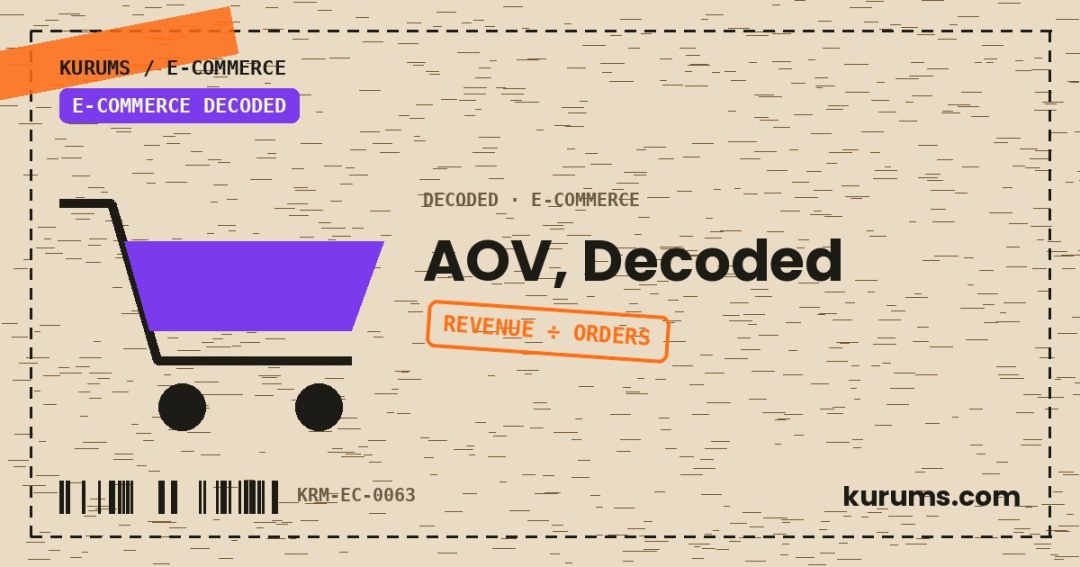
AOV, Decoded: What It Actually Means
How much a customer spends each time they check out. AOV, average order value, is total revenue divided by the number of orders in a period. It tells you the size of a typical basket. Because the cost of
Take rate, Decoded: What It Actually Means
The platform’s cut of every sale. Small percentage, entire business model. Take rate is the share of each transaction’s value that a marketplace or payment platform keeps as its own revenue. It is calculated as platform reven

GMV, Decoded: What It Actually Means
The total price tag of everything sold. Not the same as what the company keeps. GMV, gross merchandise value, is the total value of goods sold through a platform or store over a period, before subtracting fees, discounts, returns
Faire vs Ankorstore (2026): Wholesale Marketplaces for Independent Shops and Brands Reviewed
Two marketplaces changed how independent shops buy stock. How Faire and Ankorstore work, what brands pay, what retailers get, how the fee models diverged in 2026 and which one fits your side of the counter.
Alibaba vs 1688 vs Made-in-China vs DHgate vs Global Sources: China Wholesale Platforms Reviewed
Alibaba.com, 1688, Made-in-China, DHgate and Global Sources serve different buyers. A review of each on price level, minimum order, buyer protection and effort, and which to use at each budget.
How to Find Wholesale Suppliers for an Online Store: Types, MOQs, Vetting and Negotiation
Where online sellers actually find suppliers, how the supply chain’s layers differ in price and minimums, and a step-by-step vetting and negotiation process that protects your first order.
WooCommerce Review (2026): What ‘Free’ Really Costs, Pros, Cons and Who It Suits
WooCommerce charges nothing for the software and no share of your sales. The bill arrives as hosting, extensions, payment fees and maintenance time. A clear-eyed look at what it costs and who it suits.
Shopify Review (2026): Pricing, Real Costs, Pros, Cons and Who Should Use It
What Shopify costs in 2026 once fees and apps are counted, where it is strong, where it is weak, and how to tell whether it is the right platform for your store.
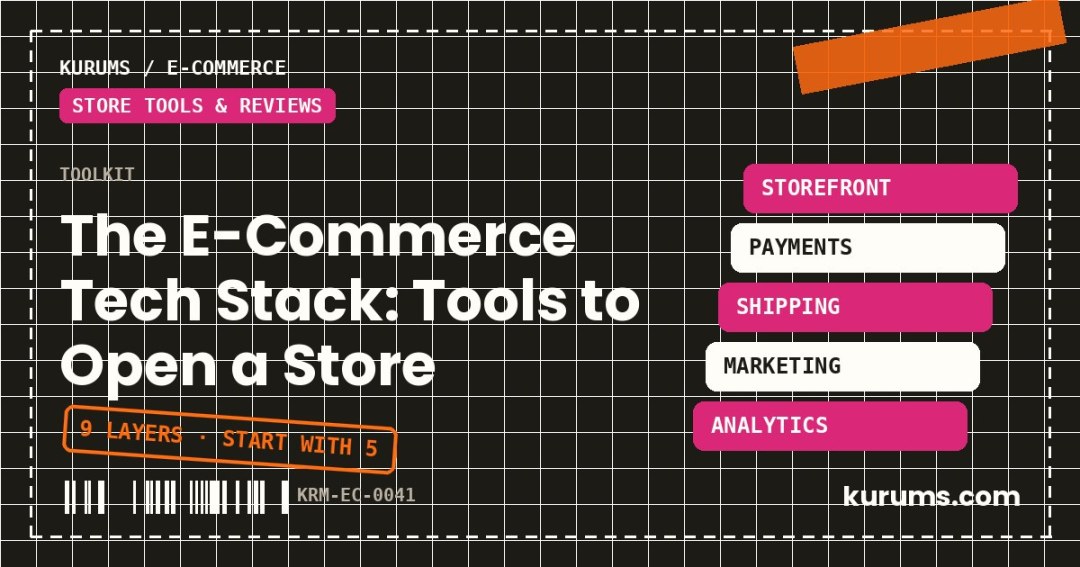
The E-Commerce Tech Stack: Every Tool You Need to Open an Online Store (and What to Skip)
Nine layers, in the order you should set them up: store platform, domain, payments, shipping, tax and invoicing, email, reviews, analytics and accounting. What each does, the leading tools, and what a new store can skip.
Kurums Book Taste
The Startup Shelf
Kurums Book Taste is our business-book review desk: every title gets a Taste Note - what the book argues, and exactly how to use it at work - and curated Tasting Menus chain them into reading routes. This is the shelf we keep stocked for Startup teams.
Use it to turn a business idea into cheap, fast experiments instead of one expensive launch.
Taste Note - Book TasteZero to OnePeter Thiel with Blake MastersRewrite your pitch's market slide: name the small market you will dominate first, not the trillion-dollar one you will touch.
Taste Note - Book TasteThe Hard Thing About Hard ThingsBen HorowitzWrite the layoff protocol before you need it: decision speed, manager training, survivor communication.
Taste Note - Book TasteThe Mom TestRob FitzpatrickRewrite your discovery script: three past-behavior questions, zero idea-mentions, one commitment ask.
Taste Note - Book TasteShoe DogPhil KnightBuild the Blue Ribbon stress test: model your cash position if revenue doubles and payment terms stay fixed.
Taste Note - Book TasteBlitzscalingReid Hoffman and Chris YehRun the growth-factor/limiter audit on your business and write the verdict: blitzscale, fast-scale, or efficient-growth.
Taste Note - Book TasteThe E-Myth RevisitedMichael E. GerberWrite the operations manual for your three most owner-dependent processes this month.
Taste Note - Book TasteFounders at WorkJessica LivingstonRead three interviews per week as founder calibration - before decisions, not after.
Taste Note - Book TasteVenture DealsBrad Feld and Jason MendelsonBuild the cap-table waterfall model now, before any negotiation, and stress it at three exit scenarios.
Taste Note - Book TasteThe Cold Start ProblemAndrew ChenDefine your atomic network precisely - who, how many, what density - and your saturation plan for it.
Taste Note - Book TasteTractionGabriel Weinberg & Justin MaresRun a Bullseye workshop: brainstorm all nineteen channels for your business and rank them into three rings.
Taste Note - Book TasteThe Four Steps to the EpiphanySteve BlankList your top ten business-model hypotheses and mark each as tested, partly tested or untested this month.
Taste Note - Book TasteDisciplined EntrepreneurshipBill AuletRun a two-hour workshop that ends with one named beachhead market and a written persona, then reject every feature request that does not serve that persona.
Taste Note - Book TasteBusiness Model GenerationAlexander Osterwalder & Yves PigneurRun a 90-minute canvas session with the founding team and photograph the result as version one.
Taste Note - Book TasteThe Founder's DilemmasNoam WassermanWrite down whether your priority is building value or keeping control, and share that with your co-founders before the next funding conversation.
Run the numbers before the meeting
10 free Startup calculators and templates. Type your figures, get a one-page result you can copy or print. No sign-up.
Looking for something else? Browse all 110 business tools across ten departments.