
Vendor management software for supplier onboarding, risk and performance
Software for onboarding suppliers, keeping supplier records accurate, assessing third-party risk and measuring supplier performance, from supplier information management to third-party risk and relationship platforms. Sponsored listings are paid placements ordered by daily bid; every other company below is listed free by our editors.
Sponsored listings
Claim #1 · $5/dayPick your daily bid and 7, 15 or 30 days, pay once through iyzico, and you are live the moment the payment clears. No account to create first, no subscription, no stored card.
Today's board
Paid today · resets 00:00 UTC · all categoriesAll vendor management solutions
Free listings · A to Z · sponsor yours from $5/dayAravo
Third-party risk and compliance management platform for regulated, complex organisations.
Coupa Supplier Management
Supplier onboarding, information and risk management within Coupa's spend platform.
EcoVadis
Business sustainability ratings used to assess suppliers' environmental, social and ethics practices.
Gatekeeper
UK vendor and contract lifecycle management with supplier portal and workflows.
Graphite Connect
Supplier onboarding network that collects, verifies and maintains vendor data and documents.
HICX
Supplier experience and data management platform from the UK for large enterprises.
Interos
Supply chain risk intelligence mapping multi-tier supplier networks and continuous risk signals.
Kodiak Hub
Swedish supplier relationship management suite for performance, risk and sustainability.
OneTrust Third-Party Management
Third-party risk module covering privacy, security and ESG due diligence on vendors.
ProcessUnity
Third-party risk management software for assessments, monitoring and vendor due diligence.
SAP Ariba Supplier Management
Supplier lifecycle, onboarding and performance management within SAP's spend management portfolio.
TealBook
Supplier data foundation that enriches and cleans supplier records for procurement systems.
Venminder
Third-party risk management software and assessment services, popular with financial institutions.
Sell in this category? List your product — from $5/day, one payment, no account or stored card. How it works.
What does vendor management software actually do?
Vendor management software keeps a reliable, shared record of every supplier the organisation works with, and manages what happens to that supplier over time. Typical capabilities include a self-service onboarding portal, collection of tax, bank, insurance and compliance documents, approval workflows before a supplier can be paid, periodic risk assessments and performance scorecards.
The problem it solves is usually fragmentation. Supplier details live in the ERP, questionnaires in email, certificates in shared drives and performance notes in someone's head. When an auditor, regulator or customer asks which suppliers handle personal data or have expired insurance, nobody can answer quickly.
Good vendor management also protects payments. Verified bank details, controlled changes and segregation of duties reduce the risk of fraudulent bank-change requests, one of the most common causes of misdirected supplier payments.
It also supports customer and regulatory demands. Many buyers now require evidence of how their own suppliers are vetted, from data protection to sustainability, and a well-maintained vendor record makes those requests a routine export rather than a scramble.
Do you need supplier information management, third-party risk management or supplier relationship management?
Vendors use overlapping labels, so start from the question you most need answered.
| Focus | Main question it answers | Typical fit |
|---|---|---|
| Supplier information and onboarding | Is this supplier's data complete, verified and approved for payment? | Procurement and AP teams with messy supplier masters or slow onboarding |
| Third-party risk management (TPRM) | Does this vendor create security, privacy, regulatory or financial risk for us? | Banks, insurers, healthcare and any business sharing sensitive data with vendors |
| Supplier relationship and performance management | Are key suppliers delivering on quality, cost, delivery and sustainability? | Manufacturers and companies with a small number of strategic suppliers |
Larger organisations often need all three, but not necessarily from one vendor. Decide which system owns the supplier master record and make the others feed it, rather than creating several competing supplier lists.
What should you compare before you shortlist?
Onboard a few real suppliers during evaluation, including one reluctant one.
| Criterion | What to ask |
|---|---|
| Supplier portal | Can suppliers register, upload documents and update details without accounts they must pay for? |
| Data validation | Does it verify tax IDs, bank accounts and sanctions lists, or just store what suppliers type? |
| Risk tiering | Can you apply different questionnaires and review frequencies by risk level and category? |
| Continuous monitoring | Are there alerts for expiring documents, adverse news, financial distress or cyber signals? |
| Performance scorecards | Can internal stakeholders rate suppliers and combine ratings with delivery and quality data? |
| ERP and P2P integration | Does the approved supplier record sync to your ERP, and are bank-detail changes controlled? |
| Audit trail | Can you show who approved each supplier, what was checked and when? |
Ask vendors how suppliers are notified and chased, and what share of invited suppliers typically complete onboarding without manual follow-up. Supplier completion rates drive both the speed and the cost of the programme.
How is vendor management software priced?
Pricing usually scales with the number of suppliers managed or assessed, sometimes combined with internal user counts. Third-party risk tools may charge by the number of vendors in scope and add fees for external risk data feeds, security ratings or completed assessments delivered as a service. Supplier management modules inside procurement suites are typically bundled into wider contracts.
Content subscriptions add up. Sanctions screening, financial health scores, cyber ratings and sustainability ratings are often licensed separately or by the vendor, so ask exactly which data sources are included and what each additional monitored supplier costs.
Implementation effort sits mostly on your side: defining risk tiers, writing questionnaires, cleaning the existing supplier list and agreeing who approves what. Vendors can supply templates, but expect internal workshops with procurement, finance, legal and security before launch.
What usually goes wrong?
Questionnaire overload is the most common failure. Organisations send the same long security and compliance questionnaire to every supplier, from cloud providers to the office florist. Suppliers stall, onboarding slows and business teams start bypassing the process. Tier suppliers by risk and ask for only what is proportionate.
The second problem is a one-off clean-up that is never maintained. Teams onboard everyone into the new system at launch, then stop reviewing. Certificates expire, contacts leave and risk ratings go stale. Set review cycles, automated reminders and a named owner for each critical supplier.
Third, the platform does not connect to payments. If a supplier can still be created directly in the ERP, or bank details changed by email, the controls are cosmetic. Close those back doors before you rely on the system.
Finally, performance scorecards collapse without real input. Ask internal users for a few quick ratings at set intervals rather than long annual surveys.
Frequently asked questions
Is vendor management software the same as a vendor management system (VMS) for contingent labour?
No. A contingent workforce VMS manages temporary staff, contractors and staffing agencies. Vendor management software in this category covers suppliers of goods and services generally: onboarding, data, risk and performance.
Who should own vendor management: procurement, finance or risk?
Usually procurement owns the process, finance owns payment-related data such as bank details, and risk or information security owns assessment standards. The software should support these roles with clear approvals rather than one team doing everything.
How often should suppliers be reassessed?
It depends on risk. Critical or high-risk suppliers are commonly reviewed annually or monitored continuously, while low-risk suppliers may only need document checks when certificates expire or contracts renew. Automated monitoring can then trigger an early review when something changes.
Can small companies benefit from vendor management software?
Yes, particularly if they handle customer data or operate in regulated sectors where clients ask about their suppliers. Smaller firms often start with an onboarding and document-tracking tool before adding formal risk assessments. Industry questionnaires and shared assessment networks can also reduce the burden on both sides.
How this directory is compiled
Every company on this page was added by our editors from publicly available information: the product name, what it does in one line, and a link to the vendor's own site. No company paid to be listed in the free section, none was asked for approval, and inclusion here is not a recommendation — it is a starting point for a shortlist you should verify yourself.
The block at the top of the page is different and is labelled as such. Positions there are paid: a company chooses a daily bid and a number of days, pays once, and sits above the free listings for that period, ordered by bid. That is advertising, it is disclosed on every listing, and it has no influence on our editorial comparisons or on the Kurums Trust badges, which are earned against published criteria and are never for sale.
Pricing, feature and availability details change constantly in these categories, so we deliberately keep vendor descriptions here short and factual, and leave verified pricing to the dated editorial comparisons. Check the vendor’s own pricing page before you make a decision, and treat anything you read in a directory — including this one — as a list of candidates rather than an answer.
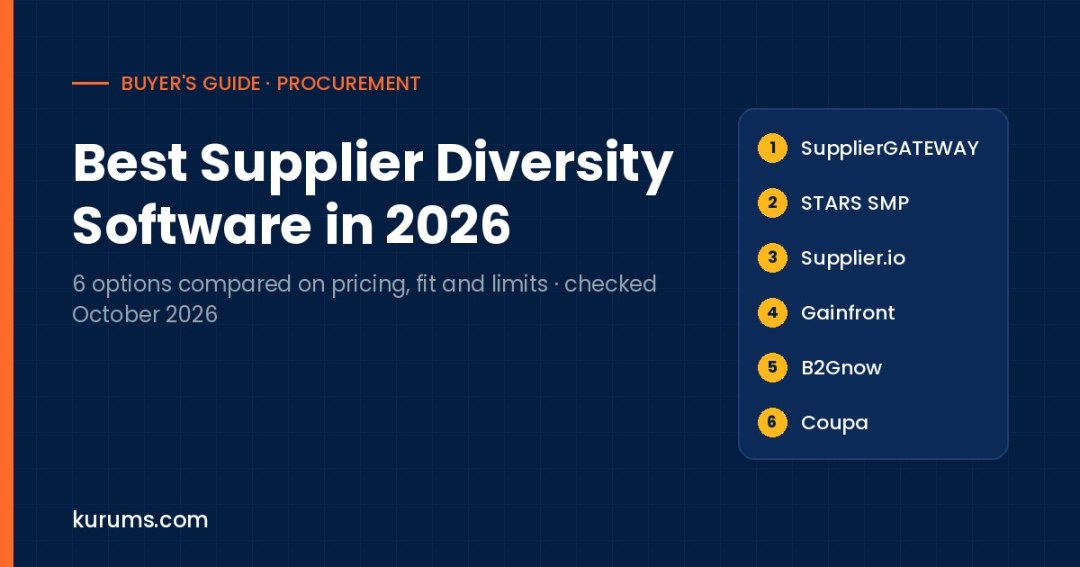
Best Supplier Diversity Software in 2026: Spend and Tier 2 Tools Compared
Six supplier diversity and small business spend platforms compared on pricing, certification data, Tier 2 reporting and fit, with a neutral note on the changing US policy context.
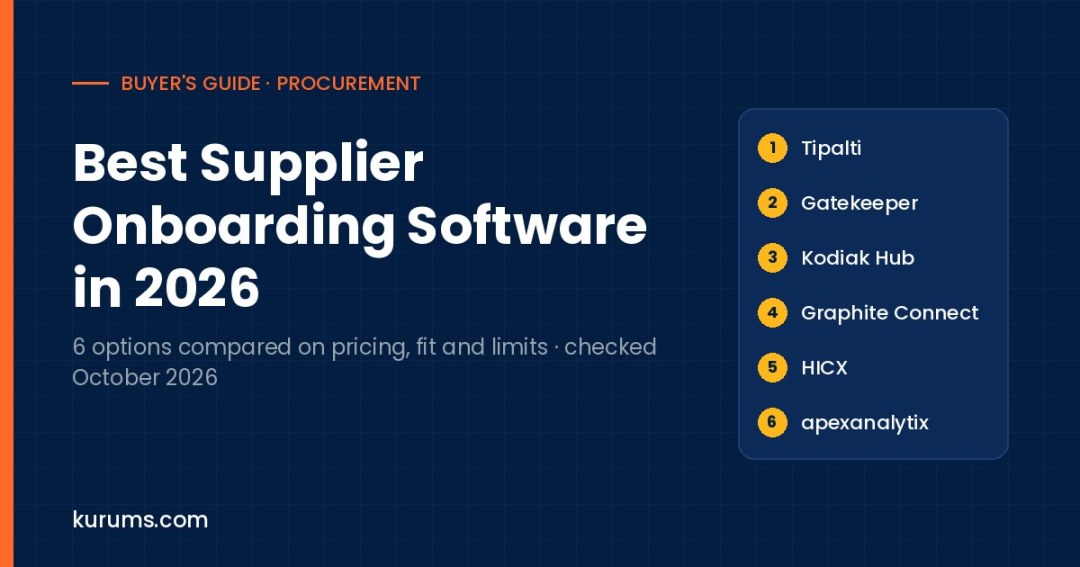
Best Supplier Onboarding Software in 2026: Portals and Validation Compared
Six supplier onboarding and supplier information management tools compared on pricing, portals, bank and tax validation and ERP sync, with prices checked in October 2026.
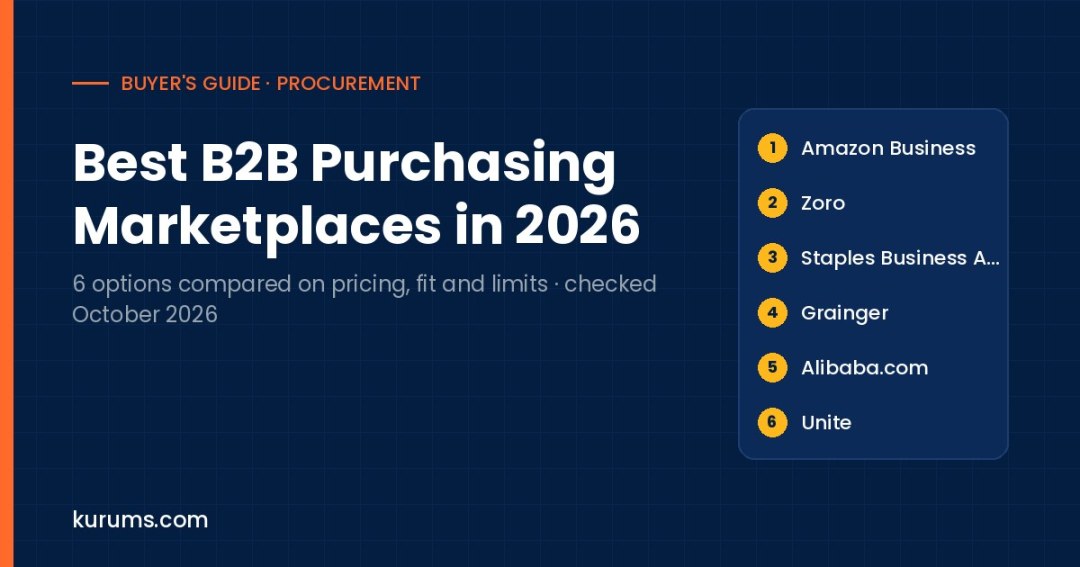
Best B2B Purchasing Marketplaces in 2026: Tail Spend Options Compared
Six business buying marketplaces and distributor platforms compared on membership fees, payment terms, eProcurement integration and catalog fit, with prices checked in October 2026.