
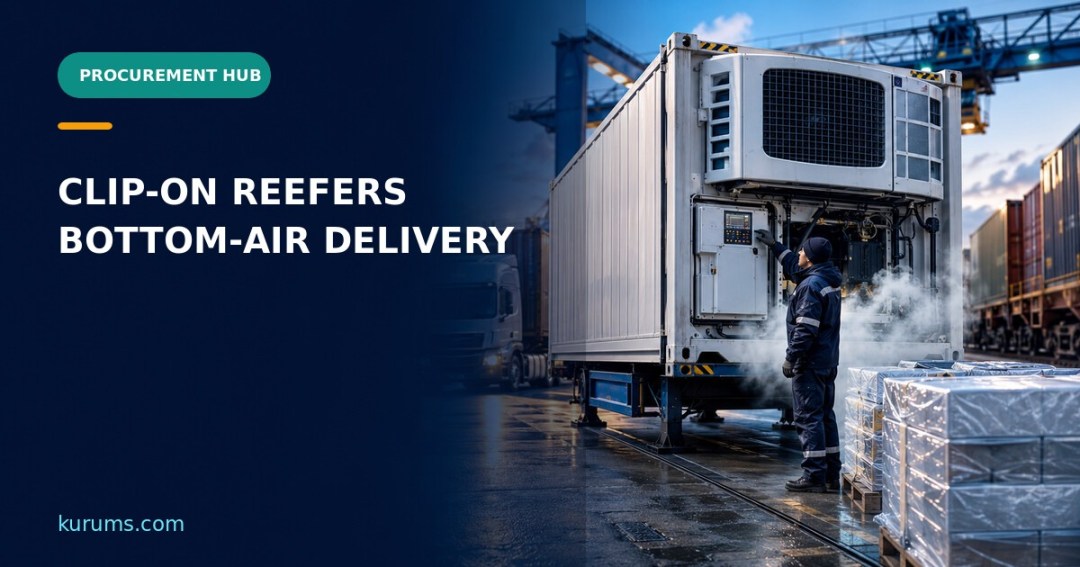
Clip-on units add refrigeration to an insulated container or equipment, while bottom-air delivery controls airflow through a temperature-controlled container. Procurement should match the equipment to cargo, ambient conditions, power, airflow, set point, alarms, maintenance, monitoring and recovery evidence.
- Define cargo temperature range, set point, ventilation, power, ambient conditions and transit duration before selecting equipment.
- Verify clip-on compatibility, fit, capacity, fuel or electrical supply, alarm, maintenance and backup arrangements.
- Distinguish supply-air, return-air and actual commodity temperature in the monitoring plan.
- Use pre-trip, connection, alarm, event, calibration, handoff and receipt evidence for claims and continuous improvement.
Why Equipment Terms Matter
The SSDER glossary describes CLIP-ON as refrigeration equipment that can be attached to an insulated container and BOTTOM-AIR DELIVERY as the arrangement that circulates air in a temperature-controlled container. These terms describe equipment features, not a guarantee that the cargo will stay within its required temperature range.
The procurement specification must begin with the product. State allowable product range, set point, ventilation, respiration or heat load, packaging, transit time, ambient exposure, power availability, alarm response and acceptable excursion before choosing a unit.
Match Clip-On Capacity and Compatibility
A clip-on unit should be checked for container or equipment interface, dimensions, connection, electrical or fuel supply, cooling capacity, heating, humidity, airflow, remote monitoring, alarms and service coverage. Confirm the unit can maintain the required range under the route’s highest and lowest ambient temperatures.
Set a pre-trip inspection: structural condition, door seals, drain, filters, sensor calibration, cable or plug, fuel or battery, set point, alarm and emergency contact. A unit that fits physically but cannot exchange air or maintain power is not a usable solution.
Control Bottom-Air Delivery and Loading
Bottom-air delivery depends on the floor, T-floor or airflow path, package design, stowage pattern, return-air space and obstruction control. The shipper should follow the equipment and cargo-loading plan so cartons do not block the air path or sit outside the intended thermal envelope.
The CTU Code explains why commodity temperature, air temperature, airflow and heat ingress should be understood separately. Define who approves a changed pallet pattern, overpack, vent setting or loading density.
Build Monitoring, Alarm and Recovery Controls
Require pre-cool or pull-down evidence, set point, supply and return readings, commodity or probe plan, calibration, power connection, alarm events, door openings, handoffs and receipt condition. Make the data exportable and tied to container, booking, seal and shipment identifiers.
The contingency plan should cover power loss, clip-on failure, reefer plug shortage, alarm escalation, truck or terminal delay, dry ice or alternative equipment, product quarantine and survey. A temperature claim needs evidence of time, location, equipment state and cargo condition.
Worked Example: Air Temperature Looks Fine, Cargo Is Warm
A supplier ships chilled product with a clip-on unit set correctly. The bottom-air path is blocked by dense pallets, the return-air sensor remains within range and the buyer receives no commodity-probe evidence. The centre cartons arrive above the product limit.
The corrected specification controls pallet pattern, airflow clearance, pre-cool, sensor placement, alarm response and product-temperature sampling. The buyer can distinguish equipment performance from loading and packaging causes and improve the lane instead of simply blaming the reefer.
Metrics and Governance
For clip-on reefer bottom-air delivery controls, measure both service and evidence quality. Useful indicators include first-pass acceptance, exception rate, response time, unplanned cost, document completeness, damage or discrepancy rate, and the percentage of shipments that follow the approved process. A dashboard should distinguish a supplier failure from a carrier, terminal, broker or internal master-data failure.
Review the metric trend with procurement, logistics, finance, quality and the responsible specialist. Use a monthly exception sample to test whether the control worked in a real transaction, not just whether a field was filled. Repeated exceptions should change the sourcing strategy, contract, lane design or supplier development plan.
Keep the control proportionate to risk. High-value, regulated, time-critical or safety-sensitive cargo needs stronger evidence and faster escalation than a routine shipment. Record the decision owner, approval date, source documents and follow-up action so the next buyer can understand the operating history.
Supplier and Carrier Questions
- Which CLIP-ON or related glossary condition is assumed in your quotation, procedure or service description?
- Which party owns each data field, physical handoff, inspection, document and exception?
- What evidence will be available before release, loading, movement, receipt, invoice approval or claim?
- What changes require advance notice, requalification, a revised price or a new risk decision?
- How will the supplier report incidents, delays, mismatches and corrective actions, and within what response time?
Implementation Sequence
Implement the control in a small, representative lane first. Capture the baseline process, test the required data and evidence, run a real transaction, and review every exception with the people who performed the work. Do not declare the control effective only because a supplier signed a procedure.
After the first three shipments or operating cycles, update the purchase-order clause, work instruction, scorecard and training. Scale the control to other suppliers only when the evidence is repeatable and the owner can explain what happens when the normal path fails.
Common Mistakes to Avoid
- Choosing a clip-on unit by physical fit or nominal horsepower alone.
- Treating return-air or supply-air readings as the same as product temperature.
- Blocking airflow with dense pallets, overpacks or incorrect floor loading.
- Accepting a shipment without calibration, alarm, power and handoff evidence.
- Having no plan for power loss, equipment failure, delay or product quarantine.
Procurement Implementation Checklist
- Define product range, set point, airflow, ambient, power and transit assumptions.
- Verify clip-on interface, capacity, alarms, maintenance and backup service.
- Approve loading, ventilation, bottom-air path and return-air clearance.
- Set pre-trip, connection, calibration, alarm, handoff and receipt records.
- Tie logs to container, seal, booking, shipment and product IDs.
- Test power-loss, failure, delay, quarantine and survey recovery scenarios.
Frequently Asked Questions
What is a clip-on reefer?
It is a detachable refrigeration unit that can be fitted to an insulated container or equipment, subject to compatibility and power requirements.
What is bottom-air delivery?
It is a method of circulating conditioned air through the lower part of a temperature-controlled container or cargo space.
Is return-air temperature the product temperature?
No. Product temperature, supply air, return air and container ambient can differ; the monitoring plan should reflect the cargo risk.
What should a reefer supplier prove?
Compatibility, capacity, power, alarm, calibration, maintenance, response, monitoring, backup and records for the actual equipment and shipment.
What happens after a temperature excursion?
Quarantine or protect the cargo, preserve logs and condition evidence, notify the responsible parties, survey when needed and follow the product and contract decision path.
Related Kurums Guides
- Cargo Insurance and Claims
- Freight Rates and Surcharges
- Freight Contracts and Parties
- Customs Documents for Procurement
- Customs EDI and Entry Data
- Container Cells and Cell Guides
Standards and Authoritative Sources
- IMO/ILO/UNECE — CTU Code temperature guidance
- IMO — Container safety and cargoes
- IMO — Cargo securing manual guidance
Glossary terms covered: CLIP-ON, BOTTOM-AIR DELIVERY, AMBIENT TEMPERATURE, reefer, airflow, power, temperature log
Kurums.com · Procurement, sourcing and business operations
Discover more from Kurums | Business Intelligence
Subscribe to get the latest posts sent to your email.