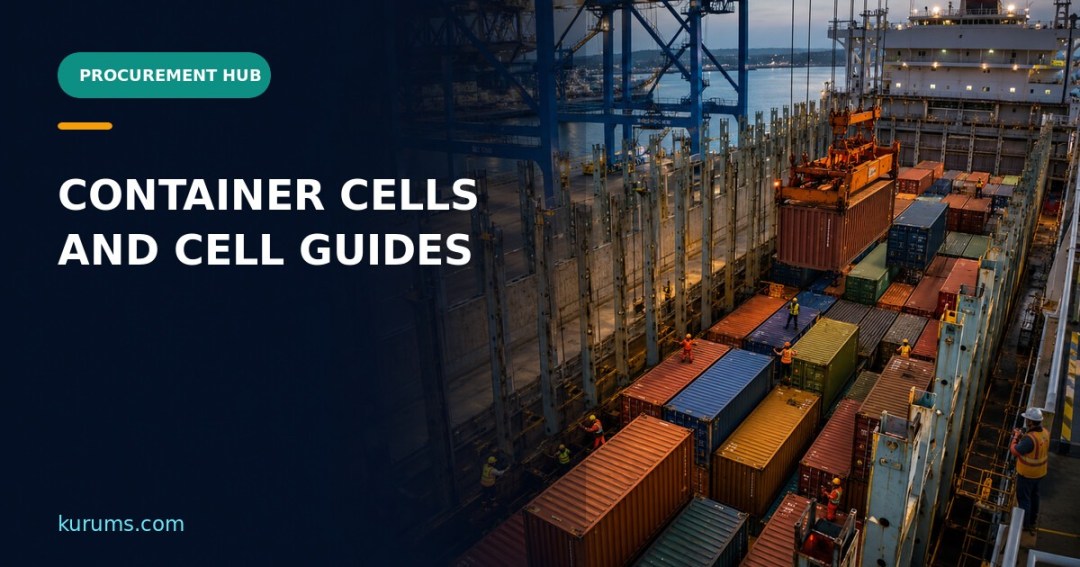
Cells are the vessel’s vertical guides and slot structure for stacking containers. Procurement should buy a usable slot and stowage result—not an abstract TEU number—by verifying dimensions, weight, reefer or dangerous-goods restrictions, lashing, VGM, port equipment and substitution controls.
- Define the container profile, slot, tier, weight, reefer, dangerous-goods and lashing requirements for the lane.
- Use a cell-guide or stowage plan to test whether the quoted capacity is operationally usable.
- Tie VGM, booking, seal, lashing and bay-plan evidence to the container and voyage identifiers.
- Recheck the plan when cargo, vessel, port, weather or equipment changes before loading.
What Cells Mean for a Procurement Buyer
The SSDER glossary defines Cells as the cell system used to stack containers on a container ship. A cell guide keeps containers aligned in a bay, but the commercial question is broader: can the carrier provide the correct slot, tier, weight, power, segregation and handling conditions for this shipment on this voyage?
Do not compare TEU capacity with a simple arithmetic ratio. A container may be too tall, heavy, wide, sensitive, hazardous or time-critical for the nominal slot. Procurement needs the operational acceptance rule behind the capacity number.
Write the Slot and Container Specification
Record container size and type, gross and tare weight, verified gross mass, centre of gravity, dimensions, reefer power, temperature range, dangerous-goods class, over-height or over-width status, seal requirement, cargo sensitivity and the required loading and discharge ports.
Ask the carrier to state bay, row or tier restrictions where they matter, plus any transhipment or terminal limitations. A procurement specification can remain commercially simple while still requiring the carrier to provide the technical acceptance evidence.
Connect VGM, Bay Plan and Lashing Evidence
IMO’s container-safety framework and the CSS Code support disciplined weight, securing and stowage practices. The buyer should connect the VGM submission, booking confirmation, container and seal numbers, bay plan, lashing or securing instructions and terminal gate events in one record.
The carrier or terminal may own the final stowage plan, but the shipper owns accurate cargo and weight data. Define who can reject a container, who approves a correction and how a late change is communicated to the vessel and terminal.
Manage Cell, Port and Vessel Exceptions
A vessel change, blank sailing, crane restriction, damaged cell guide, reefer-power shortage or dangerous-goods segregation issue can make a booked slot unusable. The SLA should require notice, a compliant alternative, revised cut-off and clear cost and delay ownership.
Review exceptions by vessel, bay, terminal, commodity and booking channel. If the same type of container is repeatedly rolled, the issue may be a commercial allocation problem or a bad specification rather than an isolated port event.
Worked Example: TEU Capacity, No Usable Slot
A buyer books a 40-foot high-cube reefer and receives confirmation that the vessel has capacity. At the terminal, the planned bay has no compatible power point and the revised stowage plan places the unit in a restricted slot. The container is rolled, the production window is missed and the carrier cites overall vessel capacity.
The corrected RFQ requests container-type acceptance, reefer-power confirmation, VGM and bay-plan cut-off, plus a substitute-vessel and roll-recovery rule. The scorecard measures usable-slot acceptance, roll rate, notice time and temperature exposure.
Metrics and Governance
For container cell guide procurement, measure both service and evidence quality. Useful indicators include first-pass acceptance, exception rate, response time, unplanned cost, document completeness, damage or discrepancy rate, and the percentage of shipments that follow the approved process. A dashboard should distinguish a supplier failure from a carrier, terminal, broker or internal master-data failure.
Review the metric trend with procurement, logistics, finance, quality and the responsible specialist. Use a monthly exception sample to test whether the control worked in a real transaction, not just whether a field was filled. Repeated exceptions should change the sourcing strategy, contract, lane design or supplier development plan.
Keep the control proportionate to risk. High-value, regulated, time-critical or safety-sensitive cargo needs stronger evidence and faster escalation than a routine shipment. Record the decision owner, approval date, source documents and follow-up action so the next buyer can understand the operating history.
Supplier and Carrier Questions
- Which CELLS or related glossary condition is assumed in your quotation, procedure or service description?
- Which party owns each data field, physical handoff, inspection, document and exception?
- What evidence will be available before release, loading, movement, receipt, invoice approval or claim?
- What changes require advance notice, requalification, a revised price or a new risk decision?
- How will the supplier report incidents, delays, mismatches and corrective actions, and within what response time?
Implementation Sequence
Implement the control in a small, representative lane first. Capture the baseline process, test the required data and evidence, run a real transaction, and review every exception with the people who performed the work. Do not declare the control effective only because a supplier signed a procedure.
After the first three shipments or operating cycles, update the purchase-order clause, work instruction, scorecard and training. Scale the control to other suppliers only when the evidence is repeatable and the owner can explain what happens when the normal path fails.
Common Mistakes to Avoid
- Treating advertised TEU capacity as proof that every container type will load.
- Submitting VGM or dimensions late and expecting the carrier to solve the stowage impact.
- Separating booking, bay-plan, lashing, seal and terminal evidence into unlinked systems.
- Ignoring reefer power, hazardous-goods segregation or transhipment restrictions.
- Accepting rolls without measuring notice, recovery, temperature and production impact.
Procurement Implementation Checklist
- Define container type, dimensions, weight, VGM, reefer, DG and handling needs.
- Request usable-slot, bay, tier, power and segregation assumptions.
- Link booking, VGM, seal, bay plan, lashing and terminal events.
- Set cut-offs, rejection, correction and approval responsibilities.
- Require notice and compliant alternatives for vessel or cell exceptions.
- Track usable-slot acceptance, rolls, notice, delay and cargo exposure.
Frequently Asked Questions
What are cells on a container vessel?
Cells are the guide and slot structure used to keep containers aligned in a vessel bay while they are stacked.
Is TEU capacity enough to select a carrier?
No. Container type, weight, dimensions, reefer power, dangerous-goods rules, stowage, port and voyage constraints determine usable capacity.
Who owns VGM accuracy?
The shipper or party designated by the applicable rule supplies accurate verified gross mass; the carrier and terminal use it for safe planning and handling.
What evidence should procurement retain?
Booking, container and seal identifiers, VGM, acceptance, bay or stowage plan, lashing instructions, terminal events and exception notices.
What should happen when a slot is rolled?
Require prompt notice, a compliant alternative, revised milestone, cost and delay treatment, and a review of recurring root causes.
Related Kurums Guides
- Customs EDI and Entry Data
- Consumption Entry (CE)
- Cargo Preference and Cargo NOS
- Freight Contracts and Parties
- Ocean Vessel Classification and Certificates
- Cargo Insurance and Claims
Standards and Authoritative Sources
- IMO — Container safety and verified gross mass
- IMO — Code of Safe Practice for Cargo Stowage and Securing
- IMO — Cargo securing manual guidance
Glossary terms covered: CELLS, cell guide, container vessel, slot allocation, stowage, lashing, verified gross mass
Kurums.com · Procurement, sourcing and business operations
Discover more from Kurums | Business Intelligence
Subscribe to get the latest posts sent to your email.