
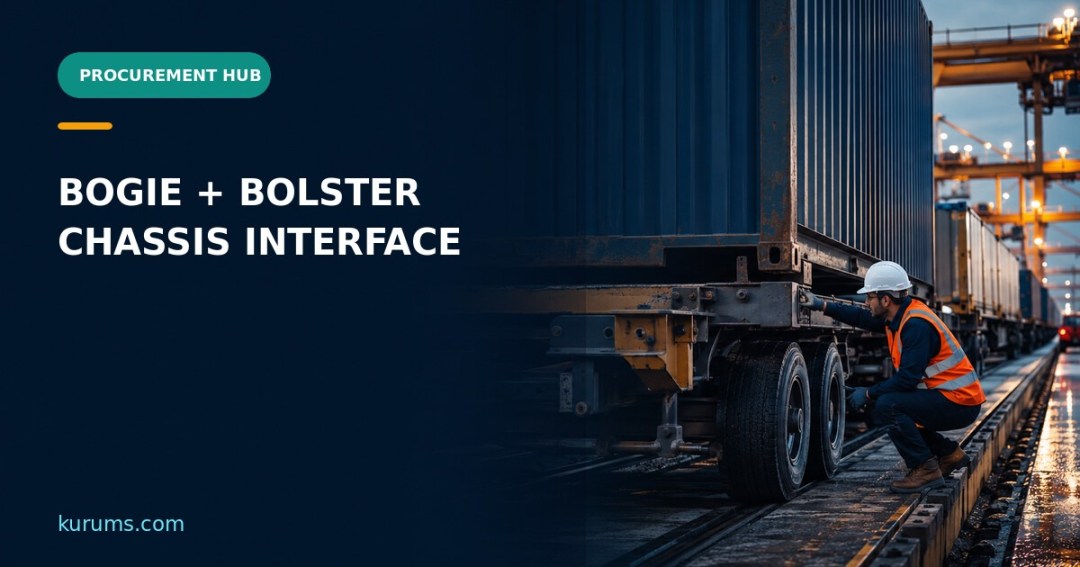
A BOGIE is a wheel assembly under a container or rail equipment, while a BOLSTER secures a container to a chassis. Procurement should define compatibility, load limits, inspection, interchange, maintenance, damage evidence and responsibility at each handoff.
- Specify the equipment type, container interface, load limit, locking system and operating environment.
- Inspect condition and safety devices before interchange and at return.
- Assign maintenance, damage, shortage, seal and interchange evidence duties.
- Price equipment availability and repair downtime, not only the linehaul rate.
The Interface Is Part of the Freight Service
The SSDER glossary describes a BOGIE as a wheel system mounted under a container and a BOLSTER as a part that secures a chassis-mounted container. These components sit between cargo and transport mode. A mismatch can create a delay, unsafe load, damage claim or a terminal refusal.
Procurement should treat the equipment interface as a service specification. The carrier or equipment provider must confirm compatibility with the container type, gross mass, locking points, route, terminal, railcar or truck and required handling equipment.
Define Compatibility and Load Limits
Record container length, corner fittings, chassis or bogie type, twist-lock condition, axle or rail limits, payload, centre of gravity, clearance and operating route. Oversized or special containers need an engineering and route review before the booking is accepted.
The purchase order should identify who supplies the chassis, who confirms the equipment, and what happens when the planned unit is unavailable. A substitute must meet the same safety, capacity and interchange requirements unless approved otherwise.
Control Interchange and Condition
At pickup and return, capture equipment ID, container ID, locks, frame, tyres or wheels, lights, brake or coupling components, damage, cleanliness and photographs. A condition report should identify the party accepting the equipment and the time of handoff.
Do not let a generic interchange receipt shift every defect to the next party. Define latent-defect investigation, damage notification, repair approval, downtime and dispute evidence in the equipment agreement.
Manage Availability and Maintenance
A low equipment rate has little value if the provider cannot position a serviceable chassis or bogie at the appointment. Track availability, no-equipment events, repair turnaround, roadability, inspection failures, late returns and emergency substitutions.
Set preventive maintenance, inspection interval, spare ratio and escalation duties. For a critical lane, test the provider’s recovery plan with an unavailable chassis or a damaged bolster before award.
Worked Example: A Good Container, Wrong Chassis
A container arrives at the terminal, but the assigned chassis has incompatible twist locks and a damaged bolster. The driver cannot safely secure the unit, the booking is missed and storage begins. The carrier and terminal each say the other owns the issue.
The corrected tender lists interface and condition requirements, assigns pre-gate verification and sets a recovery vehicle and cost rule. The equipment provider supplies a compliant unit and the buyer can identify the failure in the scorecard.
Metrics and Governance
For bogie bolster container chassis controls, measure both service and evidence quality. Useful indicators include first-pass acceptance, exception rate, response time, unplanned cost, document completeness, damage or discrepancy rate, and the percentage of shipments that follow the approved process. A dashboard should distinguish a supplier failure from a carrier, terminal, broker or internal master-data failure.
Review the metric trend with procurement, logistics, finance, quality and the responsible specialist. Use a monthly exception sample to test whether the control worked in a real transaction, not just whether a field was filled. Repeated exceptions should change the sourcing strategy, contract, lane design or supplier development plan.
Keep the control proportionate to risk. High-value, regulated, time-critical or safety-sensitive cargo needs stronger evidence and faster escalation than a routine shipment. Record the decision owner, approval date, source documents and follow-up action so the next buyer can understand the operating history.
Supplier and Carrier Questions
- Which BOGIE or related glossary condition is assumed in your quotation, procedure or service description?
- Which party owns each data field, physical handoff, inspection, document and exception?
- What evidence will be available before release, loading, movement, receipt, invoice approval or claim?
- What changes require advance notice, requalification, a revised price or a new risk decision?
- How will the supplier report incidents, delays, mismatches and corrective actions, and within what response time?
Implementation Sequence
Implement the control in a small, representative lane first. Capture the baseline process, test the required data and evidence, run a real transaction, and review every exception with the people who performed the work. Do not declare the control effective only because a supplier signed a procedure.
After the first three shipments or operating cycles, update the purchase-order clause, work instruction, scorecard and training. Scale the control to other suppliers only when the evidence is repeatable and the owner can explain what happens when the normal path fails.
Common Mistakes to Avoid
- Specifying a container without specifying chassis, bogie or locking compatibility.
- Accepting a substitute equipment unit without checking load and route limits.
- Signing an interchange receipt without condition photographs or equipment IDs.
- Treating a no-equipment event as a normal delay instead of a supplier failure.
- Leaving repair, downtime and latent-defect responsibility undefined.
Procurement Implementation Checklist
- Define container, chassis, bogie, bolster, lock and load interfaces.
- Record gross mass, payload, centre of gravity, clearance and route limits.
- Set pickup, gate, return, condition and damage evidence requirements.
- Assign maintenance, repair, downtime and substitute-equipment duties.
- Test availability and recovery for an unavailable or failed unit.
- Measure equipment availability, failures, delays, damage and repair time.
Frequently Asked Questions
What is a bogie?
It is a wheel assembly used under a container or rail equipment to support movement.
What is a bolster?
It is a chassis-mounted component that helps secure a container and transfer load safely.
Who supplies the chassis?
The contract should identify the responsible carrier, terminal or equipment provider and the accepted substitute rules.
What should an interchange record show?
Equipment and container IDs, locks, condition, damage, photos, time and accepting party should be captured.
Which metric matters most?
Track serviceable equipment availability, no-equipment events, inspection failures, repair time and delay cost.
Related Kurums Guides
- Freight Rates and Surcharges
- Billed Weight and VGM Controls
- Combination Rates
- Freight Measurement and Pricing
- CFR vs CIF vs CIP
- Bridge Points and Bridge Ports
Standards and Authoritative Sources
- Association of American Railroads — Intermodal resources
- U.S. FHWA — Freight intermodal connectors
- IMO — Cargo securing
Glossary terms covered: BOGIE, BOLSTER, chassis, container interface, interchange, inspection, equipment condition
Kurums.com · Procurement, sourcing and business operations
Discover more from Kurums | Business Intelligence
Subscribe to get the latest posts sent to your email.