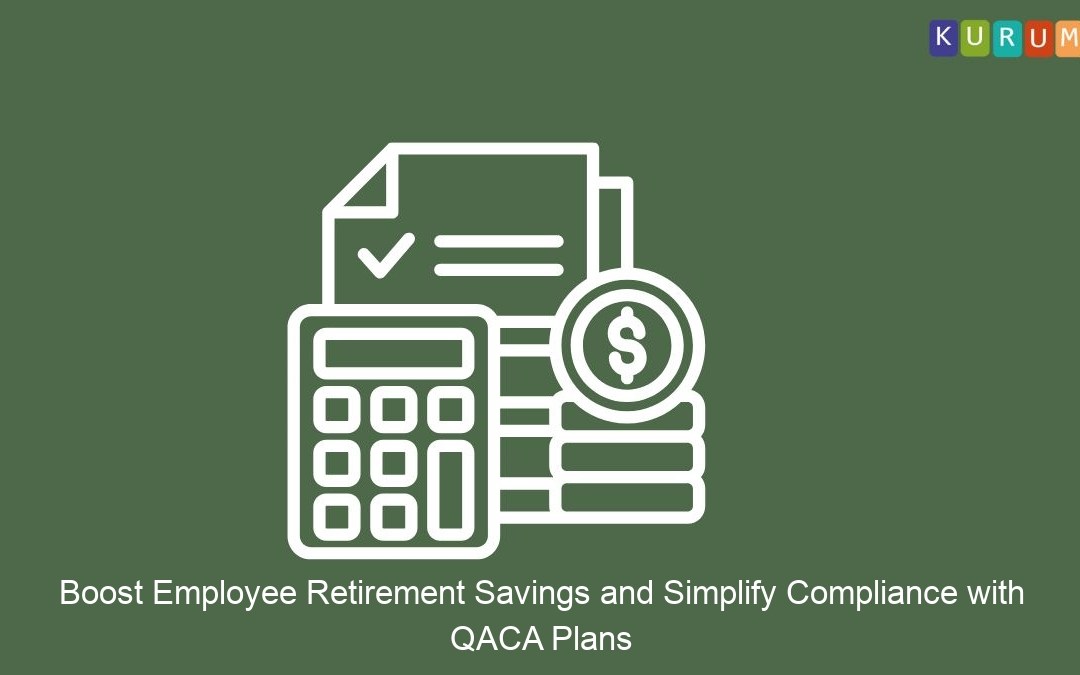
Are you an entrepreneur wondering how to design a retirement plan that’s both enticing for employees and manageable for your business? Or perhaps a professional seeking clarity on how automatic enrollment works at your company? Whether you’re part of a startup team or run an established small business, there’s a clause in the IRS handbook that could level the playing field: the Qualified Automatic Contribution Arrangement (QACA). It’s not just a policy—it’s a pathway to redefine financial security for your workforce while simplifying compliance. Let’s dive into what QACAs are, how they work, and why they matter.
🚀 How QACAs Simplify Retirement Savings: A Win-Win For Employers and Employees
Traditional retirement plans—like 401(k)s—often struggle with low participation rates. Why? Many employees procrastinate signing up, even if they understand the long-term value. QACAs flip this script. Instead of relying on employees to opt-in, QACAs let employers automatically enroll them in a retirement plan. The twist? Employers must contribute to the plan through a matching formula or a fixed profit-sharing component, and employees can opt out if they choose.
Here’s the magic: QACAs simplify nondiscrimination testing. Under regular 401(k) plans, employers must ensure their offerings don’t disproportionately benefit highly paid staff. For small businesses, these tests can be a bureaucratic headache. QACAs sidestep this by giving employers a “safe harbor” exemption, provided they meet specific contribution and disclosure requirements. This makes maintaining a compliant plan more straightforward—and a lot less stressful.
For employees, QACAs act as a subtle nudge toward financial preparedness. By enrolling them automatically, employers help break down psychological barriers to saving. According to a 2022 Vanguard study, automatically enrolled plans boost participation rates by over 50% compared to opt-in plans. It’s like creating “forced discipline” with the employee’s best interest at heart.
📁 Real-World Success: Turning Policies Into Practice
Take TechEdge Innovations, a 70-person software development firm in Austin. When they introduced a QACA structure in 2019, they faced skepticism from employees accustomed to informal cash compensation. But their CFO, Maya Chen, was optimistic: “We wanted to make retirement savings feel like a natural part of our team’s benefits, not an afterthought.” Here’s what happened:
– Within 12 months, 85% of employees were actively contributing to their 401(k)s—a leap from 30% under their old opt-in setup.
– TechEdge adopted a greenwood rule: Employees couldn’t opt out of contributed funds, but could reduce or stop their own deferrals. This ensured even the hesitant享受到 employer generosity.
– By leveraging QACA’s safe harbor provisions, TechEdge avoided the complex testing required under traditional plans, saving over $10,000 annually in administrative costs.
Closer to home, Bella’s Bakes, a family-owned bakery in Chicago, used QACAs to attract talent in a competitive labor market. Bella Guillermo, the owner, shared, “We’re not Wall Street. But with QACAs, we can tell our staff, ‘We’re investing in your future, too.’ Turns out, that message works wonders.”
💬 Expert Insights: Why Leaders Love QACAs
For the seasoned professional, automatic enrollment isn’t just about defaulting employees into a plan—it’s about culture-building. “QACAs do more than move money around; they align with a modern workplace ethos,” explains Sarah Lin, founder of RetireWise Consulting. “They signal to employees that you care about their long-term well-being, not just meeting payroll.”
Mark Reynolds, CEO of a fintech company with over 200 staff, echoes this approach: “When we launched our QACA policy, we saw more balance questions from our employees. That engagement translated into better retention—it’s proof that we’re in this together.”
The appeal isn’t one-sided. For businesses with high turnover, QACAs create structure around employee investments. As author and entrepreneur Emily Taguchi notes, “I used to think retirement was a ‘ someday’ for young startups. But with QACAs, it’s a ‘starting now’ story.”
🛠️ Practical Tips For Implementing QACAs: Lessons From The Field
If you’re considering QACAs, here’s how to set your strategy straight:
- Start with a Clear Communication Plan
Transparency is key. Explain how QACAs work, why they benefit employees, and how funds grow over time. Host workshops or digital webinars! 📈 - Use Tiered Matching to Incentivize Contributions
Encourage employees to increase deferrals by scaling your matching. Example: Match 50% up to 3% of their salary, but go to 100% for those investing more than 4%. 🧮 - Assess Financial Viability First
QACAs require employers to fund a deferral or profit-sharing component. Before signing up, simulate the impact of this on cash flow, payroll, and bottom-line profit. 💸 -
Combine QACAs with Other Benefits
Pair QACAs with flexible work policies or wellness programs—reinforce the idea that their career and personal life matter equally. 🤝 -
Train HR to Answer “Why Does This Matter?”
When employees ask questions like, “Will these deductions lower my paycheck?”, lead with the long-term gains—compounding returns, tax advantages, and employer support. 🧒
Here’s the catch: Employees under a QACA must be allowed to opt out after two years, and the plan must provide at least a 3% employer match or profit-sharing contribution. Don’t skip the basics or risk losing the safe harbor protection.
📚 Dr. TL;DR: Quick Recap Of What’s Important
You’re short on time. Here’s the QACA story in a nutshell:
– Automatically enroll employees to boost participation.
– Employers get safe harbor status—fewer tests, fewer headaches.
– Employees enjoy seamless savings with built-in flexibility.
– It’s a golden opportunity for startups and small businesses.
🌟 Key Takeaways For Smart Business Strategy
- QACAs boost participation rates by turning saving into a default action, not a choice.
- Compliance is easier—safe harbor status lets employers sidestep annual nondiscrimination tests.
- Employers benefit too, with better retention + engagement, Lower administrative costs. 💼
- Opt-out rules ensure no forced commitment for employees—freedom sleeps soundly at night. 🛌
- It’s a powerful tool for small businesses that can’t afford advanced benefits management.
❓ FAQ: Your QACA Questions Answered
What’s the difference between QACAs and regular automatic enrollment plans?
QACAs carry the sweet perk of safe harbor compliance. Employers don’t have to worry about passing nondiscrimination tests if they meet all QACA requirements.
What’s the maximum employer contributions in a QACA Plan?
The IRS sets an annual deferral limit of $22,500 for 2023 ($30,000 for those 50+). However, employers can cap contributions at a lower percentage, e.g., 6% matching.
Can employees ever fully stop participating in the plan?
Employees may opt out every year, but contributions made while enrolled belong to them (minus vesting rules). 🚫
Do QACAs Require Employees To Be Fully Vest those employer contributions?
Yes! For employer contributions, you must adopt a full vesting schedule over three years or a cliff vesting of two years.
🧭 Not Just Paperwork: Shaping A Secure Future
Imagine this: You’re at a coffee shop interviewing someone for a role, and they ask, “What’s your 401(k) policy?” With QACAs, you don’t just rattle off fine print—you share a tangible brag about how you balance business growth with care for your team.
Top entrepreneurs often say, “The best companies build bridges to the future—for themselves and their people.” QACAs offer a sturdy bridge to retirement for employees, while giving employers a blueprint for stability. Whether you’re navigating the fast-paced startup landscape or growing a long-tenured small business, QACAs can become a foundational piece of workplace culture.
The next time you tweak your benefits package, ask yourself: “Am I being reactive with retirement—or am I redefining what’s possible?” As QACAs prove, automation doesn’t have to feel cold; in the right hands, it feels like progress with purpose. 🌿
Remember—starting the conversation could be as simple as sharing this post with your HR team, your accountant, or even your employees. Maybe they’ll spark the kind of dialogue that ends in decades of shared financial security. 💬
Scroll down for related resources on retirement plan optimization!
Discover more from Kurums | Business Intelligence
Subscribe to get the latest posts sent to your email.