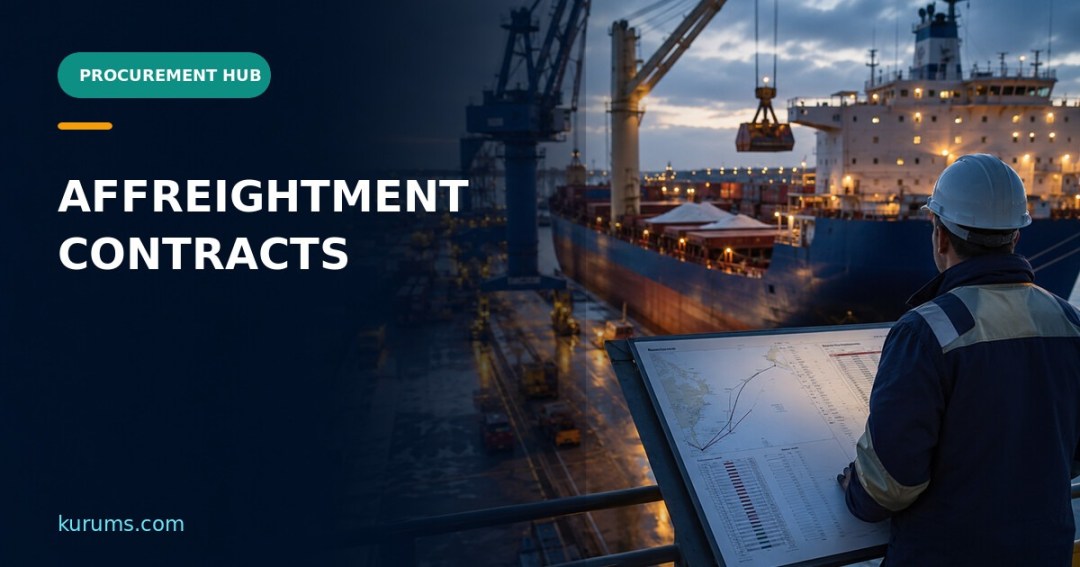
A contract of affreightment reserves transport capacity across defined voyages or a period, rather than buying one spot shipment at a time. Procurement should define cargo, volume, ports, laycan or schedule, vessel standards, freight formula, shortfall, substitution, performance evidence and exit rights before committing demand.
- Separate a capacity commitment from a spot charter, service contract or forwarder booking.
- Define the volume, cargo, ports, voyage window, vessel standard, freight basis and index or adjustment formula.
- Make shortfall, overage, substitution, delay, cancellation, force majeure and safe-port decisions measurable.
- Use actual liftings, schedule reliability, cargo condition, cost and unused commitment in the governance review.
What a Contract of Affreightment Buys
The SSDER glossary describes a contract of affreightment as a promise by a sea carrier to provide cargo space at an agreed time and tariff. The procurement value is predictable capacity, but the buyer also accepts a planning and volume-commitment risk that is different from a one-off booking or a voyage charter.
Start with the operating problem: repeated spot exposure, seasonal capacity, project cargo, a fixed import programme or a need to protect a production lane. The contract should solve that problem without forcing the buyer to pay for capacity it cannot use.
Define Volume, Cargo and Voyage Rules
Specify cargo type, quantity or range, package or container profile, ports, route, loading and discharge windows, expected number of voyages, nomination process, laycan, notice, tolerance, minimum and maximum liftings and the evidence used to measure performance.
State who owns the cargo description, weight, stowage, dangerous-goods information, port readiness and weather or draft assumptions. A volume clause without a cargo and route definition creates a dispute over whether the carrier offered usable capacity.
Price Capacity and Shortfall Fairly
The rate may be a fixed freight, a formula, a market index plus margin, a voyage-specific quote or a combination. Model bunkers, port costs, canal or security charges, currency, emissions, handling, demurrage, deadfreight, unused capacity and re-routing before award.
Shortfall and overage rules should reflect the cause. A buyer should not pay for capacity it could not use because the carrier failed to nominate a vessel, but it may owe a defined commitment when demand was cancelled without contractual relief. Record the cause code and approval.
Control Vessel, Substitution and Performance
Set minimum vessel, class, flag, age, equipment, cargo-space, draft and safety requirements. Require advance notice and approval for vessel substitution, schedule change, port refusal, material incident or loss of certificate. Keep the evidence tied to the actual voyage and IMO number.
Governance should review nominated capacity, accepted bookings, rolled or cancelled voyages, transit time, condition, claims, cost variance and unused commitment. If the contract consistently fails at one port or season, adjust the capacity design rather than only renegotiating a rate.
Worked Example: Capacity Reserved, Cargo Unusable
A buyer commits annual tonnage under a contract of affreightment. The carrier provides the volume but nominates vessels that cannot meet the discharge draft during the low-water season. The buyer pays for lightering and emergency truck relief while the carrier claims the annual capacity target was met.
The corrected contract defines route, draft, seasonal restrictions, usable capacity, nomination evidence, alternative port and cost allocation. Performance is measured on cargo delivered to the required node, not only on nominal tonnes loaded.
Metrics and Governance
For affreightment contract ocean capacity, measure both service and evidence quality. Useful indicators include first-pass acceptance, exception rate, response time, unplanned cost, document completeness, damage or discrepancy rate, and the percentage of shipments that follow the approved process. A dashboard should distinguish a supplier failure from a carrier, terminal, broker or internal master-data failure.
Review the metric trend with procurement, logistics, finance, quality and the responsible specialist. Use a monthly exception sample to test whether the control worked in a real transaction, not just whether a field was filled. Repeated exceptions should change the sourcing strategy, contract, lane design or supplier development plan.
Keep the control proportionate to risk. High-value, regulated, time-critical or safety-sensitive cargo needs stronger evidence and faster escalation than a routine shipment. Record the decision owner, approval date, source documents and follow-up action so the next buyer can understand the operating history.
Supplier and Carrier Questions
- Which AFFREIGHTMENT, CONTRACT OF or related glossary condition is assumed in your quotation, procedure or service description?
- Which party owns each data field, physical handoff, inspection, document and exception?
- What evidence will be available before release, loading, movement, receipt, invoice approval or claim?
- What changes require advance notice, requalification, a revised price or a new risk decision?
- How will the supplier report incidents, delays, mismatches and corrective actions, and within what response time?
Implementation Sequence
Implement the control in a small, representative lane first. Capture the baseline process, test the required data and evidence, run a real transaction, and review every exception with the people who performed the work. Do not declare the control effective only because a supplier signed a procedure.
After the first three shipments or operating cycles, update the purchase-order clause, work instruction, scorecard and training. Scale the control to other suppliers only when the evidence is repeatable and the owner can explain what happens when the normal path fails.
Common Mistakes to Avoid
- Treating a contract of affreightment like a single spot booking.
- Committing volume without a realistic demand, season and port model.
- Leaving rate adjustments, deadfreight, unused capacity and shortfall causes vague.
- Accepting a substitute vessel without checking cargo, draft, class, port and safety fit.
- Measuring tonnes loaded instead of usable delivery, reliability and total cost.
Procurement Implementation Checklist
- Define cargo, volume range, ports, route, voyages and nomination windows.
- State vessel, class, flag, age, draft, equipment and safety requirements.
- Model freight, bunker, port, emissions, currency, demurrage and unused capacity.
- Allocate shortfall, overage, substitution, delay, cancellation and force-majeure duties.
- Link each nomination and voyage to vessel and cargo evidence.
- Review usable liftings, schedule, condition, claims, cost and commitment monthly.
Frequently Asked Questions
What is a contract of affreightment?
It is an agreement under which a carrier undertakes to provide cargo space or transport for defined cargo and voyages over a period or programme.
Is a COA the same as a voyage charter?
No. A COA commonly covers repeated voyages or volume commitments; a voyage charter is typically tied to a defined voyage. The contract wording controls.
What is deadfreight or shortfall exposure?
It is the commercial consequence of failing to tender agreed cargo or capacity. Define the measurement, cause and relief in the contract.
Can the carrier substitute the vessel?
Only under the agreed substitution rule, with evidence that the replacement meets cargo, route, port, class, safety and schedule requirements.
What KPI should a COA use?
Usable liftings, on-time delivery, cargo condition, schedule reliability, claims, rate variance, unused commitment and total delivered cost.
Related Kurums Guides
- Cargo Insurance and Claims
- Freight Rates and Surcharges
- Freight Contracts and Parties
- Customs Documents for Procurement
- Customs EDI and Entry Data
- Container Cells and Cell Guides
Standards and Authoritative Sources
- BIMCO — Contracts and contracts of affreightment
- BIMCO — Clauses for contracts of affreightment
- IMO — Safety and cargo regulations
Glossary terms covered: AFFREIGHTMENT, CONTRACT OF, contract of affreightment, reserved capacity, volume commitment, voyage, freight, substitution
Kurums.com · Procurement, sourcing and business operations
Discover more from Kurums | Business Intelligence
Subscribe to get the latest posts sent to your email.