
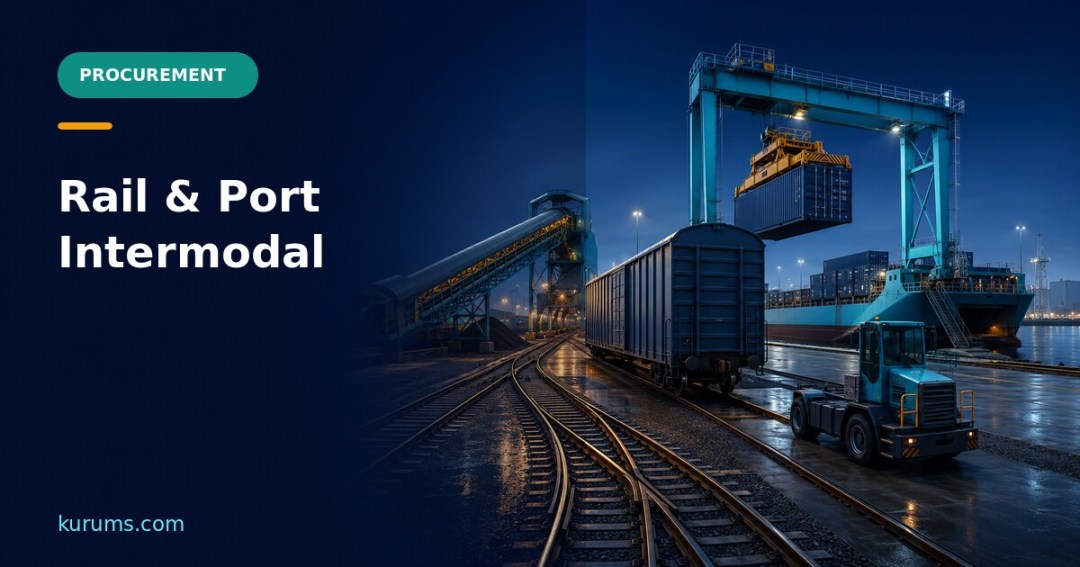
Intermodal savings depend on equipment fit and terminal interfaces. Procurement should specify the railcar, transfer system, yard process, interchange standard, drayage condition and evidence required for a safe, on-time handoff.
- Treat AAR or local rail standards as a technical baseline, not as a substitute for lane-specific approval.
- Match cargo dimensions, loading method and protection needs to boxcar, container, barge or carfloat capability.
- Model classification-yard dwell and terminal transfer time as part of lead time.
- Control bobtail, chassis, empty-return and interchange exceptions in the carrier contract.
Intermodal Procurement Starts at the Interface
A rail lane is not only a line-haul rate. It is a chain of car supply, loading site, origin yard, interchange, classification yard, terminal transfer, drayage and destination receipt. The glossary terms boxcar, carfloat and belt line describe different equipment and movement environments that can create different handling, access and schedule requirements.
AAR establishes safety, security and operating standards for North American freight railroads, but procurement still needs the local railroad, terminal and commodity requirements. Ask bidders to identify the standard, exception and inspection evidence that apply to the lane.
Choose the Right Equipment
A boxcar protects palletised or boxed cargo inside an enclosed railcar. A carfloat transfers railcars by water, while a belt line can describe a rail system serving a commercial or industrial district. A barge carrier is a vessel designed to move barges or barge cargo. These are not interchangeable solutions.
The RFQ should include dimensions, weight, loading height, forklift or crane access, commodity sensitivity, package strength, loading rate, temperature needs and destination unloading. Require a carrier drawing or equipment specification when clearance is tight.
Classification Yards and Schedule Risk
A classification yard assembles and sorts freight-train cars. The process can improve network efficiency but can add dwell and handling variability. Procurement should request the planned service pattern, interchange points, yard dwell assumption, cut-off, estimated transit and exception escalation path.
A guaranteed transit time should state what is included. If a quote excludes origin congestion, yard dwell or interchange delay, compare it as a lower-price service with a different risk profile rather than as an equivalent offer.
Bobtail and Drayage Controls
Bobtail describes a tractor travelling without its trailer. It is a useful exception term because an empty or mismatched move can generate a chassis, appointment or return problem. Procurement should define who provides equipment, who pays repositioning, and how an empty move is evidenced.
Link the rail booking, container or railcar number, chassis, appointment and gate records. A carrier scorecard should separate line-haul performance from terminal, drayage and equipment-availability failures.
Worked Example: A Boxcar That Cannot Load
A supplier awards a low rail rate for boxed machinery but discovers that the nominated boxcar cannot accept the forklift height or the load distribution. The carrier proposes a different car and an origin transload, adding labour and damage risk after the purchase order is released.
The corrected sourcing package includes a loading diagram, equipment envelope, floor rating, transload prohibition or approval rule, and a site trial before award. The buyer scores usable capacity and total cost, not the headline rail tariff.
Metrics and Governance
For rail and port intermodal equipment, measure both service and evidence quality. Useful indicators include first-pass acceptance, exception rate, response time, unplanned cost, document completeness, damage or discrepancy rate, and the percentage of shipments that follow the approved process. A dashboard should distinguish a supplier failure from a carrier, terminal, broker or internal master-data failure.
Review the metric trend with procurement, logistics, finance, quality and the responsible specialist. Use a monthly exception sample to test whether the control worked in a real transaction, not just whether a field was filled. Repeated exceptions should change the sourcing strategy, contract, lane design or supplier development plan.
Keep the control proportionate to risk. High-value, regulated, time-critical or safety-sensitive cargo needs stronger evidence and faster escalation than a routine shipment. Record the decision owner, approval date, source documents and follow-up action so the next buyer can understand the operating history.
Supplier and Carrier Questions
- Which A.A.R. or related glossary condition is assumed in your quotation, procedure or service description?
- Which party owns each data field, physical handoff, inspection, document and exception?
- What evidence will be available before release, loading, movement, receipt, invoice approval or claim?
- What changes require advance notice, requalification, a revised price or a new risk decision?
- How will the supplier report incidents, delays, mismatches and corrective actions, and within what response time?
Implementation Sequence
Implement the control in a small, representative lane first. Capture the baseline process, test the required data and evidence, run a real transaction, and review every exception with the people who performed the work. Do not declare the control effective only because a supplier signed a procedure.
After the first three shipments or operating cycles, update the purchase-order clause, work instruction, scorecard and training. Scale the control to other suppliers only when the evidence is repeatable and the owner can explain what happens when the normal path fails.
Common Mistakes to Avoid
- Treating an AAR reference as proof that a local terminal can handle the cargo.
- Comparing a line-haul rate without yard, drayage and transload costs.
- Ignoring boxcar loading height, floor rating or cargo distribution.
- Failing to define empty equipment, chassis and bobtail exceptions.
- Promising a transit time without separating classification-yard dwell.
Procurement Implementation Checklist
- Map every rail, terminal, interchange and drayage interface.
- Specify equipment, loading envelope, weight distribution and protection.
- Confirm AAR or local technical standards and exception ownership.
- Model classification-yard dwell and cut-off times.
- Define container, chassis, carfloat and empty-return responsibility.
- Run a first-load review and measure damage, dwell and usable capacity.
Frequently Asked Questions
What is a boxcar?
A boxcar is an enclosed rail freight car used for cargo that benefits from weather and security protection. Its dimensions and loading limits must match the commodity.
What is a carfloat?
A carfloat is a barge-like vessel used to move railcars over water between rail connections or terminals.
What does a classification yard do?
It assembles, sorts and routes railcars into train movements. Yard dwell can affect the end-to-end procurement lead time.
What does bobtail mean?
It describes a tractor operating without its trailer. In procurement it is often an exception involving empty moves, equipment mismatch or repositioning.
Does AAR approval cover every rail lane?
No. It is a standards reference; the actual railroad, equipment, commodity and terminal requirements still need lane-specific confirmation.
Related Kurums Guides
- ABC Inventory Analysis in Procurement
- Shipping Documents for Procurement
- Customs Documents for Procurement
- Freight Contracts and Parties
- Freight Network Design for Procurement
- Container Types and Load Securing
Standards and Authoritative Sources
- Association of American Railroads — About AAR
- Association of American Railroads — Freight Rail FAQs
- U.S. FRA — Rail safety and regulations
- Kurums — Freight Network Design
Glossary terms covered: A.A.R., BOXCAR, CARFLOAT, BELT LINE, CLASSIFICATION YARD, BOBTAIL, BARGE CARRIERS, AAR standards
Kurums.com · Procurement, sourcing and business operations
Discover more from Kurums | Business Intelligence
Subscribe to get the latest posts sent to your email.
Trackbacks/Pingbacks