
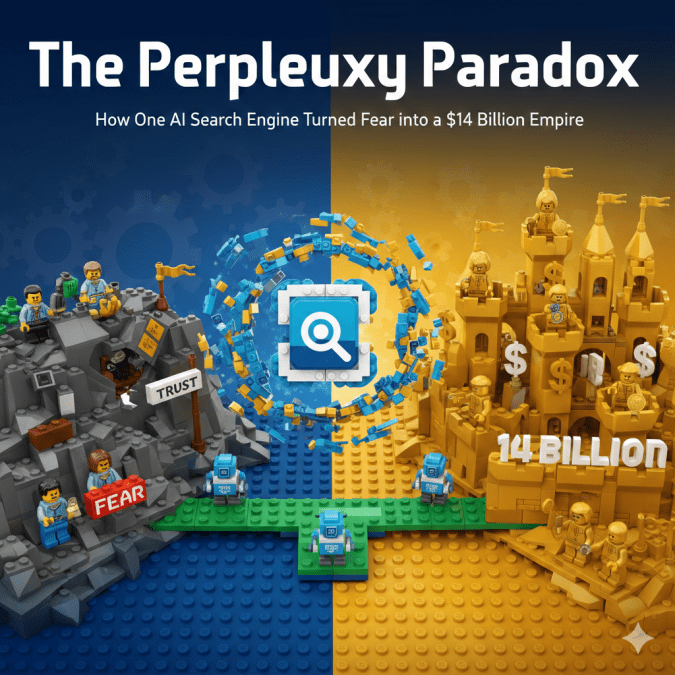
Imagine this: It's 2022, and the world is still reeling from the pandemic. Remote work has us glued to screens, scrolling endlessly through blue links on Google that lead to dead ends, ads, and rabbit holes of irrelevance. Enter Aravind Srinivas, a 27-year-old Indian-born engineer with a fire in his belly and a PhD from UC Berkeley under his arm. Fresh off stints at OpenAI and DeepMind—places where he tinkered with the very algorithms that power today's AI revolution—Srinivas isn't content with tweaking giants. He wants to topple one. With co-founders Denis Yarats (a machine learning wizard from Meta), Johnny Ho (a finance-engineering hybrid), and Andy Konwinski (a big-data veteran), they birth Perplexity AI. Not just another chatbot. Not a glorified autocomplete. But a conversational search engine that answers questions directly, cites its sources like a diligent professor, and feels like chatting with a brilliant, unflappable friend.
Fast-forward to November 2025, and Perplexity isn't just surviving—it's surging. Valued at $14 billion after a whirlwind $500 million funding round in June, it's processing 780 million queries a month, with 30 million daily users hooked on its real-time magic. From humble beginnings in a San Francisco apartment to inking deals with Getty Images for ethical image sourcing and even powering a chatbot for Truth Social, Perplexity's story is the startup saga we all crave: improbable, inspiring, and laced with the raw grit of human ambition. But beneath the headlines? A tale of innovation that rewires how we seek truth, milestones forged in fire, and the psychological tightrope every founder walks. This is Perplexity's odyssey—and a blueprint for turning "what if" into "watch out, Google."
What Makes Perplexity Tick? The Secret Sauce in a Sea of Sameness
In a world drowning in AI hype, Perplexity doesn't just generate text; it searches with soul. Traditional engines like Google? They serve up links—10 blue pills of varying potency, leaving you to diagnose the info flu. Chatbots like ChatGPT? They hallucinate confidently, spitting out facts that sound right but crumble under scrutiny. Perplexity? It blends the best of both: a hybrid beast that crawls the web in real-time, synthesizes answers with large language models, and slaps citations right there, transparent as glass. No more "trust me, bro"—every claim links back to verifiable sources, slashing misinformation by design.
But the real differentiator? It's obsessively user-centric, born from Srinivas's frustration with "search fatigue." Picture this: You're planning a trip to Tokyo. Google buries you in sponsored hotels. ChatGPT invents a festival that doesn't exist. Perplexity? It pulls live flight prices, weather forecasts, hidden ramen spots from recent traveler reviews, and even drafts your itinerary—all in one fluid conversation. By 2025, this has evolved into "Pro" mode, where users toggle between models like Grok 4 or Claude for tailored depth, and voice commands handle everything from emailing reservations to analyzing images.
Technically, it's a marvel. Perplexity's proprietary "Sonar" model, launched in February 2025 on LLaMA 3.3, mixes Fourier transforms (Srinivas's Berkeley brainchild) for lightning-fast processing—92% as accurate as BERT but 80% quicker. Add in-house crawling infrastructure that sidesteps the costs of retraining massive models, and you've got scalability on steroids. Revenue? A freemium model with Pro subscriptions ($20/month) raking in $150 million ARR by mid-year, plus API access for devs and partnerships like the one with publishers for ad revenue sharing. It's not just different; it's disruptive—proving AI search can be ethical, efficient, and insanely addictive.
What sets Perplexity apart culturally? A "fear-first" ethos. Srinivas preaches "sleeping with the fear" that competitors will steal your edge. No bloated decks for pitches; he uses AI assistants like their own Comet browser to query real-time business intel on the fly. This lean, paranoid agility? It's why they've outpaced rivals, launching apps for iOS, Android, macOS, and Windows in a blitz that feels more indie band than corporate symphony.
Milestones: From Garage Dream to Global Challenger
Perplexity's timeline reads like a thriller: rapid ascents, plot twists, and triumphs snatched from the jaws of doubt. Founded in August 2022 with pocket change and sheer audacity, it bootstrapped to two million unique visitors by February 2023. Milestone one: Unicorn status in April 2024 after a $165 million round at $1 billion valuation, backed by heavyweights like Jeff Bezos, Nvidia, and Shopify's Tobias Lütke. Skeptics scoffed—another AI wrapper?—but Srinivas's team iterated weekly, launching Perplexity Pages for prompt-generated websites and a mobile app that hit 10 million MAUs by year's end.
2025? A breakout year of bold bets. January: A publishers' program shares ad revenue, mending fences with media giants wary of scraping. February: Sonar drops, their first in-house model, turbocharging accuracy. March: Windows app launch, expanding to enterprise. By May, 780 million queries processed, with 20% MoM growth—Srinivas boasts it at Bloomberg's Tech Summit.
June's $500 million raise catapults valuation to $14 billion, led by Accel. July: Comet browser debuts, integrating search into everyday browsing—summaries, image descriptions, email drafts, all seamless. September: Search API with SDK and open-source evals empowers devs, while a Getty partnership ensures licensed images. October: Free browser download for all, spiking users. November: AI shopping assistants via PayPal integration, personalizing buys based on chat history.
These aren't just checkboxes; they're pivots. Early lawsuits from Forbes and the New York Post over "content theft" in 2024? Perplexity counters with citations and transparency, turning critics into collaborators. A January 2025 trademark spat with Perplexity Solved Solutions? Settled quietly, fueling sharper branding. Even whispers of an Apple acquisition add intrigue—Srinivas plays coy, eyes on independence till at least 2028. Each milestone? A testament to founders who treat failure as feedback, scaling from prototype to powerhouse in under four years.
The Shadows of Success: Psychological Hurdles and How Perplexity Conquered Them
Ah, the glamour of founder life: TED Talks, yacht invites, and valuations that buy islands. But peel back the curtain, and it's a psychological gauntlet—loneliness, burnout, impostor syndrome—that claims more startups than bad code ever could. Studies paint a grim picture: 72% of founders battle mental health demons, with 45% reporting "poor" well-being amid funding droughts and work-life implosions. Perplexity's ascent? It's a masterclass in navigating this minefield, where fear isn't the enemy—it's the forge.
First, impostor syndrome, that whispering thief of joy. Srinivas, a IIT Madras prodigy who turned down Goldman Sachs for AI's wild frontier, admits the gnaw: "Am I the fraud Google fears, or just lucky?" With roots in a middle-class Chennai family—his dad a schoolteacher, mom a homemaker—the pressure to "make it" for them amplified every doubt. Early days at OpenAI? He coded breakthroughs like FNet, but whispers of "diversity hire" stung. Solution? Ruthless self-validation: Weekly "win journals" logging micro-victories, from bug fixes to user raves. By 2025, as valuations soared, he leaned into vulnerability—Reddit AMAs sharing "I still wake up terrified"—humanizing the hustle and building a founder network that normalizes the noise. Lesson: Impostors thrive in isolation; Perplexity's co-founder pact—rotating "CEO days" for shared load—starves it.
Then, burnout, the silent killer. Crunchbase pegs 72% of VC-backed startups failing from exhaustion-fueled missteps. For Perplexity's crew, 2024's legal barrages—Forbes suing over "scraping," publishers crying foul—meant 80-hour weeks defending the dream. Yarats, the CTO, hit a wall: Sleepless nights tweaking Sonar amid investor "show me growth or else" ultimatums. The toll? Anxiety spikes, team morale dips, decisions fog. Founders often mask it, fearing weakness signals to VCs. Perplexity flipped the script: Mandatory "recharge sabbaths"—one day off weekly, no exceptions—and AI therapy bots for anonymous check-ins. Srinivas credits meditation apps and co-founder therapy sessions: "We treat burnout like a bug: Debug early, or it crashes the system." By 2025, this built resilience; post-funding, they hired a "chief wellness officer," proving mental ROI beats cash burn.
Isolation? The founder's curse, where you're captain of a sinking ship but can't show the cracks. Srinivas felt it post-unicorn: Investors flooded in, but who to trust? Co-founder rifts loomed—Ho's finance lens clashed with Konwinski's data purism. Echoing Sifted's survey, 45% of founders eye exits over such strains. Their hack? "Fear forums"—monthly offsites dissecting dreads, from "Google clones us overnight" to "What if we flop?" It fostered "radical candor," turning paranoia into product fuel. And the big one: Fear of failure and competition, that neurotic edge. Columbia research links high neuroticism to 16% lower exit odds, but Perplexity harnessed it. Srinivas's mantra: "Sleep with the fear your rival steals your idea—it keeps you sharp." Amid 2025's AI bubble jitters—voted "most likely to fail" at Cerebral Valley despite billions raised—it fueled Comet's launch, outpacing OpenAI's shopping bots with hyper-personalization.
These aren't anomalies; they're universals. EY's data: 43% of founders cling to control, stifling innovation. Perplexity dodged by delegating early—Srinivas stepped back on ops, empowering Ho's financial wizardry for sustainable scaling. The result? Not just survival, but a culture where psych hurdles become superpowers: Fear drives iteration, vulnerability builds teams, burnout's ashes birth boundaries.
Echoes in the Ecosystem: Perplexity's Ripple for Aspiring Builders
Perplexity's story isn't solitary; it's a siren call in 2025's startup symphony. As AI democratizes tools—Sonar for all—solo founders bootstrap empires, but the mind game's unchanged. Take Suno AI's Mikey Shulman: Text-to-song magic, 200% growth, yet he battled isolation till peer circles saved his sanity. Or GlossGenius's Danielle Cohen-Shohet: $72 million raised for beauty SaaS, but impostor pangs nearly derailed her. Perplexity whispers: Embrace the mess. Journal wins. Seek squads. Fear forward.
In a year where 40% of startups flipped profitable amid headwinds, Perplexity proves psych fortitude > pedigree. Srinivas, now worth $27 million, still meditates daily: "Success? It's not the valuation. It's waking up excited, not exhausted." For every founder staring at a blank prompt, remember: The search for answers starts within. Query boldly. Cite your courage. And who knows? Your Perplexity might just perplex the world.
Discover more from Kurums | Business Intelligence
Subscribe to get the latest posts sent to your email.