
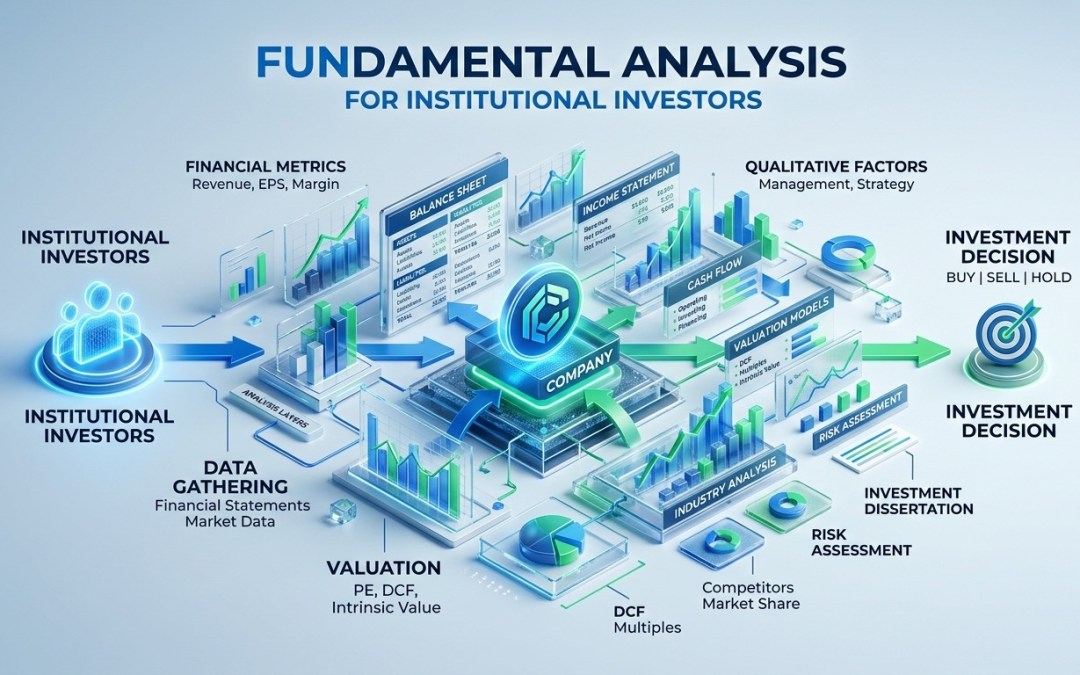
1. The Historical Context and Evolution of Fundamental Analysis
The genesis of corporate fundamental analysis traces back to the aftermath of the 1929 stock market crash, a period characterized by rampant speculation and a stark detachment from underlying corporate realities. In 1934, Benjamin Graham and David Dodd published “Security Analysis,” fundamentally revolutionizing how capital allocators evaluated equities. They introduced the concept of intrinsic value, asserting that an asset’s worth is independent of its market price and can be determined by rigorously analyzing objective financial metrics such as earnings, dividends, and asset values.
For decades, institutional investors relied heavily on this traditional value investing paradigm, scouring balance sheets for companies trading below their net current asset value (the so-called “net-nets”). However, as markets became more efficient and information asymmetry decreased due to the advent of digital communication and regulatory frameworks like Regulation FD, the fundamental analysis of a company evolved significantly.
In the late 20th and early 21st centuries, the focus shifted from purely tangible assets to a synthesis of quantitative financial metrics and qualitative evaluations of intangible assets. The rise of technology and service-oriented economies meant that a company’s most valuable assets—intellectual property, network effects, and brand equity—often did not appear on a traditional balance sheet. Today, institutional fundamental analysis is a highly sophisticated, multi-disciplinary exercise. It requires integrating traditional accounting analysis with forensic accounting, macroeconomic forecasting, industry value-chain dynamics, and increasingly, alternative data sets such as natural language processing (NLP) of earnings calls and satellite imagery of supply chains.
2. Core Pillar I: Quantitative Deep-Dive and Financial Forensics
At the institutional level, the quantitative fundamental analysis of a company transcends basic ratio calculations. It involves a forensic deconstruction of the three primary financial statements to assess the true quality of earnings, the sustainability of cash flows, and the robustness of the capital structure.
2.1. The Income Statement: Assessing Earnings Quality
The income statement provides a historical record of profitability, but institutional analysts view it with inherent skepticism due to the flexibility allowed under Generally Accepted Accounting Principles (GAAP) and International Financial Reporting Standards (IFRS).
Revenue Recognition: Analysts must heavily scrutinize revenue recognition policies (e.g., ASC 606). Are revenues being pulled forward? Is the company relying on highly aggressive channel stuffing to meet quarterly estimates? The fundamental analysis of a company requires matching revenue growth against accounts receivable. If receivables are growing exponentially faster than revenue, it is a leading indicator of deteriorating credit quality among customers or aggressive accounting practices.
Margin Analysis and The DuPont Framework: Operating margins, gross margins, and net profit margins must be analyzed longitudinally. Institutions frequently employ the DuPont Analysis to deconstruct Return on Equity (ROE) into three distinct components: Net Profit Margin, Asset Turnover, and Equity Multiplier (financial leverage). This uncovers whether a high ROE is driven by actual operational excellence and pricing power, or merely engineered through dangerous levels of debt.
2.2. The Balance Sheet: Capital Structure and Solvency
A pristine balance sheet is the ultimate defensive moat against macroeconomic shocks. Institutional fundamental analysis seeks to uncover both the stated and hidden risks within a company’s asset and liability mix.
Liquidity and Working Capital: Beyond the standard current and quick ratios, analysts focus on the Cash Conversion Cycle (CCC). A negative or steadily decreasing CCC indicates immense pricing power and supplier leverage (a hallmark of companies like Apple or Amazon), allowing the company to fund its own growth through working capital.
Hidden Liabilities and Off-Balance Sheet Risk: Despite capitalization of operating leases under ASC 842, analysts must still dig into the footnotes for contingent liabilities, underfunded pension obligations, and complex special purpose entities (SPEs). Goodwill also requires rigorous impairment testing analysis; a balance sheet bloated with goodwill from historical acquisitions often presages massive, earnings-destroying write-downs.
2.3. The Cash Flow Statement: The Ultimate Truth Teller
While net income can be manipulated through accruals, cash flow is notoriously difficult to fake. For institutional investors, Free Cash Flow (FCF) is the primary engine of intrinsic value.
Operating Cash Flow (OCF) vs. Net Income: The divergence between OCF and Net Income is a critical forensic metric. Consistently higher Net Income relative to OCF indicates aggressive accrual accounting and poor earnings quality.
Capital Expenditure (CapEx) Efficiency: Analysts divide CapEx into “Maintenance CapEx” (required to keep the business running) and “Growth CapEx” (invested to expand operations). True Unlevered Free Cash Flow (FCFF) must be calculated to determine the cash available to all capital providers after necessary reinvestment.
Quantitative Indicators Checklist
| Financial Metric Area | Value Accretive Indicators (High Quality) | Value Destructive Indicators (Red Flags) |
|---|---|---|
| Earnings Quality | OCF consistently exceeds Net Income; Low reliance on Non-GAAP adjustments. | Net Income exceeds OCF; Massive discrepancy between GAAP and Adjusted EPS. |
| Capital Structure | Net Cash position; Staggered debt maturity profile; High interest coverage (>5x). | High reliance on short-term revolving credit; Debt-to-Equity > 2.0; Imminent maturity walls. |
| Working Capital | Decreasing Days Sales Outstanding (DSO); Increasing Days Payable Outstanding (DPO). | Spiking inventory levels relative to sales; Capital tied up in stagnant receivables. |
| Capital Allocation | Return on Invested Capital (ROIC) consistently higher than the Weighted Average Cost of Capital (WACC). | Debt-funded share buybacks at peak valuations; Serial, dilutive M&A activity. |
3. Core Pillar II: Qualitative Analysis, Management, and Governance
While quantitative data looks backward, qualitative data provides the forward-looking context necessary for projecting future cash flows. Institutional fundamental analysis emphasizes Corporate Governance and Management competency, recognizing that even the strongest balance sheet can be decimated by poor leadership.
3.1. Assessing Management Competence and Capital Allocation
The primary responsibility of a Chief Executive Officer is capital allocation. Once a business generates free cash flow, the CEO must decide whether to reinvest in the business, acquire other companies, pay dividends, pay down debt, or repurchase stock. Institutional analysts evaluate the historical track record of management’s capital allocation decisions.
Did management repurchase shares when the stock was undervalued, or merely to offset dilution from their own stock options? Do their acquisitions generate a return on invested capital (ROIC) that exceeds the weighted average cost of capital (WACC)? A fundamental analysis of a company involves reading years of historical proxy statements (DEF 14A in the US) to understand the alignment of management incentives. If executive compensation is tied solely to raw EPS growth or revenue size, management is incentivized to engage in value-destroying, debt-fueled acquisitions. Compensation should ideally be tied to ROIC, Total Shareholder Return (TSR) relative to a peer group, and FCF per share.
3.2. Board Independence and Corporate Governance
The Board of Directors exists to represent the shareholders, not to rubber-stamp the CEO’s agenda. Institutional investors require a high degree of board independence. Analysts look for the separation of the CEO and Chairman roles, the presence of financial experts on the audit committee, and staggered board elections. Furthermore, related-party transactions are heavily scrutinized. If a company is leasing real estate owned personally by the CEO, or utilizing supply chain vendors owned by board members’ relatives, these are massive red flags indicative of agency problems.
4. Core Pillar III: Industry Dynamics and Macro-Economic Positioning
A company does not operate in a vacuum. Its fundamental health is inextricably linked to the industry structure and macroeconomic forces. The fundamental analysis of a company must contextualize the business within its competitive ecosystem.
4.1. Modern Application of Porter’s Five Forces
Institutional analysts utilize Michael Porter’s framework to quantify industry attractiveness:
- Threat of New Entrants: Are there high barriers to entry? Regulatory approvals, massive capital requirements, and entrenched brand equity prevent new competitors from eroding margins.
- Bargaining Power of Suppliers: If a company relies on a single monopolistic supplier (e.g., tech companies relying entirely on TSMC for semiconductor manufacturing), its gross margins are perpetually at risk.
- Bargaining Power of Buyers: High customer concentration is a systemic risk. If a single customer accounts for more than 10% of revenue, the loss of that contract can devastate intrinsic value.
- Threat of Substitutes: Technological obsolescence. Analysts must forecast whether a company’s core product is at risk of being replaced by a cheaper, more efficient alternative.
- Competitive Rivalry: Oligopolies with rational pricing behavior are vastly preferred over fragmented, hyper-competitive industries engaged in race-to-the-bottom price wars.
4.2. Evaluating Economic Moats
Coined by Warren Buffett and operationalized by firms like Morningstar, an “Economic Moat” is a structural competitive advantage that allows a firm to generate excess returns (ROIC > WACC) for an extended period. In fundamental analysis, moats are categorized into four types:
1. Intangible Assets: Patents, regulatory licenses, and strong brand identity (e.g., pharmaceutical patents, aerospace defense clearances).
2. Switching Costs: The financial, psychological, or operational cost for a customer to switch to a competitor (e.g., enterprise software systems like SAP or Oracle, where the friction of switching is monumental).
3. Network Effects: The value of the product increases as more people use it (e.g., Visa/Mastercard payment rails, social media platforms).
4. Cost Advantage: The ability to produce goods or services at a consistently lower cost than competitors due to economies of scale or unique geographical positioning.
5. Advanced Valuation Methodologies: The Synthesis of Fundamentals
Valuation is the translation of the fundamental analysis of a company into a mathematically derived target price. Institutional analysts do not rely on a single metric; they triangulate value using multiple sophisticated methodologies.
5.1. Discounted Cash Flow (DCF) Modeling
The DCF model is the gold standard of fundamental equity valuation. It calculates the present value of all future free cash flows.
1. Forecasting Cash Flows: Analysts build detailed three-statement operating models, forecasting revenue growth, margin expansion/contraction, working capital requirements, and CapEx for a 5-to-10 year explicit period.
2. Deriving the Discount Rate (WACC): The Weighted Average Cost of Capital must be meticulously calculated. The cost of equity is derived using the Capital Asset Pricing Model (CAPM): Re = Rf + Beta(Rm – Rf). Institutional analysts often utilize an adjusted Beta that accounts for leverage and industry-specific risks, and may add a size premium or country risk premium.
3. Terminal Value Complexity: Because the majority of a company’s value in a DCF resides in the Terminal Value (often 60-80% of total present value), analysts must be highly conservative. Utilizing the Gordon Growth Model, the terminal growth rate (g) should rarely exceed the long-term GDP growth rate of the macroeconomic environment (typically 2-3%). Overestimating terminal growth is the most common mathematical error in fundamental analysis.
5.2. Relative Valuation and Sum-of-the-Parts (SOTP)
While DCF provides intrinsic value, relative valuation provides market context. Analysts compare trading multiples (EV/EBITDA, P/E, EV/Free Cash Flow) against a carefully selected peer group.
For complex conglomerates operating in disparate industries, institutional investors utilize Sum-of-the-Parts (SOTP) analysis. This involves valuing each business segment independently using the metric most appropriate for that specific industry (e.g., EV/EBITDA for a manufacturing arm, Price/Book for a financial services arm, EV/Sales for a high-growth SaaS division), subtracting central corporate overhead and net debt, to arrive at a consolidated Net Asset Value (NAV).
6. Real-World Application Scenarios and Failure-Case Analysis
A theoretical understanding of fundamental analysis is insufficient without examining how it succeeds or fails in real-world scenarios. Studying market history prevents the repetition of catastrophic institutional capital losses.
6.1. The Success Scenario: Apple Inc. and the Ecosystem Moat
Institutional investors who conducted rigorous fundamental analysis on Apple Inc. in the early 2010s identified a transition from a pure hardware company to an ecosystem/services behemoth. While retail investors focused on quarterly iPhone unit sales (a cyclical metric), institutional analysts focused on the structural switching costs being built via iCloud, the App Store, and iOS lock-in. By projecting the high-margin, recurring revenue of the Services segment, analysts correctly modeled massive FCF generation. Furthermore, management’s decision to initiate an aggressive, debt-funded share repurchase program while interest rates were near zero was a masterclass in capital allocation, significantly amplifying EPS and intrinsic value.
6.2. The Failure-Case Autopsy: The Wirecard Fraud
One of the most profound failures of institutional fundamental analysis in recent history was the collapse of Wirecard AG, a German payment processor. Despite a market capitalization exceeding €24 billion at its peak, the company was built on systemic accounting fraud.
Where Fundamental Analysis Failed: Many institutional analysts relied blindly on the audited financial statements provided by reputable accounting firms. They saw high revenue growth, expanding margins, and strong theoretical cash flows.
The Missing Link: The analysts who avoided Wirecard did so by applying deep forensic fundamental analysis. They noticed a glaring red flag: the company claimed to generate massive cash flows, yet continually raised outside debt and equity capital to fund operations. The OCF on the cash flow statement did not reconcile with the actual cash balances held in reliable, tier-1 global banks. Furthermore, qualitative analysis of corporate governance revealed a hostile management team that aggressively sued journalists and short-sellers who questioned their accounting, a classic indicator of internal malfeasance. The Wirecard case underscores that fundamental analysis of a company must include a skeptical, verify-everything approach, independent verification of cash balances, and a deep distrust of overly complex, opaque subsidiary structures in offshore jurisdictions.
7. Future Trends: The Convergence of Tech and Fundamental Analysis
The fundamental analysis of a company is currently undergoing a massive paradigm shift. The integration of advanced computational technology is allowing institutional investors to process fundamental data at unprecedented speeds and depths.
7.1. Alternative Data Integration
Traditional quarterly financial statements are increasingly viewed as lagging indicators. Institutional analysts now triangulate intrinsic value using alternative, high-frequency data sets. This includes:
- Credit Card Transaction Panels: Scraping anonymized consumer credit card data to predict retail and e-commerce revenue weeks before the official earnings release.
- Geospatial and Satellite Imagery: Analyzing satellite photos of retailer parking lots to gauge foot traffic, or monitoring oil storage tank shadows to estimate global crude inventories.
- Web Scraping and App Downloads: Tracking daily app download rankings and user engagement metrics to model customer acquisition costs (CAC) and lifetime value (LTV) for digital-first enterprises.
7.2. Artificial Intelligence and Natural Language Processing (NLP)
Institutional fundamental analysis now heavily relies on AI to process the sheer volume of qualitative data. NLP algorithms are deployed to parse through decades of 10-K and 10-Q SEC filings, automatically flagging subtle changes in the “Risk Factors” or “Management’s Discussion and Analysis (MD&A)” sections. If an algorithm detects a 15% increase in words associated with “supply chain disruption” or “litigation risk” compared to the previous quarter, it generates an immediate alert for the portfolio manager.
Furthermore, AI is used to perform sentiment analysis on live earnings calls, analyzing the CEO’s vocal cadence, hesitation, and linguistic complexity when answering difficult questions from equity research analysts. This biometric fundamental analysis provides an edge in assessing management’s confidence and honesty.
7.3. Environmental, Social, and Governance (ESG) as a Fundamental Risk Factor
ESG is no longer a peripheral compliance exercise; it is integrated directly into the fundamental analysis of a company. Institutional investors model climate transition risks (e.g., carbon taxes) directly into their DCF models by increasing the WACC or decreasing terminal growth rates for heavy emitters. Conversely, companies with strong social governance and diverse boards are often awarded a premium multiple due to lower perceived regulatory and reputational risk profiles.
8. Conclusion and Strategic Implementation
Conducting a fundamental analysis of a company is an exhaustive, rigorous, and inherently complex process. For institutional investors, it is not merely about finding “cheap” stocks, but about uncovering discrepancies between an asset’s intrinsic value and its current market price. This requires a masterful blend of forensic accounting, economic theory, behavioral psychology, and industry expertise.
The evolution of fundamental analysis dictates that analysts can no longer rely solely on traditional spreadsheets. They must embrace alternative data, algorithmic sentiment analysis, and ESG risk modeling to maintain an informational edge. Ultimately, the successful fundamental analyst acts as an investigative journalist, a mathematician, and a business strategist, relentlessly questioning the consensus narrative to uncover the underlying economic reality of the enterprise.
- Step 1: Quantitative Screening. Run historical financials through Piotroski F-Score and DuPont Analysis to eliminate structurally deficient companies.
- Step 2: Accounting Forensics. Reconcile Operating Cash Flow with Net Income over a 5-year period to verify earnings quality and screen for accrual manipulation.
- Step 3: Governance Review. Read the last three years of proxy statements (DEF 14A) to ensure executive compensation is aligned with ROIC and FCF generation, not just revenue growth.
- Step 4: Moat Assessment. Utilize Porter’s Five Forces to evaluate industry structure and identify the presence of sustainable switching costs, network effects, or cost advantages.
- Step 5: Valuation Modeling. Build a dynamic DCF model, ensuring the terminal growth rate does not exceed macroeconomic GDP forecasts, and stress-test the WACC with variable interest rate scenarios.
- Step 6: Alternative Data Validation. Cross-reference traditional fundamental forecasts with real-time alternative data (e.g., credit card panels, web traffic) to validate near-term momentum.
- Step 7: Risk Factor Parsing. Utilize NLP tools to scan the SEC 10-K filings for hidden regulatory, litigation, or supply chain risks newly introduced by management.
Discover more from Kurums | Business Intelligence
Subscribe to get the latest posts sent to your email.