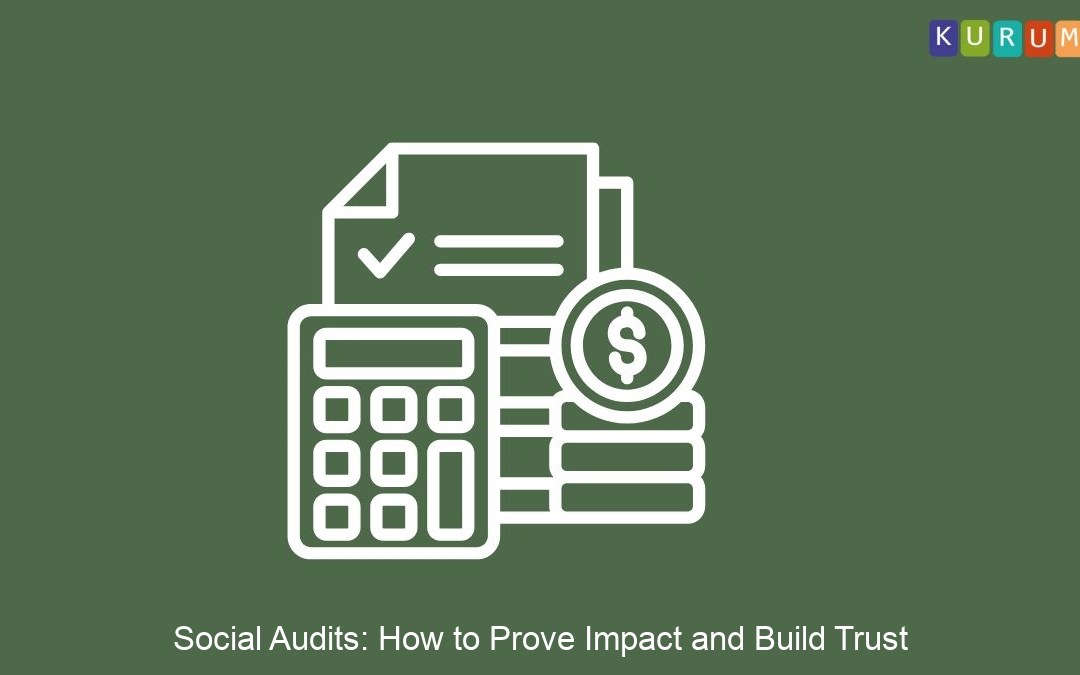
It’s no longer enough for businesses to profit—they must prove they’re making a meaningful impact on society and the environment. In today’s world, consumers, investors, and employees demand transparency, accountability, and purpose. Enter the social audit: a powerful tool that helps companies assess their social, ethical, and environmental performance while fostering trust and aligning with global sustainability goals. 💡
A social audit isn’t a passing trend. It’s a structured evaluation of how a company behaves toward stakeholders—from employees to communities—and whether it’s delivering on its promises. Think of it as a mirror, reflecting not just financial health but also the broader footprint of a business. 📊
Let’s explore how social audits work, their real-world impact, and what leaders across industries are saying about their value.
🌍 Real-World Stories: When Social Audits Drive Change
Patagonia: Profits with Purpose
Outdoor apparel giant Patagonia has long been a pioneer in corporate responsibility. In 2011, the company conducted a social audit of its supply chain after concerns were raised about labor practices and environmental harm. The audit revealed that their production processes contributed to water pollution and garment worker exploitation in Southeast Asia.
Rather than hiding the findings, Patagonia shared them openly, then launched The Footprint Chronicles: a public-facing platform tracking the environmental and social impact of every product. This transparency boosted customer loyalty, with sales increasing by 40% in the following decade, proving that integrity can coexist with profitability. 📈
LEGO’s Journey to Sustainability
When LEGO set a goal to make all its products from sustainable materials by 2030, they turned to social audits to map progress. In 2015, the audit highlighted a dependency on fossil-fuel-based plastics. By 2020, LEGO began using plant-based bricks made from sugarcane and committed to zero net carbon emissions by 2022. The audit didn’t just identify shortcomings—it gave the company a roadmap to align playtime with planetary health. 🌱
Grameen Bank: Banking for the People
Nobel Peace Prize-winning Grameen Bank used social audits to refine its micro-lending model. Founded by Muhammad Yunus to uplift impoverished communities in Bangladesh, the bank discovered through audits that 97% of its borrowers were women. Leveraging this insight, Grameen designed programs to address gender gaps in finance, further entrenching its legacy as a force for social good. 🌟
💼 Voices from the Top: Lessons from Industry Leaders
Social audits are a rarity in the corporate world. Many companies talk about ESG, but few know how to measure it effectively. – Elon Musk on ESG
Elon Musk has criticized ESG (Environmental, Social, Governance) standards as “virtue-signaling,” arguing that metrics lack universality. Yet, his own company, Tesla, regularly undergoes third-party audits to validate claims about clean energy and battery sustainability, proving the need for credible frameworks even in niche industries.
Michael Bloomberg, founder of Bloomberg LP, ties social audits to investor confidence:
“You can’t manage what you don’t measure. Social audits give companies measurable goals—whether it’s diversity, emissions, or community programs—that investors can track.”
For small businesses, progress often starts with clarity. Yvon Chouinard, Patagonia’s founder, advises:
“A social audit isn’t about perfection—it’s about honesty. First, figure out what you stand for. Then let the world see how you’re living up to it.”
🛠️ Practical Tips for Conducting a Social Audit
Ready to take a closer look at your company’s social impact? Here’s a step-by-step guide:
- Start with “Why?” 🗺️
Define your objectives. Are you addressing stakeholder concerns, improving public perception, or preparing for ESG investing? Align your audit goals with your mission. - Check Your Blind Spots 🎯
Review supply chain ethics, workplace diversity, community engagement, and environmental practices. Don’t forget to benchmark against competitors—this adds context to your data. - Involve the Crowd 🧑🤝🧑
Social audits thrive on stakeholder feedback. Survey employees about inclusion initiatives, host community forums, and talk to suppliers about their challenges. -
Set KPIs (Key Performance Indicators) 📌
Turn qualitative goals into measurable results. For example:- Reduce carbon footprint by 20% in five years.
- Increase female leadership roles to 40% by 2025.
- Share Results Transparently 📢
Publish findings in an annual sustainability report or via a microsite. Transparent communication builds trust and shows stakeholders you’re serious. -
Fix What’s Broken 🔧
If audits reveal issues, act fast. IKEA overhauled suppliers after discovering child labor in its 1990s audit, showcasing how accountability can restore reputations. -
Collaborate for Growth 🤝
Partner with nonprofits, academia, or ESG consultants. These collaborations offer fresh perspectives and validate your claims.
📚 Dr. TL;DR: The CliffNotes on Social Audits
A social audit evaluates a company’s social, ethical, and environmental performance. Businesses use it to align with ESG standards, enhance transparency, and build trust. By identifying gaps in labor rights, sustainability, or community engagement, a social audit becomes both a diagnostic tool and a catalyst for progress. 📊
🔑 Takeaways: Your Action Field Guide
- Measure What Matters: Focus on areas tied to your business values and customer expectations.
- Transparency=Trust: Audits mean nothing if you hide the results; share both wins and work leftovers.
- Humans-First Approach: Engage employees, customers, and partners—they’re critical to shaping actionable insights.
- Numbers Have Power: Quantifiable data, like emission reductions or wage gaps, resonates with investors and policymakers.
- Impact > Image: Use audits to drive real change, not just polish your PR.
❓ FAQ About Social Audits
Q1: Which businesses benefit most from social audits?
Social audits are ideal for companies prioritizing sustainability, facing stakeholder pressure (like investors or consumers), or exploring IPOs. Even small startups show enhanced professional appeal when including them.
Q2: Don’t social audits distract from core business operations?
On the contrary—audits often uncover inefficiencies (like excessive carbon output or management gaps) that improving leads to cost savings and better productivity.
Q3: How often should businesses audit?
For established companies, annual audits are standard. New businesses and startups with high impacts (like tech or fashion) can audit semi-annually to stay aligned.
Q4: Are social audits legally binding?
Most are voluntary, though regions like the EU and U.K. require broader ESG disclosures for large companies. Social audits give a head start to comply with regulations.
Q5: Can small businesses afford social audits?
Absolutely. They can use free tools like the UN’s Global Compact or partner with NGOs to keep costs manageable—sometimes turning audits into grassroots opportunities.
🌱 The Ripple Effect: Social Audits as a Growth Strategy
Embracing social audits isn’t just about checking boxes—it’s about starting a conversation. Take Jones Soda, a niche beverage company that faced backlash when a 2010 audit showed high water usage in drought-prone areas. The company worked with farmers, redesigned packaging, and reduced water use by 30%. Sales grew by 18% in two years.
Or consider Ben & Jerry’s, which has conducted audits since the 1980s. Their audit revealed racial disparities in ice cream flavor naming and ingredient sourcing. By renaming flavors like “Cherry Garcia” (to “Raspberry Ripple”) in certain markets and sourcing dairy from inclusive farms, they saw a 25% increase in global sales, demonstrating that accountability drives resonance.
A Human-Centric Commitment
At their core, social audits reflect an underappreciated truth: businesses succeed when the communities around them thrive. 🔄
Take Too Good To Go, an app fighting food waste. A 2021 audit helped them increase partnerships with restaurants and food vendors, reducing waste by 90 million meals across Europe and North America. By staying grounded in their higher purpose—tackling hunger and environmental concerns—they turned data into impact.
Even for industries like tech, where data reigns supreme, social audits are critical. Salesforce’s recent audits led to paid parental leave policies, LGBTQ+ inclusion workshops, and carbon-neutral cloud computing—moves that helped them rank #1 in Fortune’s “Change the World” list.
Closing Thoughts: A Better Mirror for the Future
The takeaway? A social audit is more than a compliance exercise—it’s a competitive advantage. 🏆
By reflecting a company’s values and providing actionable pathways to improvement, audits help businesses future-proof themselves in a world where ethics are non-negotiable. Whether you’re a scrappy startup or an industry titan, the focus should always be on stewardship over self-promotion.
As Mark Cuban quipped:
“If your business doesn’t stand for something bigger, it’s already failing.”
A social audit is how you stake your stand—and win. 💪
Are you ready to embark on your social audit journey? The path starts with one honest step. 🚶♂️
How it started: 📊
Here’s how to embrace and implement practices like social audits, tailored for tech startups and enterprise teams—a way to balance profit with purpose, and reputation with responsibility.
📌 Summary: By aligning with ESG standards, auditing human and environmental impacts, and taking action on findings, businesses unlock growth through trust and transparency. 🚀
Final Note: The success stories in this post depend on their ability to balance the act of measuring with the act of bettering. 📁 Read deeper into the Investopedia link to start your checklist today!
Discover more from Kurums | Business Intelligence
Subscribe to get the latest posts sent to your email.