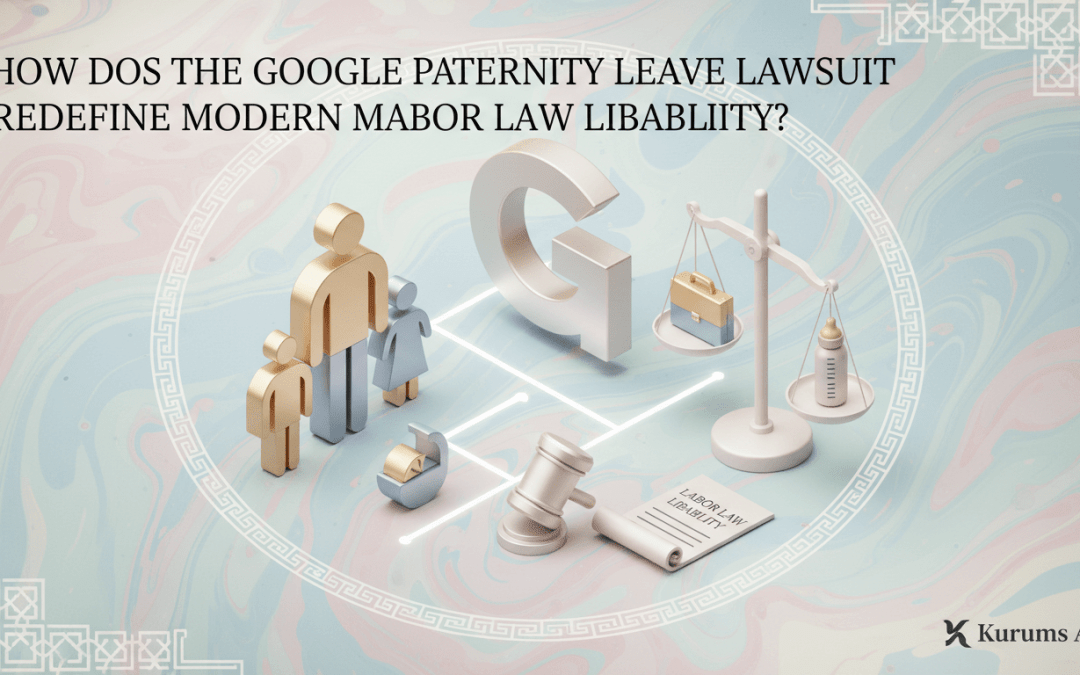
- What is the core of the Google paternity leave lawsuit? It involves a high-performing single father who alleges his performance rating was downgraded and his role marginalized after returning from a legally protected child-bonding leave.
- What is the “Paternity Leave Penalty”? It is a systemic bias where male employees face professional stagnation, lower bonuses, or “quiet firing” tactics after utilizing parental leave benefits.
- How does this impact 2026 corporate liability? This case sets a precedent that “neutral” performance metrics can be deemed discriminatory if they disproportionately penalize those taking protected leave, increasing C-level exposure to Title VII and FMLA litigation.
- What is the strategic takeaway? Organizations must decouple “time-on-desk” metrics from “impact” assessments and implement “Leave-Neutral” performance calibration.
The corporate world of 2026 is witnessing a seismic shift in labor litigation. What was once seen as a progressive benefit—extended paternity leave—has become a legal minefield for Silicon Valley giants. At the center of this storm is a landmark lawsuit against Google, involving a single father and a high-ranking engineer whose career trajectory allegedly hit a “brick wall” the moment he exercised his right to bond with his child. This isn’t just an HR grievance; it is a fundamental challenge to how modern corporations define “performance.”
As we peel back the layers of this dispute, we find a complex intersection of civil rights, algorithmic bias in performance management, and the evolving definition of the modern father. This article provides an exhaustive analysis of the Google case, the legal theories driving it, and the roadmap for C-suite executives to navigate this high-stakes environment without sacrificing operational excellence.
The Catalyst: Understanding the Google Paternity Leave Dispute
The specifics of the Google case are as harrowing as they are legally significant. A lead engineer, recognized for years as a top-tier performer, took a 12-week bonding leave following the birth/adoption of his child as a single parent. Upon his return, he found his projects reassigned, his direct reports moved under a peer, and most critically, his performance rating dropped from “Exceeds Expectations” to “Needs Improvement” within a single cycle.
But here’s the kicker: Google’s internal defense allegedly rested on “objective” metrics—specifically, code commit frequency and project delivery speed during the quarter. Since the engineer was on leave for half the quarter, his “output” was mathematically lower. The lawsuit argues that using such metrics against a person on protected leave constitutes a “per se” violation of labor protections. It highlights a systemic failure where the quantity of work is used to mask discrimination against the status of the employee as a caregiver.
The ‘Paternity Leave Penalty’ and the Evolution of Male Caregiver Bias
For decades, the “Motherhood Penalty” has been a well-documented phenomenon. However, the Google case brings the “Paternity Leave Penalty” into the sharpest focus we have seen in the 2020s. Research indicates that while women are often stereotyped as less committed after childbirth, men who take leave are often viewed as “deviating” from the traditional “ideal worker” norm.
Think about it: A single father does not have a partner to “lean on” for domestic duties. When he takes leave, he is signaling a total commitment to caregiving. In a high-pressure environment like Google, this is often interpreted by middle management as a lack of “Googley-ness” or a reduced hunger for the mission. The lawsuit alleges that this cultural bias was codified into the engineer’s performance review, creating a hostile work environment designed to encourage a “voluntary” exit.
Legal Frameworks: Title VII, FMLA, and the 2026 Compliance Standard
To understand the gravity of this case, we must look at the legal pillars being invoked. The plaintiff is not just claiming “unfairness”; they are alleging violations of established federal and state statutes. In 2026, the interpretation of these laws has become increasingly employee-friendly.
The FMLA Retaliation Claim
The Family and Medical Leave Act (FMLA) protects an employee’s right to take leave without fear of losing their job or being penalized. Retaliation occurs when an employer takes “adverse action” (like a rating downgrade) because the employee exercised their rights. The Google case argues that the performance rating itself is an adverse action because it directly correlates to bonus eligibility, equity vesting, and future promotion potential.
Title VII and Gender Discrimination
Title VII of the Civil Rights Act prohibits discrimination based on sex. The lawsuit posits that if Google provides leave to all parents but creates a culture where only men are penalized for taking it (or where single fathers are targeted due to their unique lack of a domestic support system), it constitutes sex-based discrimination. This is a sophisticated “stereotyping” claim: the idea that a “real man” or a “top engineer” shouldn’t need the full leave period.
| Legal Theory | Core Argument in Google Case | Potential Liability |
|---|---|---|
| FMLA Retaliation | Downgrading ratings due to absence during protected leave. | Back pay, liquidated damages, legal fees. |
| Title VII Discrimination | Disparate treatment of male caregivers compared to female or non-parents. | Compensatory and Punitive damages, brand damage. |
| Constructive Discharge | Creating a hostile environment to force the employee to quit. | Full loss of future earnings claims. |
| Breach of Contract | Violation of internal parental leave policy promises. | Contractual damages and specific performance. |
The Performance Rating Dispute: A Technical Deep Dive
At the heart of the dispute is the “Performance Rating.” In modern tech companies, these ratings are often determined by a mix of peer reviews and manager discretion. When a single father returns from leave, he often faces a “Recency Bias” where his recent absence outweighs years of prior high performance.
The Google lawsuit highlights a critical flaw in “calibration meetings.” These are sessions where managers debate the ratings of their employees to ensure consistency. However, if a manager argues that “John was away for 3 months, so he didn’t contribute as much as Sarah, who was here,” and the calibration committee accepts this logic, they have just participated in systemic retaliation.
- The Pro-Rata Fallacy: Evaluating a returning employee on a full-year scale without adjusting targets for the leave duration.
- The Momentum Myth: Penalizing employees for a “loss of project momentum” which is an inevitable result of taking protected leave.
- Peer Comparison Bias: Comparing an employee on leave to peers who were present, rather than evaluating them against objective goals adjusted for time.
- Managerial Subjectivity: Allowing comments like “We needed him during the launch, and his absence was felt” to influence the rating.
The Financial Impact of Parental Leave Litigation
Why should C-level executives care? Because the cost of these lawsuits extends far beyond a settlement check. For a company like Google, the direct legal costs are rounding errors, but the secondary impacts are catastrophic.
First, there is the Talent Drain. High-performing men, particularly in the Gen Z and Millennial cohorts, prioritize work-life integration. If they see a peer penalized for being a father, they will take their talents to competitors with more equitable cultures. Second, there is the Equity Volatility. ESG (Environmental, Social, and Governance) scores are heavily influenced by labor relations. A high-profile discrimination case can trigger divestment from institutional funds that prioritize social responsibility.
| Cost Category | Estimated Impact (Per Case) | Long-term Consequence |
|---|---|---|
| Direct Legal Fees | $500k – $2.5M | Immediate hit to OpEx. |
| Settlement/Damages | $1M – $10M+ | Precedent for future claims. |
| Employer Branding | Estimated $50M+ in recruitment costs | Difficulty attracting top-tier “culture-first” talent. |
| Internal Productivity | 15-20% drop in team morale | “Quiet Quitting” and increased turnover in the affected department. |
Mitigating Litigation Risks in the 2026 Fiscal Landscape
How can companies avoid becoming the next Google headline? It requires a total overhaul of the “return-to-work” experience. It is not enough to have a policy on paper; the culture must support the policy in practice.
One of the most effective strategies is the implementation of “Safe Harbor” Ratings. Under this system, any employee who takes protected leave of more than 4 weeks is automatically granted a “Neutral/Successful” rating or their previous cycle’s rating (whichever is higher) for the period they were away. This removes the manager’s ability to use the leave as a negative factor.
The Role of the Chief People Officer (CPO)
The CPO must lead the charge in auditing performance data. If the data shows that men returning from paternity leave consistently receive lower ratings than their peers, the system is broken. In 2026, AI-driven “Bias Detection” tools are now standard for identifying these patterns before they reach the litigation stage.
- Mandatory Bias Training: Specifically for middle managers on “Caregiver Bias” and “Fatherhood Stereotypes.”
- Post-Leave Re-integration Plans: Formalized documents that outline how projects will be transitioned back without penalizing the employee for the interim gap.
- Equity in Promotion Cycles: Ensuring that leave does not “reset the clock” on promotion eligibility.
- Anonymous Reporting Channels: A way for employees to flag rating disputes specifically linked to leave without fear of further retaliation.
The Psychological Dimension: Single Fathers in Corporate Tech
The Google case is particularly poignant because it involves a single father. Single fathers often face a “double whammy” of bias. They lack the “traditional” family structure that many older executives still use as a mental model, and they are doing the work of two parents while trying to maintain the output of a “Google Engineer.”
When a corporation penalizes a single father, they are essentially attacking a vulnerable demographic under the guise of “meritocracy.” This adds an emotional layer to the jury’s perspective that can lead to massive punitive damages. A jury is likely to view the downgrading of a single father’s rating as not just a business error, but a cruel act of corporate indifference.
Global Labor Law Convergence: The ‘Brussels Effect’ on US Tech
We cannot view the Google lawsuit in a US vacuum. The European Union’s “Work-Life Balance Directive” has set a global gold standard for parental leave rights. As US tech companies operate globally, their US-based employees are beginning to demand the same level of protection and “right to disconnect” seen in Paris or Berlin.
The 2026 legal landscape is seeing a “convergence” where US courts are increasingly receptive to arguments that mimic EU protections. The Google case serves as a test of whether American labor law will evolve to protect the “Social Soul” of the worker or continue to prioritize “Algorithmic Productivity” at all costs. For global companies, maintaining different standards for paternal leave in different regions is becoming a logistical and ethical nightmare.
Technological Solutions: Can AI Fix the Paternity Leave Penalty?
Ironically, the same technology that Google uses to track performance can be used to protect employees. We are seeing the rise of “Equity Compliance Engines.” these are AI layers that sit on top of HR systems like Workday or BambooHR.
Here is how they work: When a manager enters a rating for an employee who has recently returned from leave, the AI cross-references that rating with the employee’s historical data and the ratings of peers who did not take leave. If it detects a statistically significant drop that cannot be explained by qualitative project failures, it flags the rating for an “Equity Audit” before it is finalized. This “Human-in-the-loop” AI approach is the best defense against the subconscious bias that triggered the Google lawsuit.
Future Predictions: Labor Law Liability in 2027 and Beyond
Looking ahead, the Google paternity leave lawsuit is just the beginning. By 2027, we expect to see:
- Class Action Expansion: Groups of fathers joining forces to sue major tech firms for “Systemic Career Stagnation.”
- Legislative Reform: New federal bills that specifically prohibit using leave-adjusted metrics in performance reviews.
- The “Dad-Track” Stigma Removal: A cultural shift where taking 16-20 weeks of leave becomes a status symbol of a confident, secure leader rather than a “career killer.”
- Transparency Mandates: Companies being required to publish their “Parental Leave Success Rates” (i.e., what percentage of parents are promoted within 18 months of returning from leave).
Conclusion: Redefining Modern Labor Law Liability
The Google paternity leave lawsuit is a wake-up call for every C-level executive and HR professional. It proves that the old ways of measuring “value”—hours worked, immediate availability, and relentless “momentum”—are legally and ethically incompatible with a modern, inclusive workforce.
To survive the 2026 labor market, corporations must move beyond “offering leave” to “protecting those who take it.” This means decoupling performance from presence, auditing algorithms for bias, and fostering a culture where a single father returning from bonding leave is seen as a rejuvenated asset, not a liability. The companies that master this shift will not only avoid the courtroom but will also win the war for talent in the decade to come.
Is your organization ready for the ‘Leave-Neutral’ era? The time to audit your performance management system is not after the subpoena arrives—it is today.
Discover more from Kurums | Business Intelligence
Subscribe to get the latest posts sent to your email.