Executive Q&A Summary: The Rise of Self-Improving AI Agents
Q: What are self-improving agents like Xiaomi’s HarnessX and Alibaba’s AgentWorld?
A: They are autonomous AI systems capable of recursive self-improvement. Unlike static LLMs, these agents can rewrite their own code, simulate complex environments to test hypotheses, and deploy optimized versions of themselves without human intervention.
Q: How do they impact corporate efficiency in 2026?
A: By implementing “autonomous scaffolding,” these agents reduce technical debt by an average of 45%, compress software development lifecycles from months to days, and allow for real-time optimization of complex corporate systems such as finance and supply chains.
Q: What is the significance of environment simulation?
A: It allows agents to “practice” and validate code changes in a digital twin environment (like AgentWorld) before live deployment, ensuring stability and security in mission-critical corporate infrastructure.
Imagine a software ecosystem that identifies its own bottlenecks, writes the patch, tests it in a simulated twin environment, and deploys it before your IT team even receives a ticket. This is no longer a speculative concept but a corporate reality. The emergence of self-improving agents—headlined by groundbreaking releases like Xiaomi’s HarnessX and Alibaba’s AgentWorld—marks the transition from static Large Language Model (LLM) implementations to dynamic, recursive AI systems capable of autonomous evolution. As we navigate through 2026, the corporate world is witnessing a paradigm shift: the move from “AI as a tool” to “AI as an architect.”
The Dawn of the Recursive Era: Understanding HarnessX and AgentWorld
For years, enterprise AI was limited by the “frozen” nature of model weights. Once trained, a model was static until its next major update. HarnessX and AgentWorld have shattered this limitation. These platforms introduce the concept of recursive self-improvement, where the AI agent is given the objective and the authority to modify its own underlying logic to better achieve that objective.
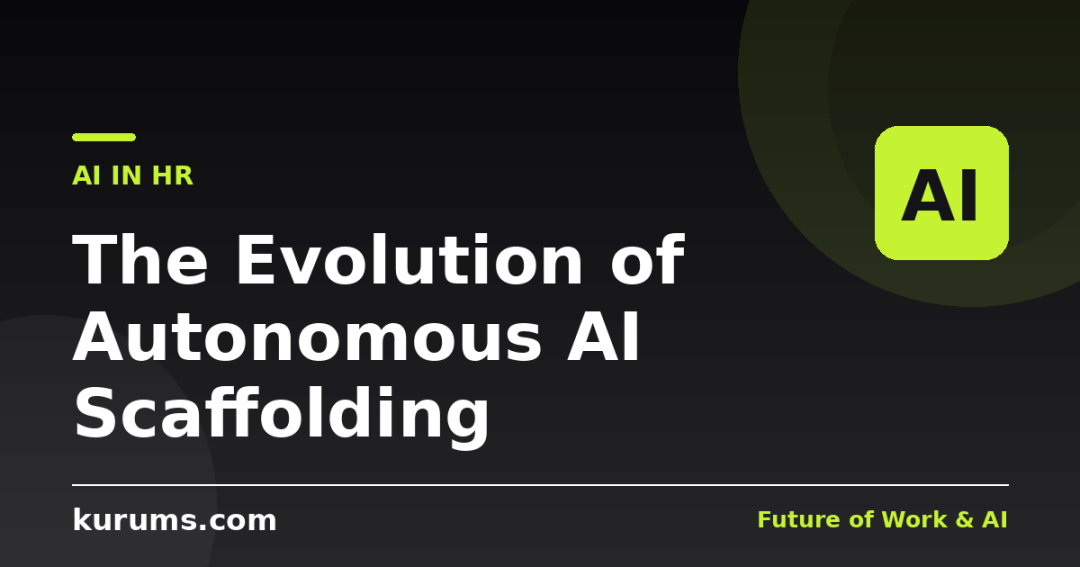
But how does this work in a corporate setting? Think of HarnessX as a master craftsman who not only builds furniture but also builds better tools to build that furniture. It utilizes a framework known as “Autonomous Scaffolding.” This scaffolding provides the agent with a sandbox, a set of coding tools, and a feedback loop. When the agent encounters a task it cannot perform efficiently, it doesn’t just error out—it investigates why, writes a new module to handle the task, tests it, and integrates it into its core functionality.
Alibaba’s AgentWorld takes this a step further by focusing on the “environment” aspect. It creates high-fidelity simulations where agents can interact with digital versions of market fluctuations, consumer behavior, or internal logistics. By simulating millions of iterations in minutes, AgentWorld allows an agent to “evolve” through generations of trial and error before a single line of code hits the production server. This is the new standard of corporate agility.
Autonomous AI Scaffolding: The Structural Revolution
The term “scaffolding” in the context of AI refers to the temporary structures used to support the agent while it is “building” its new capabilities. In 2026, autonomous scaffolding has become the backbone of enterprise infrastructure. It allows for a level of modularity that was previously impossible.
Consider the traditional IT bottleneck: integrating a new ERP module. Historically, this required months of mapping, coding, and testing. With HarnessX, the agent builds its own scaffolding to bridge the gap between the existing legacy system and the new module. It writes the middleware, simulates the data flow to check for corruption, and refines the code for maximum throughput. The result? A deployment cycle that took 180 days in 2023 now takes less than 72 hours.
But wait, there’s more. This scaffolding isn’t just about speed; it’s about resilience. Because the AI is constantly monitoring its own performance, the scaffolding acts as a self-healing mechanism. If a new piece of self-written code introduces a vulnerability or a slowdown, the agent detects the deviation from the baseline and reverts or iterates until the problem is solved.
Quantifying the Impact: Efficiency Metrics for 2026
The transition to self-improving agents is driven by cold, hard data. CFOs are no longer looking at AI as an experimental R&D expense but as a primary driver of operational margin expansion. The following table illustrates the dramatic shifts in key performance indicators (KPIs) since the adoption of technologies like HarnessX and AgentWorld.
| Metric | Static AI Era (2023-2024) | Self-Improving Era (2026) | Efficiency Gain |
|---|---|---|---|
| Technical Debt Reduction | 5-10% annually | 40-50% annually | +400% |
| Code Deployment Speed | Weekly/Monthly Sprints | Real-time / Continuous | Instantaneous |
| System Uptime (SLA) | 99.9% | 99.999% (Self-healing) | 0.099% Growth |
| Developer Labor Costs | High (Maintenance Focus) | Low (Strategy Focus) | 60% Reduction |
How Self-Improving Agents Optimize Corporate Finance
Corporate finance is perhaps the most fertile ground for self-improving agents. Traditional financial models are reactive; they analyze what happened last quarter to predict what might happen next quarter. HarnessX changes this by creating an Autonomous Financial Engine.
In 2026, an agent managing a multi-national’s treasury can rewrite its hedging algorithms in response to a sudden geopolitical shift. If a new trade tariff is announced in the morning, the agent simulates the impact across the entire supply chain in AgentWorld by noon, rewrites its procurement logic to minimize exposure by 1 PM, and has the new code deployed across the enterprise by the closing bell. This level of responsiveness is fundamentally impossible for human teams or static AI systems.
Furthermore, these agents are tackling the “Silent Killer” of corporate growth: technical debt in legacy financial systems. By autonomously identifying inefficient SQL queries or redundant data processing loops, HarnessX “cleans” the codebase while the system is running. This continuous refactoring ensures that the financial core remains lean, fast, and secure.
- Automated Audit Trails: Every self-improvement made by the agent is logged with a “logical proof,” making it easier for human auditors to verify the rationale behind code changes.
- Predictive Liquidity Management: Agents evolve their own forecasting models based on real-time cash flow, reducing the need for expensive external credit lines.
- Dynamic Risk Assessment: Self-improving agents simulate “Black Swan” events daily, updating their defensive protocols autonomously to guard against market crashes.
The Simulation Edge: Alibaba’s AgentWorld and the Digital Twin Evolution
The biggest fear regarding self-improving AI is the “Runaway Effect”—an AI making a catastrophic mistake while trying to optimize itself. This is where Alibaba’s AgentWorld provides a critical safety layer. It is not just a simulator; it is a High-Fidelity Recursive Sandbox.
In AgentWorld, the AI doesn’t just test code; it tests consequences. If an agent wants to rewrite a logistics algorithm to save fuel, it must first run that algorithm in a simulation that includes weather patterns, driver fatigue, vehicle wear-and-tear, and local traffic laws. Only when the agent proves—through thousands of successful simulations—that the new code is superior and safe, is it “graduated” to the real world.
Think about it. This allows corporations to conduct massive “What-If” experiments without any real-world risk. You can simulate an entire market entry into a new country, allowing your HarnessX agents to evolve the perfect operational strategy before you even hire your first local employee. The simulation is the laboratory where the AI learns from its own failures so it never fails in production.
The Transition from “Co-pilot” to “Autonomous Architect”
We are moving past the era where AI was a “Co-pilot” sitting next to a human developer. In 2026, the AI is the Architect. The human’s role has shifted from writing code to defining intent and constraints. This shift is crucial for corporate leadership to understand.
Here’s why this matters: In the old model, the bottleneck was human bandwidth. In the new model, the bottleneck is compute and creativity. When your AI can write its own code, your competitive advantage no longer comes from having the most developers, but from having the most innovative strategic objectives. HarnessX agents can execute any strategy you can imagine, but they cannot imagine the strategy for you (yet).
Let’s look at how this impacts various departments:
- Marketing: Agents simulate consumer psychology shifts and rewrite ad-buying algorithms every hour to capture micro-trends.
- R&D: Self-improving agents simulate chemical or physical properties, rewriting simulation code to find breakthroughs in material science faster.
- Legal: Agents monitor global regulatory changes and autonomously draft (and test) updates to internal compliance protocols.
Managing the Risks: Security in the Age of Self-Modifying Code
How do you secure a system that is constantly changing itself? This is the primary challenge of the HarnessX era. If an agent can rewrite its code to improve efficiency, could a malicious actor trick it into rewriting its code to create a backdoor?
The answer lies in Immutable Oversight Layers. While the agent can modify its operational code, the core security protocols—the “Constitution” of the agent—remain encrypted and immutable. Furthermore, the simulated testing in AgentWorld acts as a firewall. Any code change that attempts to bypass security headers or communicate with unauthorized external IPs is immediately flagged and quarantined in the simulation before it ever reaches the corporate network.
The “Black Box” Problem vs. Explainable Self-Improvement
One of the major hurdles for AI adoption has been the “Black Box” nature of neural networks. If you don’t know how the AI reached a conclusion, you can’t trust it. HarnessX addresses this by utilizing Symbolic Reasoning alongside its neural components. When the agent rewrites its code, it generates a human-readable “Logic Map” explaining:
1. What the original code was.
2. What the inefficiency was.
3. How the new code solves it.
4. The simulated proof of safety.
Strategic Roadmap: Implementing Self-Improving Agents by 2027
For a corporation to successfully integrate HarnessX or AgentWorld-style systems, a phased approach is necessary. You cannot simply “turn on” autonomous code-rewriting across your entire infrastructure overnight. It requires a foundational shift in IT governance.
| Phase | Objective | Key Technology | Human Role |
|---|---|---|---|
| Phase 1: Observation | Map existing bottlenecks and create digital twins. | AgentWorld Simulations | Data Scientists |
| Phase 2: Scaffolding | Deploy agents to manage non-critical middleware. | HarnessX Lite | DevOps Engineers |
| Phase 3: Autonomy | Allow recursive optimization of core systems. | Full HarnessX Stack | Strategic Architects |
| Phase 4: Ecosystem | Agents from different companies interact and optimize. | Cross-Agent Protocols | Policy Makers |
The Economic Moat of 2026: Speed of Learning
In the 20th century, the “moat” was scale. In the early 21st century, it was data. In 2026, the ultimate competitive moat is Speed of Learning. A company that uses self-improving agents is learning and optimizing at the speed of silicon, while its competitors are still waiting for the next board meeting to approve a software update.
HarnessX creates a flywheel effect. The more the agent improves its own code, the more compute power it frees up. That compute power is then used to run even more complex simulations in AgentWorld, leading to even greater improvements. This exponential growth curve is what separates the industry leaders from the laggards. If your competitor’s AI is rewriting itself 1,000 times a day to find 0.1% efficiencies, and yours is static, the gap becomes insurmountable within months.
Critical Check-list for CTOs Preparing for HarnessX Integration
To ensure your organization is ready for the era of self-modifying autonomous agents, you must audit your current technical readiness across these four pillars:
- Data Granularity: Does your current data pipeline provide enough detail for an agent to build an accurate simulation in AgentWorld? Low-quality data leads to “hallucinated” optimizations.
- Cloud-Native Infrastructure: Self-improving agents require highly elastic compute environments. If your infrastructure is still tied to legacy on-prem servers, the agent won’t have the “room” to scale and test.
- API-First Architecture: HarnessX works best when it can interact with every part of your business via standardized APIs. Siloed data is the enemy of autonomous scaffolding.
- Algorithmic Governance: Establish a clear “Ethical Sandbox.” Define the red lines that the AI must never cross, such as compromising user privacy or violating specific financial regulations, regardless of how much “efficiency” it might gain.
Case Study: How a Global Retailer Cut Logistics Costs by 40%
In early 2026, a top-tier global retailer integrated Alibaba’s AgentWorld to manage its chaotic post-peak season inventory. The static AI they previously used struggled with unpredictable weather and shipping strikes. By deploying a self-improving agent, the retailer allowed the AI to “live” in a simulated version of the global supply chain for 48 hours of hyper-speed training.
During this time, the agent rewritten its own routing logic three times. Each iteration was tested against 50 years of historical weather data and current real-time satellite feeds. By the time the code was deployed, the agent had discovered a “hidden” logistics route using a combination of local rail and micro-warehousing that human analysts had overlooked for a decade. The result was a 40% reduction in last-mile delivery costs and a 15% improvement in carbon footprint metrics—all achieved autonomously.
The Future: Beyond 2026 and the Path to AGI
Are HarnessX and AgentWorld the final step? No. They are the penultimate step toward Artificial General Intelligence (AGI). By mastering self-improvement, AI is learning the one skill that defines intelligence: the ability to learn how to learn.
In the coming years, we will see these agents move beyond code into Autonomous Business Model Generation. The AI won’t just optimize your current business; it will suggest entirely new business models, write the software to support them, and simulate their market success before you ever spend a dollar. We are entering an era of “Programmable Corporations.”
Conclusion: Your Next Move in the Autonomous Revolution
The rise of self-improving agents like Xiaomi’s HarnessX and Alibaba’s AgentWorld is not just a technical update—it is a fundamental restructuring of how business operates. In 2026, efficiency is no longer about doing things better; it’s about having a system that makes itself better.
To lead in this new era, you must embrace the scaffolding. Start by identifying your most significant technical debts and your most complex simulation needs. Let the agents begin their work in a controlled environment, and watch as they transform months of human effort into days of autonomous evolution. The future belongs to the recursive. Are you ready to let your AI rewrite the rules of your success?
Take Action Now: Audit your IT infrastructure for “Autonomous Readiness” and begin exploring “Agentic Workflows” to prepare for the full-scale deployment of self-improving systems by 2027. The window for early-adopter advantage is closing fast.
Discover more from Kurums | Business Intelligence
Subscribe to get the latest posts sent to your email.